

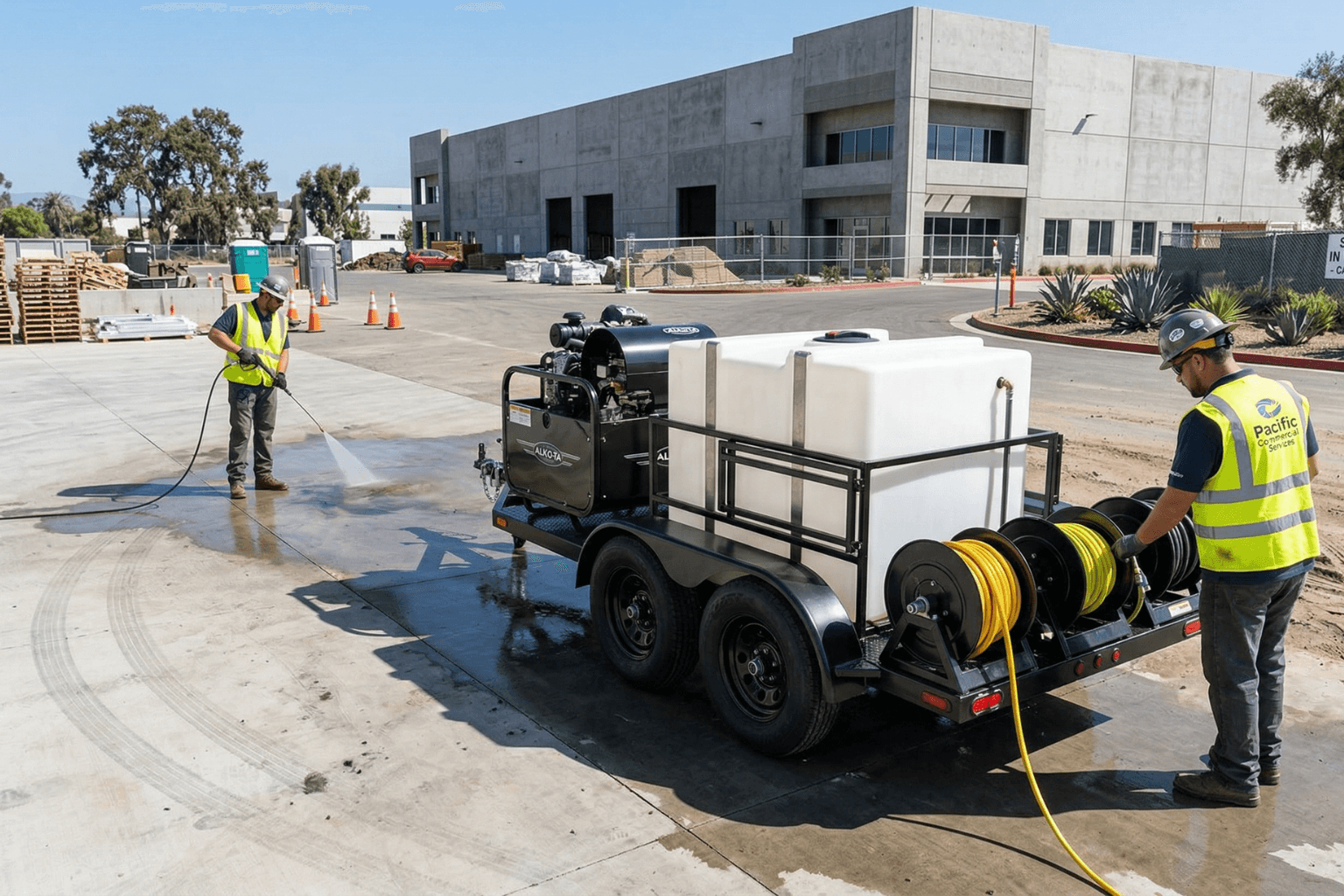
AI-Overview
- California-compliant pressure washer trailers meet strict CARB emissions standards
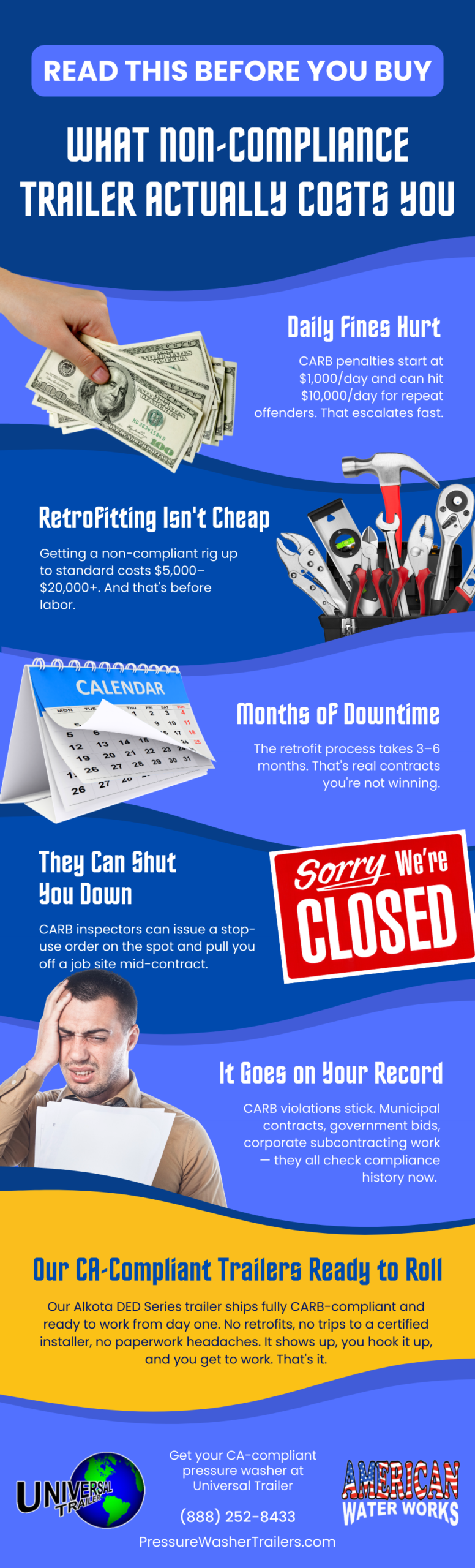
- Non-compliant diesel equipment = fines up to $10,000/day in California
- Retrofitting a non-compliant rig costs $5,000–$20,000+ and takes 3–6 months
- Ignoring CARB compliance risks results in stop-use orders, fines, and equipment impoundment
- Universal Trailer sells California-compliant pressure washer trailer Alkota DED Series — with three tank options: 230-gallon (single axle), 330-gallon, or 460-gallon (both tandem axle)
- Free US Shipping on every trailer — saves $500–$1,500+ in freight costs
- Available nationwide at pressurewashertrailers.com
TABLE OF CONTENTS
Let’s be real — California doesn’t mess around with regulations. Whether it’s emissions, environmental standards, or equipment compliance, the Golden State has some of the tightest rules in the country. And if you’re running a commercial cleaning operation in 2026, using non-compliant gear isn’t just risky. It’s basically an open invitation for fines, shutdowns, and a very bad Tuesday.
The good news? You don’t have to choose between raw cleaning power and playing by the rules. Universal Trailer and American Water Works — the team behind pressurewashertrailers.com — has cracked the code on California-compliant pressure washer trailers that are built tough, perform hard, and won’t get you a knock at the door from a CARB inspector.
Oh, and did we mention? Free US Shipping on every single trailer. Yeah, you read that right.
Why You Need a CA-Compliant Pressure Washer Trailer (Hint: The Fines Are Not Fun)
Here’s the thing about California’s emissions regulations in 2026: they’ve only gotten tighter. The California Air Resources Board (CARB) continues to crack down on diesel-powered machinery, and non-compliant equipment can rack up fines in the thousands of dollars — per violation, per day. That’s the kind of math that makes your accountant cry into their spreadsheet.
For commercial contractors, fleet managers, and municipal buyers, the stakes are even higher. Downtime is expensive. Regulatory penalties are more expensive. And reputational damage from a compliance failure? Let’s not even go there.
CA-compliant pressure washer trailers solve this problem at the source. Instead of retrofitting non-compliant gear or gambling on equipment that might not pass inspection, you get a rig engineered specifically to meet California’s standards — without sacrificing any of the performance your jobs actually demand.
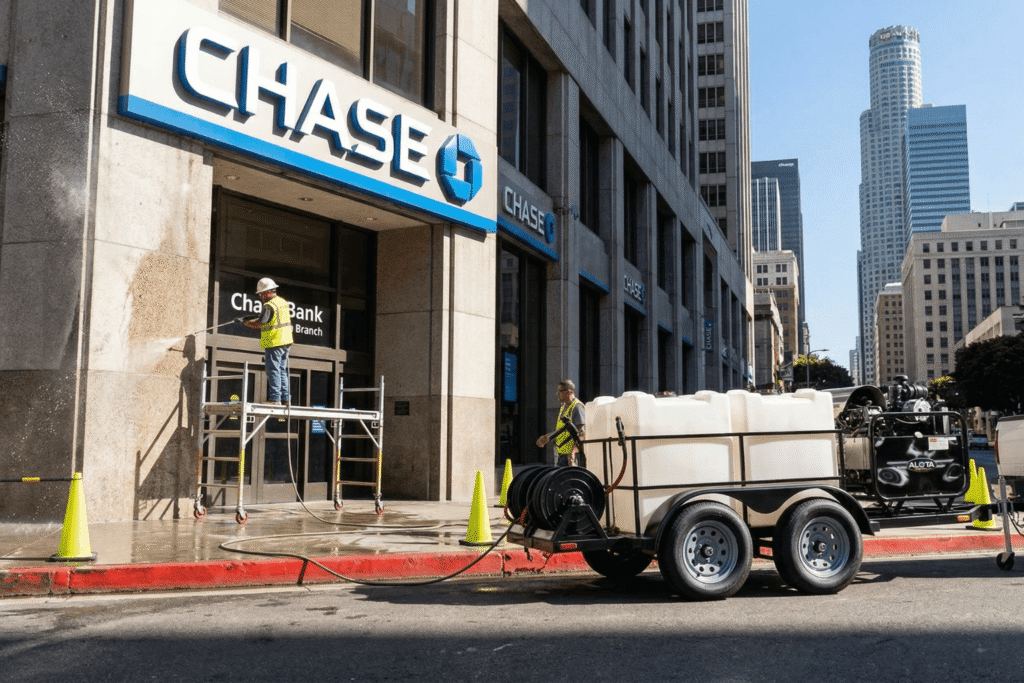
In 2026, with construction activity up, fleet washing contracts booming, and municipalities pushing for more frequent infrastructure cleaning, demand for CARB-compliant mobile cleaning systems has never been higher. Buyers who invest in the right equipment now will be working while their competitors are buried in compliance paperwork.
What Exactly Is CARB Compliance, and Why Does It Matter for Your Pressure Washer Trailer?
Great question — and one that trips up a surprising number of buyers. CARB (California Air Resources Board) sets emissions standards for engines operating in California that are significantly stricter than federal EPA standards. If your diesel-powered equipment doesn’t meet CARB’s Tier 4 Final standards, you’re not legally operating it in the state. Simple as that.
For pressure washer trailers specifically, this means the engine powering your rig has to meet strict limits on particulate matter (PM) and nitrogen oxides (NOx) — two of the main culprits in California’s air quality challenges. Non-compliant diesel engines emit far more of both, which is why CARB doesn’t look kindly on them rolling around job sites.
Here’s the kicker: a lot of heavy-duty mobile cleaning systems sold nationally are built around engines that technically meet federal standards but fall short of CARB requirements. You might not even know your rig is non-compliant until an inspector shows up. And by then, you’re already in “very expensive conversation” territory.
California-certified pressure washer trailers from Universal Trailer take that worry off the table entirely. The Kubota Z602 diesel engine powering the Alkota DED Series is water-cooled, fuel-efficient, and built to meet the emissions standards that California demands. You get all the diesel torque and reliability you need — packaged in an engine that California actually approves of. That’s not a compromise. That’s just smart buying.
Thinking of Buying a Non-Compliant Trailer? Here's What Happens Next (Spoiler: Neither Option Is Fun)
Let’s say you found a pressure washer trailer online for a few thousand dollars less than the compliant alternatives. It looked great on paper, the specs were solid, and the seller assured you it “should be fine” in California. So you pulled the trigger.
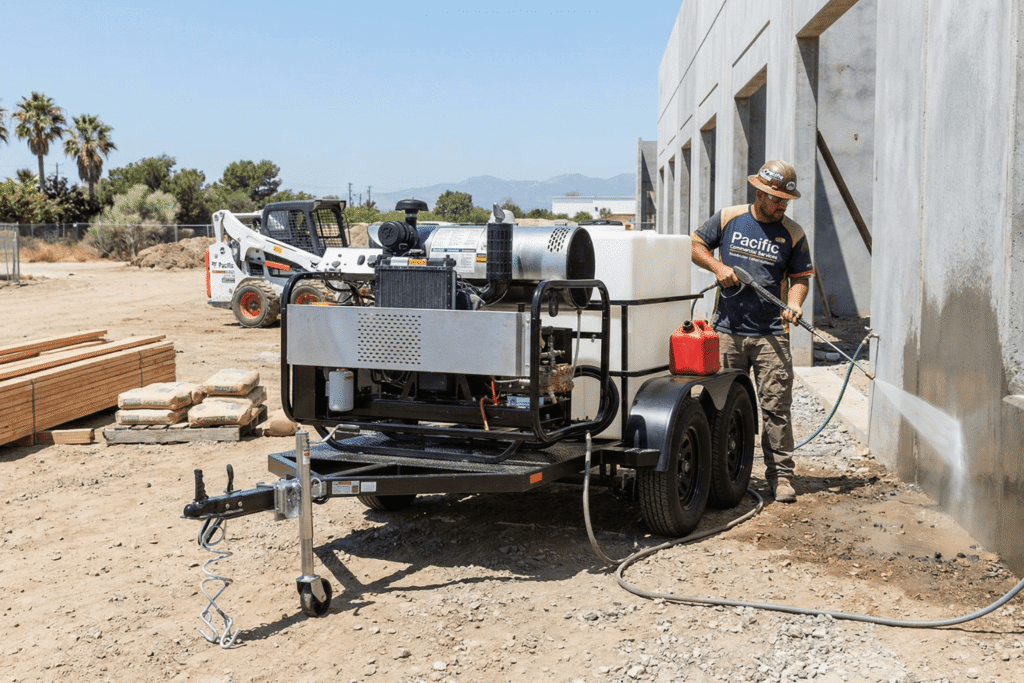
Now you’re in California with a non-CARB-compliant diesel rig and two roads ahead of you. Neither one is a joyride — but one is significantly more painful than the other.
Road #1: Do It Right and Get the Thing Compliant
To be fair, this is the responsible path. It’s also the expensive, slow, and headache-inducing path. But it exists, and here’s exactly what it looks like.
Step 1: Figure Out What You’re Actually Working With
Before anything else, you need to know your engine’s current emissions tier. Grab your engine’s model number and serial number, then look it up in CARB’s online equipment database. If it’s Tier 3 or below — which a lot of imported or budget rigs are — you’ve got a compliance gap to close.
Step 2: Apply for a CARB In-Use Off-Road Diesel Regulation Exemption or Retrofit
This is where it gets bureaucratic. CARB’s In-Use Off-Road Diesel regulation requires non-compliant engines to either be retrofitted with a verified diesel particulate filter (DPF) or replaced outright. You’ll need to:
- Submit an application through CARB’s DOORS (Diesel Off-Road Online Reporting System)
- Provide equipment documentation, engine specs, and proof of ownership
- Identify a CARB-verified retrofit kit compatible with your specific engine
Not all engines have verified retrofit options available. If yours doesn’t? You’re skipping straight to engine replacement, which is its own adventure.
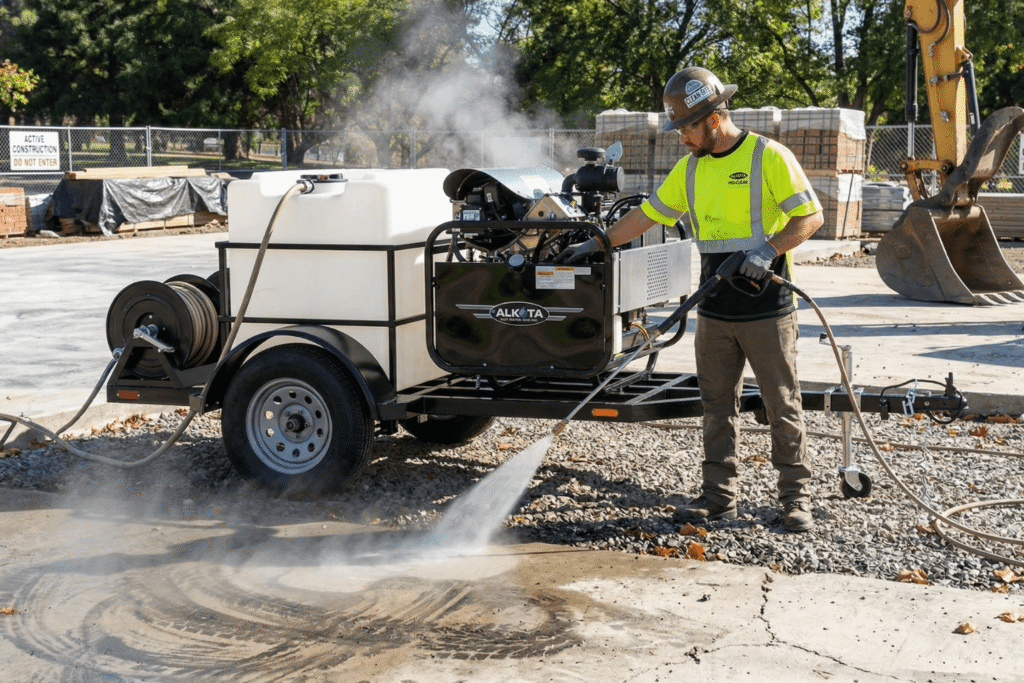
Step 3: Source and Install a CARB-Verified Retrofit Kit
Assuming a retrofit exists for your engine, you’ll need a certified installer — you can’t just bolt this on yourself and call it a day. CARB maintains a list of verified Level 3 diesel emission control systems, and installation needs to be done by someone who knows what they’re doing and can document the work properly.
The Cost: Budget anywhere from $5,000 to $15,000+ depending on your engine size, the retrofit system required, and labor rates in your area. Engine replacements can push $20,000 or more when you factor in parts, labor, and downtime.
The Timeline: From application to approved compliant operation, you’re realistically looking at 3 to 6 months — and that’s if everything goes smoothly. CARB processing times, parts availability, and installer scheduling can all add delays. During that time, your non-compliant rig is essentially a very expensive lawn ornament.
The Ongoing Reporting: Oh, and it doesn’t end at installation. CARB requires annual reporting through DOORS to confirm your equipment remains in compliance. Miss a reporting deadline and you’re back on the wrong side of the regulations. It’s not a one-time fix — it’s a relationship.
So yes, you can get there. It’ll just cost you time, money, and a solid chunk of your sanity.
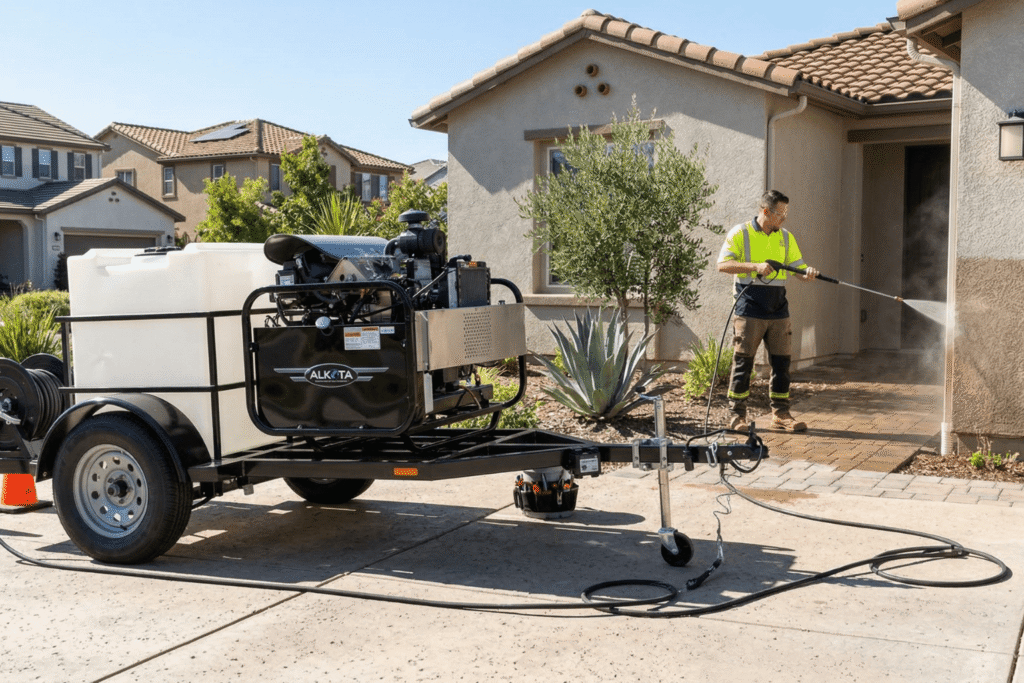
Road #2: If You Just Ignore It and Hope for the Best (Don’t Do It!)
Ah yes, the “it’ll probably be fine” strategy. Spoiler: it won’t be fine.
California doesn’t enforce its emissions regulations occasionally or randomly. CARB and local air quality management districts run active inspection programs, and commercial job sites — construction, fleet washing, industrial facilities — are exactly the kind of places they show up.
Here’s what happens when they do and your rig doesn’t pass:
Immediate Stop-Use Order
An inspector can issue a stop-use order on the spot. That means your trailer gets parked — right there, right then — and you don’t get to use it again until the compliance issue is resolved. If you’re mid-contract on a fleet washing job or a construction site cleanup, that’s not just inconvenient. That’s a blown contract and a very uncomfortable phone call with your client.
Financial Penalties
CARB penalties for operating non-compliant diesel equipment are not symbolic. They start at $1,000 per day per violation and can escalate to $10,000+ per day for repeat or willful violations. Courts have upheld six-figure penalty totals against businesses that kept operating non-compliant equipment after being cited. Run the math on a few weeks of ignoring notices and you’ll understand why this road ends badly.
It Follows Your Business
CARB violations go on record. If you’re bidding on municipal contracts, government jobs, or working with larger companies that require compliance documentation from subcontractors, a CARB violation history can knock you out of the running entirely. In 2026, with public agencies increasingly requiring proof of CARB compliance as part of procurement, this is a real and growing risk.
The Equipment Gets Impounded
In cases of repeated non-compliance, CARB has the authority to pursue equipment impoundment through the courts. Imagine not just losing the use of your trailer, but actually having it seized. At that point you’ve lost the equipment, potentially paid thousands in fines, and still need to replace the rig — now with a compliance violation on your record making it harder to work.
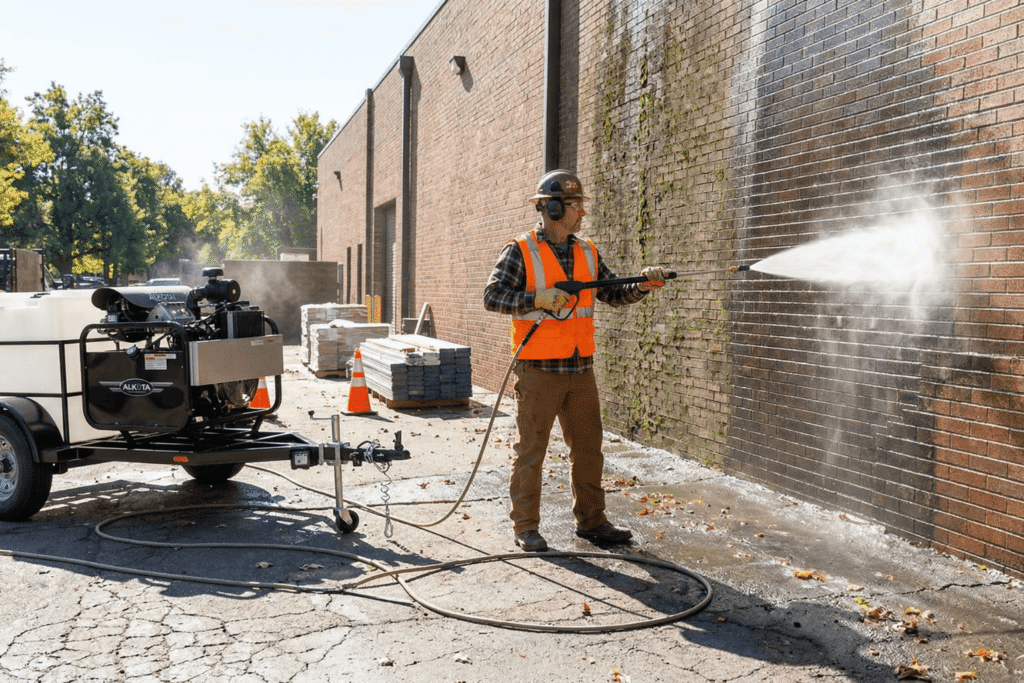
The Bottom Line on Both Roads
Road #1 costs you $5,000–$20,000+ and three to six months of compliance limbo. Road #2 costs you potentially more than that in fines, plus your contracts, your reputation, and possibly the equipment itself.
Or — hear us out — you just buy a California-compliant pressure washer trailer from Universal Trailer from the jump, get it shipped for free, and spend that energy actually running your business instead of navigating CARB’s paperwork labyrinth.
The compliance is already done for you. That’s kind of the whole point.
Our California-Compliant Pressure Washer Trailer Alkota DED Series
If the Alkota DED Series were a person, it’d be the weathered contractor who’s seen every job site imaginable and never once complained. Built by hand in the USA since 1964, Alkota has spent over six decades proving that American manufacturing still means something.
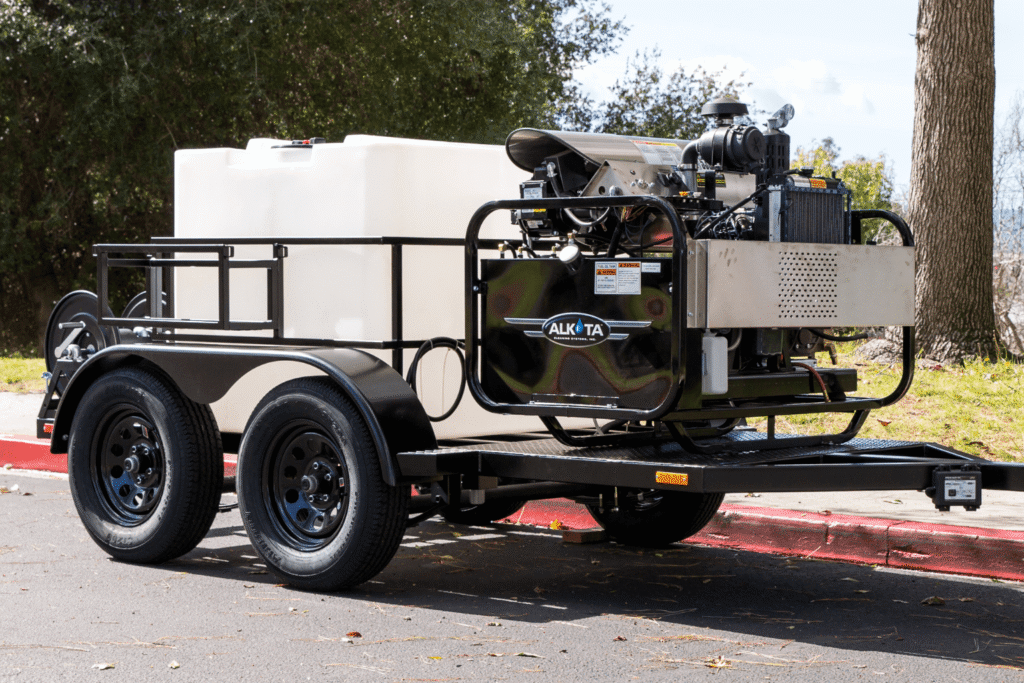
This isn’t a trailer that quits on you halfway through a 10-hour fleet wash. Here’s what’s under the hood:
Specification | Detail |
Engine | Kubota Z602 water-cooled diesel, electric start |
Flow Rate / Pressure | 4.7 GPM at 3,500 PSI |
Hot Water Output | Up to 210°F |
Burner | 355,000 BTU hot water burner (12V DC system) |
Heating Coil | 126′ x 1/2″ Schedule 80 (14″ coil size) |
Pump | GP Triplex belt drive plunger pump |
Fuel Tank | 11-gallon onboard |
Frame | Heavy tubular steel construction |
Protection System | Soft dampening system (extends pump & coil life) |
Water Storage | Stainless steel float tank |
Cold Weather | Winterizing valve included |
Included Accessories | 50 ft. hose, shut-off gun, 42″ wand |
Chemical System | High-pressure chemical metering |
Now let’s talk about that 210°F hot water output, because this is where things get genuinely exciting.
Cold water pressure washers are great for rinsing dust and light debris. But if you’re dealing with grease-caked truck bays, oil-soaked concrete, or industrial machinery — cold water is basically just an expensive hose. Hot water at 3,500 PSI is a completely different animal. It penetrates, emulsifies, and obliterates grime that cold water just bounces off.
Chewing gum on a parking structure? Gone. Grease traps? Handled. Industrial contamination on a fleet of heavy equipment? That’s what 4.7 GPM of 210-degree water does for a living.
The Kubota Z602 water-cooled diesel engine is one of the most dependable powerplants in the commercial equipment world. Water-cooled means it runs cooler, lasts longer, and doesn’t throw a tantrum when you push it hard on a full-day job. The electric start is the cherry on top — because hand-cranking a diesel engine in 2026 is a lifestyle choice nobody wants to make.
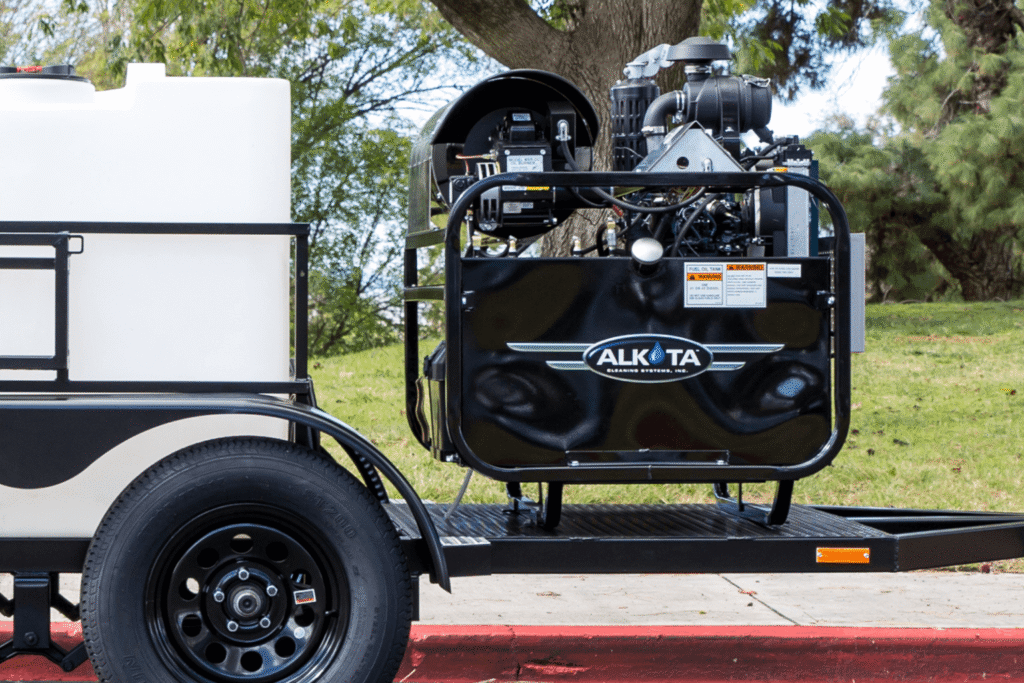
The soft dampening system is also worth calling out. It reduces vibration stress on the pump and coil, extending the life of the most expensive components on the trailer. That’s long-term reliability baked right into the engineering — the kind of detail that separates equipment built for real commercial cleaning from stuff that’s just built to a price point.
Why the Kubota Diesel Engine Is a Big Deal
Let’s zoom in on the engine for a second, because it deserves more than a line in a spec table.
The Kubota Z602 isn’t just any diesel engine — it’s a water-cooled, three-cylinder powerplant that’s earned a reputation across the commercial equipment industry for being almost annoyingly reliable. Kubota has been building engines since 1922, and the Z602 represents the kind of refined engineering that comes from a century of doing one thing really well.
Water-cooled engines run at more consistent operating temperatures than air-cooled alternatives. That means less thermal stress on components, better fuel efficiency under load, and a dramatically longer service life. For a pressure washer trailer that’s running 8–10 hours a day, that matters enormously.
The electric start is also a bigger deal than it sounds. In commercial cleaning, you’re often deploying equipment in early morning hours, in cold weather, or in situations where a quick startup is critical. A reliable electric start — no choke fiddling, no pull-cord lottery — means your crew is working faster and spending less time wrestling with the equipment before the first job even starts.
For California operations specifically, the Z602’s fuel efficiency also plays well with CARB’s broader goals around emissions reduction. Burning less diesel to achieve the same output is genuinely good for the environment — and it keeps your operating costs down at the same time. That’s what you call a win-win.
Choose Your California-Compliant Pressure Washer Trailer: 3 Custom Tank Modifications
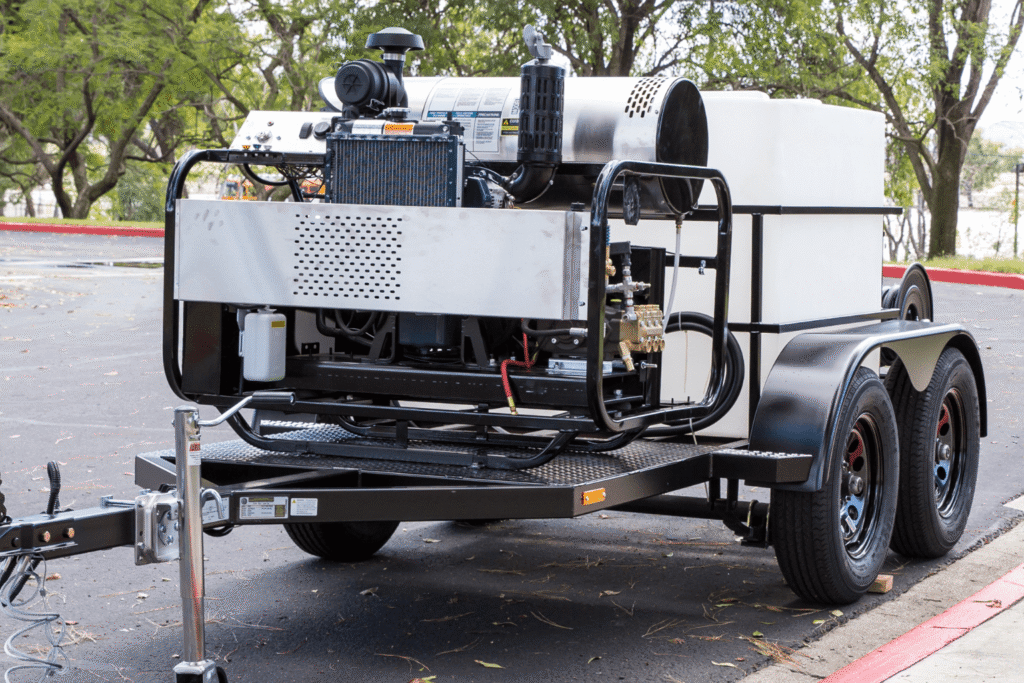
Not every job is the same, and not every trailer should be either. The Alkota DED pressure washer with water tank comes in three configurations so you can match your capacity to your actual workload — instead of hauling more water than you need or running dry mid-job.
Configuration | Tank Capacity | Axle Type | Best For |
Option 1 | 230 Gallons | Single Axle | Frequent movers, smaller jobs |
Option 2 | 330 Gallons | Tandem Axle | Most commercial operations |
Option 3 | 460 Gallons | Tandem Axle | Large-scale, high-volume work |
Option 1 — 230-Gallon / Single Axle: Perfect for contractors moving frequently between job sites who don’t need marathon water supply. Lighter tow weight, easier to maneuver, and still delivers the full 4.7 GPM at 3,500 PSI punch. If you’re doing residential contracting, light fleet work, or mobile detailing where you’ve got water access nearby, this is a smart, efficient choice.
Option 2 — 330-Gallon / Tandem Axle: The sweet spot for most commercial operations. The tandem axle adds stability and load capacity, while the extra water supply keeps you working longer between refills. Great for fleet washing, industrial facilities, and municipal contracts. If you’re not sure which configuration fits your workload, this one is usually the answer.
Option 3 — 460-Gallon / Tandem Axle: The big dog. If your jobs are large-scale — massive concrete cleaning, big-lot fleet washing, or extended industrial gigs — this is the rig that keeps you on the job when smaller units are pulling U-turns back to the water source. The tandem axle handles the weight like it was born for it. For high-volume operations running full-day jobs in remote or hard-to-supply locations, this is the configuration that earns its keep.
All three configurations deliver the same core performance specs — the same Kubota engine, the same 355,000 BTU burner, the same 210°F hot water output, the same GP Triplex pump. The only variable is how long you can keep working before you need to refill. Choose based on your job scale, your tow vehicle, and how far you typically are from a water source.
What's Included: More Than Just a Tank on Wheels
One thing that separates a genuinely well-equipped industrial cleaning trailer from a bare-bones unit is what’s included in the package. And the Alkota DED Series doesn’t nickel-and-dime you.
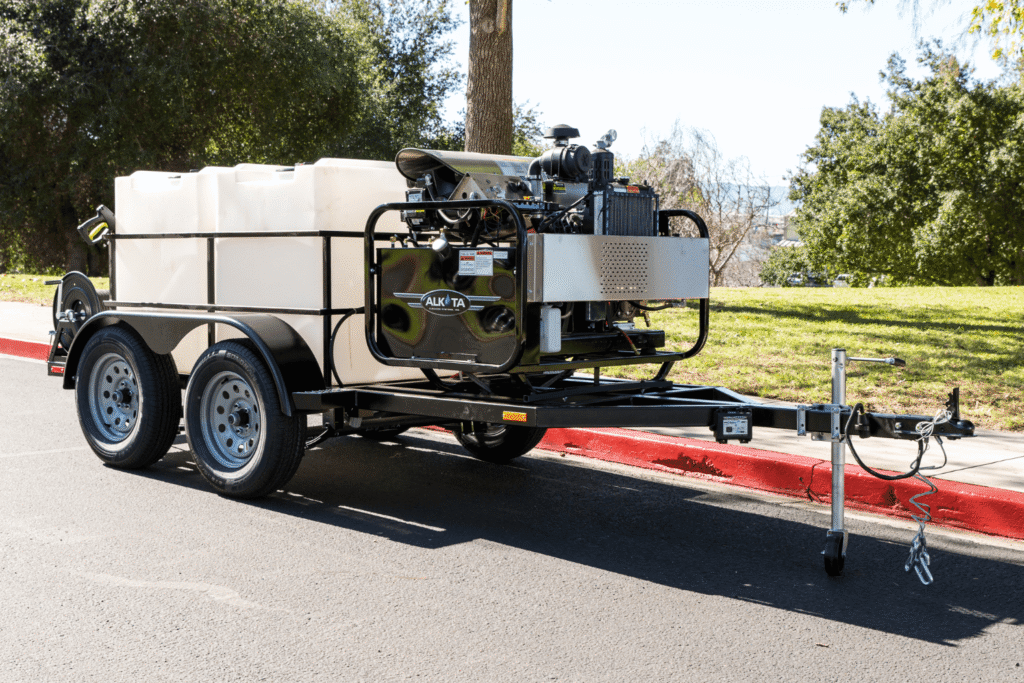
Out of the box, you’re getting:
- 50 ft. high-pressure hose — enough reach to work around most vehicles and structures without repositioning the trailer constantly
- Shut-off gun — full trigger control, so your operators aren’t burning water (or fuel) unnecessarily between surfaces
- 42″ wand — the right length for standing upright while cleaning ground-level surfaces, reducing fatigue on long jobs
- High-pressure chemical metering — inject cleaning agents directly into the pressurized stream for enhanced cleaning power on stubborn grime and grease
- Winterizing valve — because even California gets cold, and this valve lets you drain the system properly to prevent freeze damage during storage or transport
- Stainless steel float tank — corrosion resistance that holds up over years of daily use, not months
- 11-gallon onboard fuel tank — enough to run a full day of operation without hunting for a fuel source mid-job
This is a ready-to-work rig, not a starting point that requires a shopping list of add-ons before it’s actually useful.
Nationwide Delivery: Free US Shipping on All Trailers
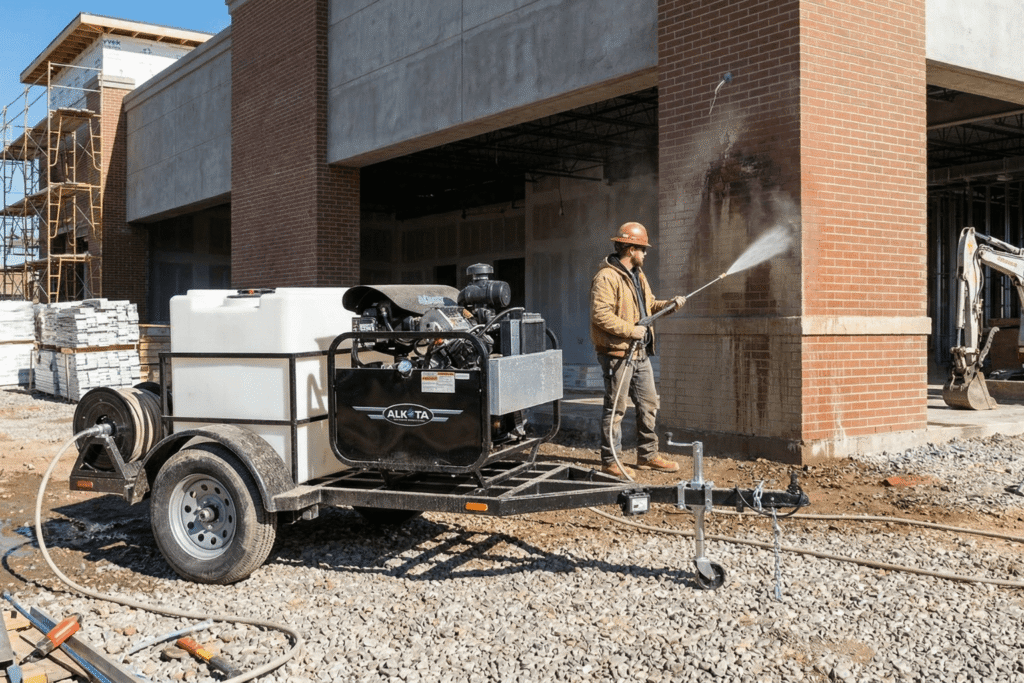
Here’s where we have to pause and appreciate something genuinely remarkable: Free US Shipping on all trailers. We’re not talking about a small package you can toss in a Prime cart. These are heavy-duty, industrial-grade pressure washer trailers — the kind of freight that normally comes with a shipping quote that makes you sit down slowly.
Universal Trailer and American Water Works has eliminated that friction entirely. Whether you’re in Sacramento, San Diego, Fresno, or somewhere out in the Central Valley, your California-certified pressure washer trailer ships to you at zero additional cost. That’s a real, meaningful saving on a major equipment purchase.
In 2026, with freight costs still elevated across the logistics industry, free shipping on heavy equipment isn’t just a nice perk — it’s a competitive advantage that goes straight to your bottom line. A comparable rig shipped through a standard freight carrier could easily add $500–$1,500+ to your total cost. With Universal Trailer, that money stays in your pocket.
The team at Universal Trailer actually knows their product, too. These aren’t call center reps reading from a script — they’re equipment specialists who can help you pick the right tank configuration, walk you through compliance documentation, and make sure your new rig shows up ready to work. No runaround. No “let me check with my manager.” Just straight answers from people who know heavy-duty mobile cleaning systems inside and out.
The Total Cost of Ownership Argument (or: Why Cheap Upfront Gets Expensive Fast)
B2B buyers — especially experienced ones — don’t just look at the sticker price. They look at total cost of ownership. And this is where California-compliant pressure washer trailers from Universal Trailer make a genuinely compelling case.
Think about what non-compliance actually costs over time. Regulatory fines can run $1,000–$10,000+ per violation in California. Equipment that doesn’t meet CARB standards can be ordered off a job site entirely, costing you contract revenue and client relationships. And retrofitting a non-compliant rig to meet California standards — if it’s even possible — rarely comes cheap.
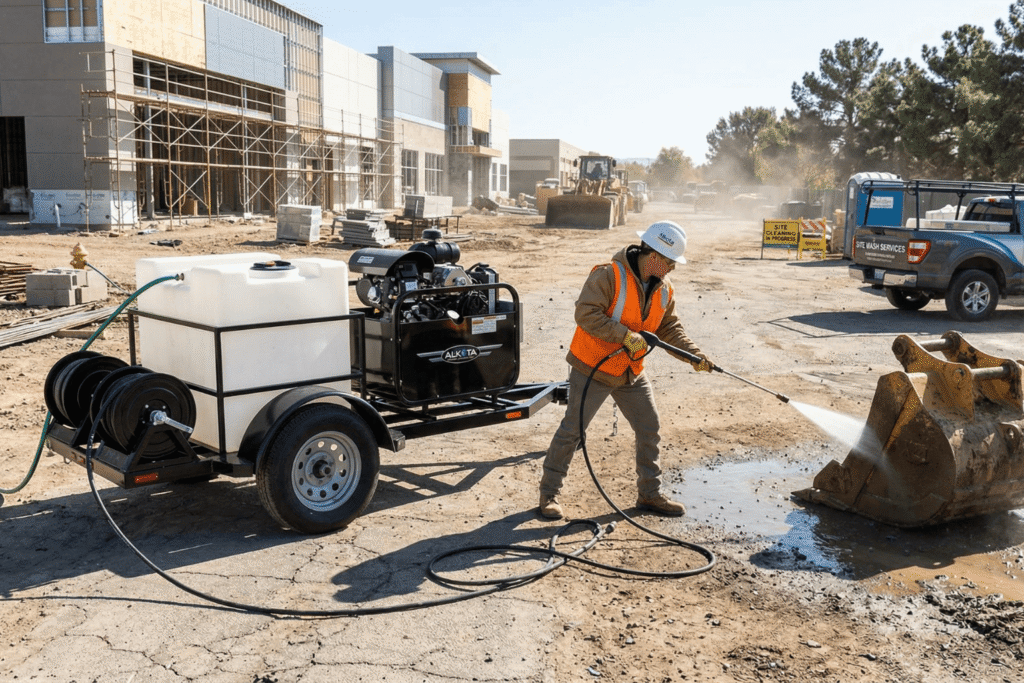
Then there’s equipment longevity. The Alkota DED Series is built with components specifically chosen for long service life. The soft dampening system, the water-cooled Kubota engine, the Schedule 80 heating coil — these are durability choices, not cost-cutting ones. A well-maintained Alkota rig running daily commercial cleaning operations can last a decade or more. Cheap alternatives might need a major rebuild or outright replacement in three to four years.
Add the value of free US shipping — potentially $1,000+ saved on delivery alone — and the math starts looking very different from what the initial price tag might suggest. You’re not just buying a pressure washer trailer. You’re buying long-term reliability, regulatory peace of mind, and the kind of performance that keeps clients calling you back.
Bottom Line
California’s regulations aren’t getting looser anytime soon — and honestly, that’s fine. When you’re running a genuine California-compliant pressure washer trailer from Universal Trailer and American Water Works, compliance isn’t a headache. It’s just Tuesday.
The Alkota DED Series delivers the hot water power, diesel reliability, and industrial-grade durability that serious commercial cleaning operations demand. Three tank configurations, hand-built American craftsmanship going back to 1964, everything you need to hit the ground running included in the package, and free US shipping on every unit. There’s really not a lot left to debate.
Ready to stop worrying about compliance and start getting to work? Visit pressurewashertrailers.com and find the CA-compliant pressure washer trailer that’s built for your business.
We’ve built our reputation on providing turnkey mobile cleaning solutions that work right out of the box. Whether you need a nimble 230-gallon pressure washing rig for residential mobile detailing or a beast-mode 460-gallon custom pressure washer trailer, we’ve got you covered.
And did we mention? Free US Shipping on every unit. No hidden fees, no surprise freight charges. What you see is what you pay.
Browse our complete selection of pressure washer trailers at https://www.pressurewashertrailers.com/shop/ or give us a call. We’re here to help you build a business, not just sell you equipment.
Frequently Asked Questions
Does my pressure washer trailer actually need to be CARB compliant, or is that just for big industrial companies?
It applies to you regardless of your business size. If you’re operating a diesel-powered pressure washer trailer in California — whether you’re a one-truck contractor or a 50-vehicle fleet washing operation — CARB regulations cover your equipment. There’s no “small business exemption” that lets you slide on emissions compliance. The good news is that buying a California-certified pressure washer trailer like the Alkota DED Series means this is already handled before the trailer even leaves the warehouse.
What does "CARB compliant" actually mean for a pressure washer trailer engine?
It means the diesel engine powering your trailer meets California Air Resources Board Tier 4 Final emissions standards — the strictest in the country. Specifically, that means the engine produces significantly lower levels of particulate matter (PM) and nitrogen oxides (NOx) than older or federally-compliant-only engines. The Kubota Z602 in the Alkota DED Series meets these standards, which is exactly why it’s the engine of choice for California operators who don’t want compliance to be their problem.
I found a cheaper trailer online that doesn't mention CARB compliance. Can I just use it in California?
Technically, no — and practically, it’s a very risky gamble. A trailer that doesn’t explicitly state CARB compliance almost certainly doesn’t meet California’s standards. Plenty of rigs sold nationally are built around engines that satisfy federal EPA requirements but fall short of what CARB demands. You might get away with it for a while, but active CARB inspections on commercial job sites are real, and the penalties when you get caught start at $1,000 per day. Saving a few thousand upfront can cost you tens of thousands down the road.
How is 210°F hot water actually better than cold water for commercial cleaning? My current cold-water unit seems fine.
Cold water is great for rinsing. Hot water at 210°F is great for cleaning. The difference is chemistry — heat breaks down the molecular bonds in grease, oil, and biological residue in a way that cold water physically cannot. Think of it like washing greasy dishes: cold water moves the grease around, hot water dissolves it. At 3,500 PSI and 4.7 GPM, you’re combining heat, pressure, and volume into something that makes short work of the kind of grime that defeats cold-water units entirely. If your current cold-water rig seems “fine,” it probably means you haven’t seen what a hot-water system does to the same job.
What's the difference between the three tank configurations? Which one should I buy?
It comes down to job scale and how far you typically are from a water source. The 230-gallon single axle is the nimble option — easier to tow, lower weight, ideal for contractors moving between multiple job sites daily. The 330-gallon tandem axle is the most popular configuration for a reason: it hits the sweet spot between capacity and maneuverability, and the tandem axle gives you better stability under load. The 460-gallon tandem axle is for high-volume operations — large fleet washing contracts, extended concrete cleaning, or any job where running back for water is just not acceptable. When in doubt, go with the 330. Most commercial operators find it covers the vast majority of their work.
Why does the "soft dampening system" matter? That sounds like marketing fluff.
It’s actually one of the more important engineering details on the trailer, and it’s worth understanding. Diesel engines and high-pressure pumps generate significant vibration during operation. Without dampening, that vibration transmits directly into the pump and the heating coil — two of the most expensive components on the rig. Over time, that stress causes micro-fractures, loosened fittings, and premature wear. The soft dampening system absorbs that vibration before it reaches the critical components, which meaningfully extends service life. On a piece of equipment you’re running hard every day, that’s the difference between a pump that lasts three years and one that lasts eight. Not fluff — real money.
Is free shipping actually free, or are there hidden fees when the trailer arrives?
It’s actually free. Universal Trailer offers free US shipping on all trailers — no fuel surcharges, no liftgate fees, no “residential delivery” add-ons buried in the fine print. For heavy freight of this type, that’s genuinely unusual and represents real savings. Comparable equipment shipped through standard freight carriers commonly adds $500–$1,500+ to the total cost. With Universal Trailer, the price you see is the price you pay, delivered to your location.
How long does delivery take, and what should I expect when the trailer arrives?
Delivery timelines vary by location and current inventory, so the best move is to contact the team at Universal Trailer directly to get an accurate lead time for your area. What you can expect when it arrives: a ready-to-work rig. The Alkota DED Series ships with the 50 ft. hose, shut-off gun, and 42″ wand already included, so you’re not waiting on additional parts before you can get to your first job. Connect your water supply, fuel up, and you’re working.
Can I use this trailer in other states besides California?
Absolutely — and this is actually a selling point that doesn’t get enough attention. A California-certified pressure washer trailer meets the strictest emissions standards in the country. Every other state’s regulations are less stringent than California’s, which means if it’s compliant here, it’s compliant everywhere. If your operation ever expands beyond California, or if you take contracts in neighboring states, your Alkota DED Series trailer goes with you without any compliance headaches. Buy to California’s standard once, and you’re covered nationwide.
What kind of maintenance does the Alkota DED Series require?
The Kubota Z602 diesel engine follows a standard commercial diesel maintenance schedule — regular oil changes, filter replacements, and coolant checks. The GP Triplex plunger pump benefits from routine packing and valve inspections, especially in high-use commercial environments. The winterizing valve is there for a reason — properly draining the system before storage or during cold snaps prevents freeze damage and extends the life of the coil and pump significantly. Universal Trailer’s team can walk you through the specific maintenance intervals and what to watch for during regular operation. The bottom line: this is a well-engineered piece of equipment that rewards basic, consistent maintenance with a long service life.
Disclaimer: Equipment specifications and performance capabilities may vary based on specific configurations and operating conditions. Professional consultation is recommended for custom applications and specialized requirements. Regulatory compliance requirements vary by location and application – consult local authorities for specific permit and operational requirements.