

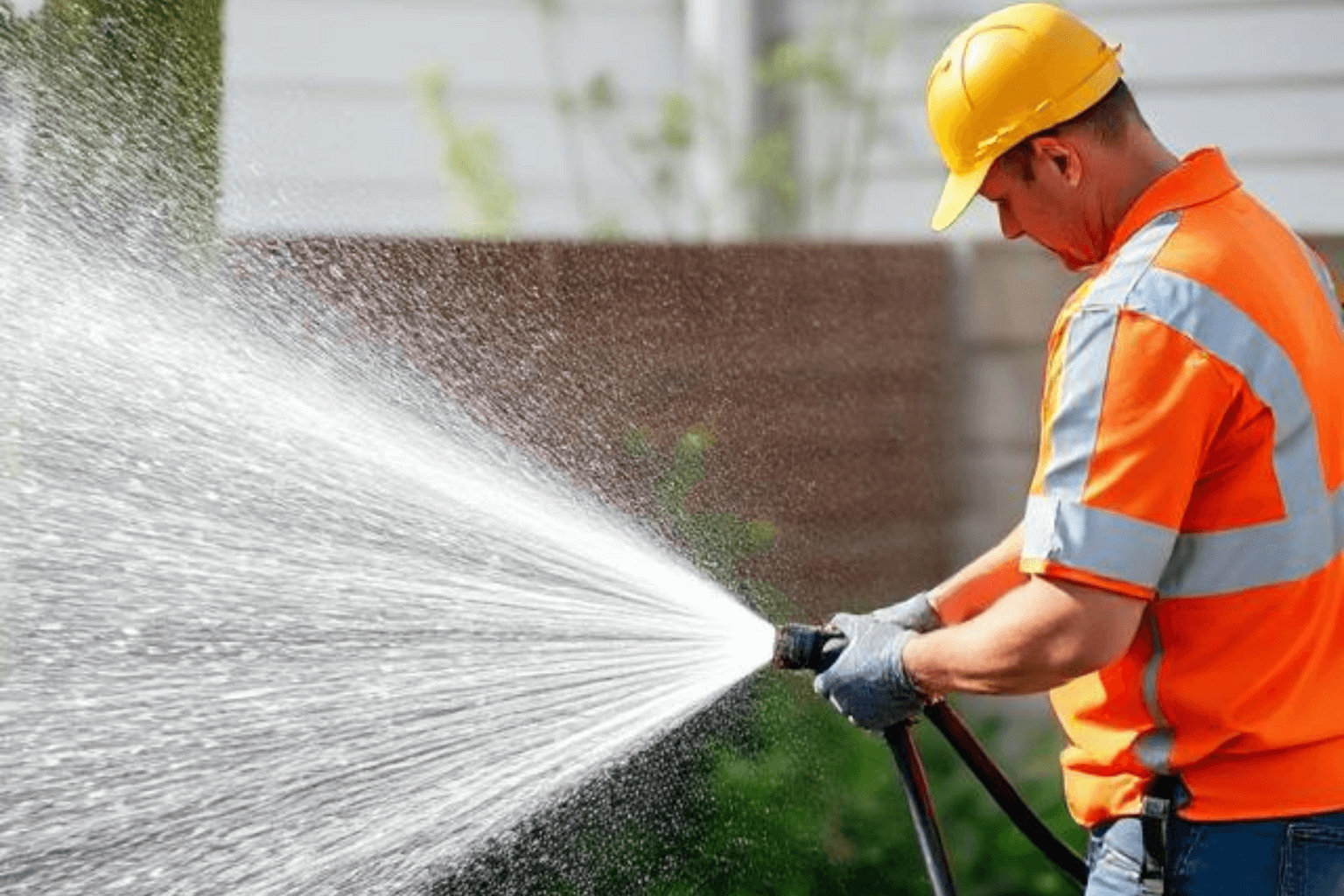
TLDR: Need a powerful, mobile heated pressure washer? Universal Trailer and American Water Works build custom, high-GPM, diesel-heated trailer systems for industrial, commercial, and remote cleaning. Featuring Alkota and American Water Works AWW Skid models.
Look, if you’ve ever tried to blast grease off heavy equipment with cold water, you already know the struggle. You’re out there for hours, burning through fuel, and the grime just laughs at you. But here’s the thing—hot water changes everything. And when we’re talking about commercial operations, a heated pressure washer isn’t just nice to have. It’s basically essential.
Whether you’re running a fleet maintenance operation, managing municipal cleaning contracts, or tackling construction site cleanup across California, you need cleaning power that goes where you do. That means combining a serious heated pressure washer with a custom trailer setup that turns your rig into a mobile powerhouse.
Let’s talk about why hot water matters, what specs actually count, and which models deliver the goods when you need industrial-grade performance.
TABLE OF CONTENTS
Why Hot Water is Non-Negotiable for Industrial Cleaning
Here’s the deal: cold water pressure washers are fine for knocking dirt off a driveway. But when you’re dealing with oil, grease, food residue, or basically anything sticky? Cold water just pushes it around.
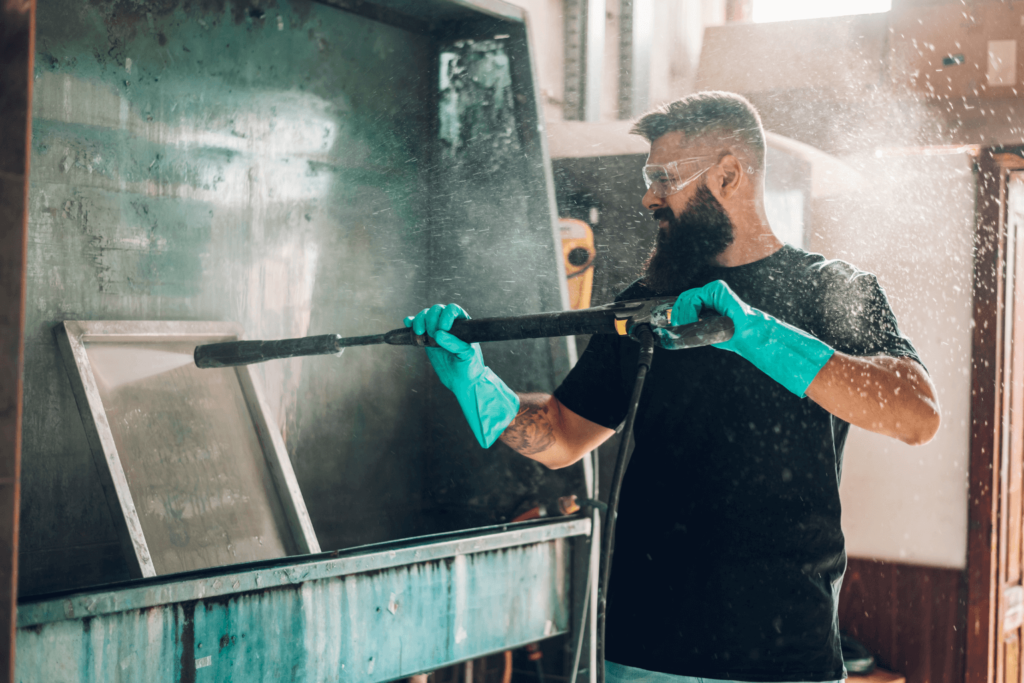
Hot water pressure washers dominate the commercial market with a 73.4% share because they excel at breaking down stubborn grime, grease, and oil—the exact stuff you’re dealing with on job sites. The heat doesn’t just rinse; it actually dissolves the molecular bonds in oils and fats. Think of it like washing dishes: you wouldn’t use cold water for that crusty lasagna pan, right? Same principle, bigger scale.
The industrial hot water pressure washer market is valued at $1.2 billion and growing at 8.5% annually through 2033, which tells you something important—serious operators know this equipment pays for itself. Hot water models deliver faster cleaning cycles and reduced need for detergents, contributing to long-term operational cost savings.
The Science Behind the Spray
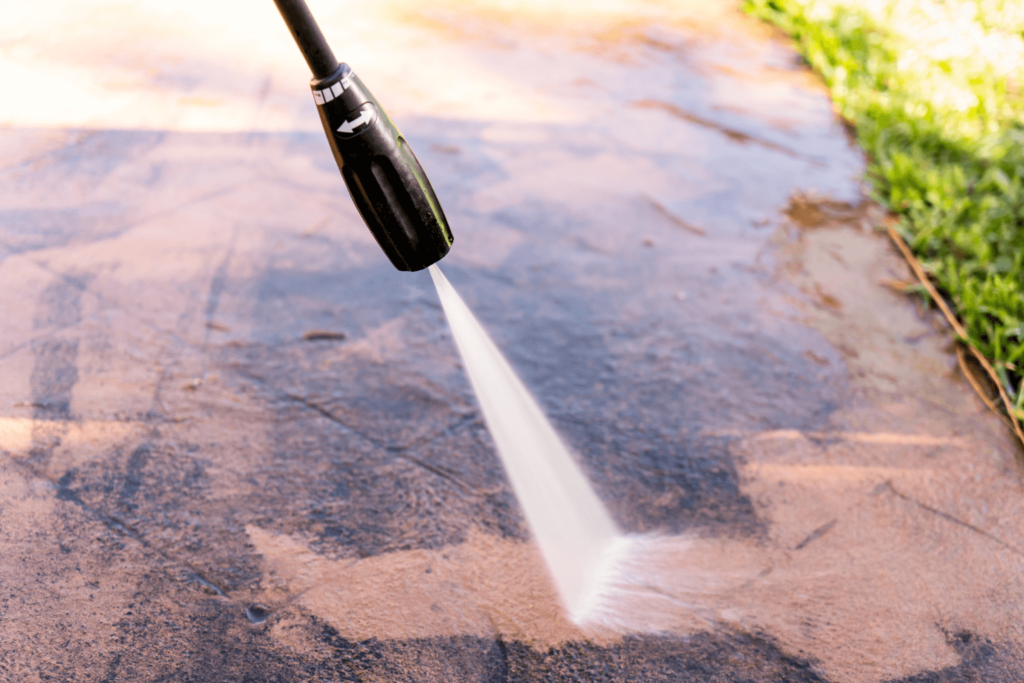
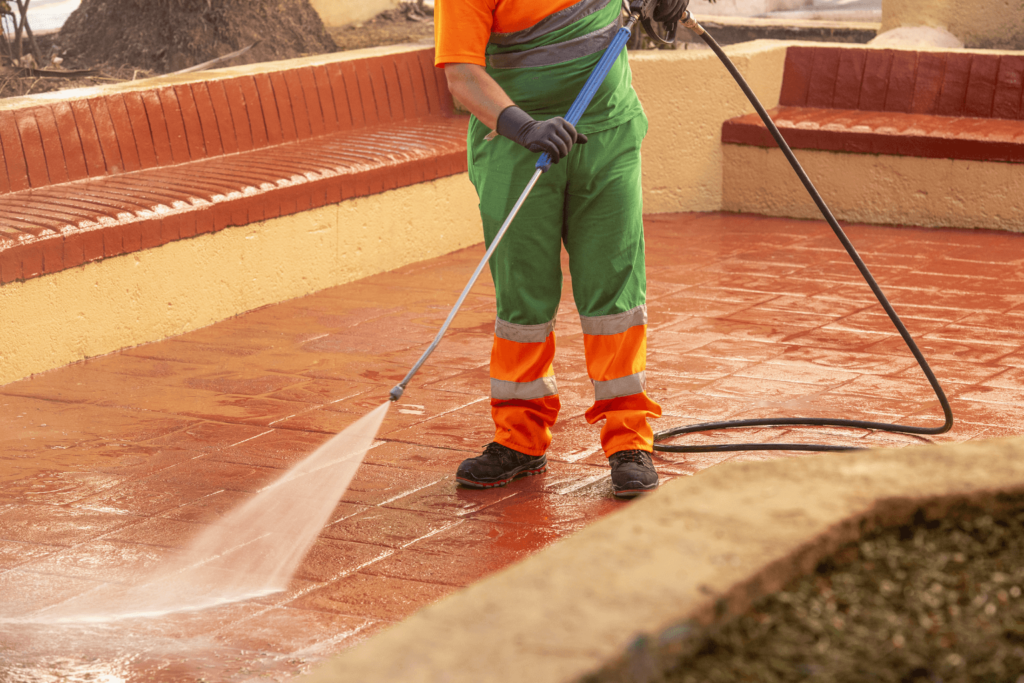
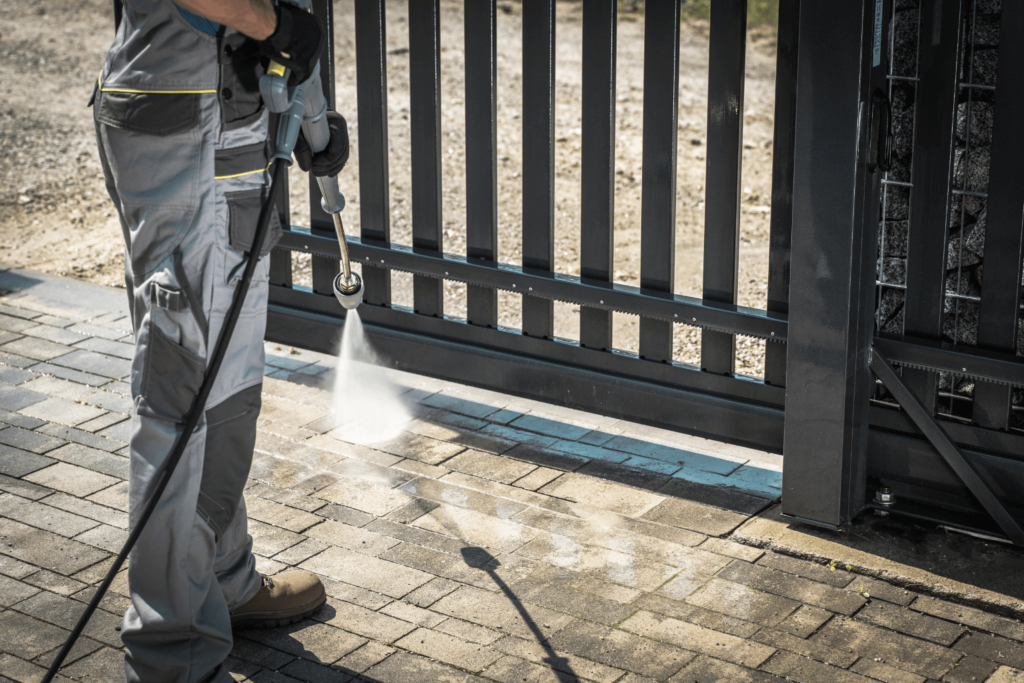
A quality heated pressure washer hits temperatures between 200-300°F. At those temps, you’re not just blasting—you’re sanitizing. Food processing facilities love this because it knocks out bacteria. Construction crews appreciate it because it melts away asphalt residue. Municipal teams use it for everything from gum removal to graffiti cleanup.
The combination of heat, pressure, and flow rate (we’ll get to GPM in a sec) creates what pros call the “cleaning triangle.” Remove any one element, and your efficiency tanks.
Understanding GPM vs. PSI: What Actually Matters
Okay, time for some real talk about specs. Everyone obsesses over PSI (pounds per square inch), but here’s what most people miss: GPM (gallons per minute) is often more important for commercial work.
PSI is your impact force—how hard the water hits. GPM is your flow rate—how much water you’re moving. For heavy-duty cleaning, you want both working together.
Think of it this way: PSI is like having a strong punch, but GPM is how fast you can throw punches. A 4,000 PSI machine at 2 GPM will take forever to clean a large area. But an 8 GPM machine at 3,000 PSI? That’s moving serious water volume, and you’ll cover way more ground.
The Five Critical Specs to Compare
When you’re shopping for a commercial heated pressure washer, here’s what separates the pros from the pretenders:
- GPM rating (5-8+ for commercial work) – This is your productivity number. Higher flow means you’re pushing more heated water through, which translates to faster cleaning times and better coverage on large surfaces.
- PSI output (3,000-4,000+ for industrial applications) – You need enough punch to dislodge caked-on material, but going over 4,000 PSI can actually damage some surfaces. Match your PSI to your typical jobs.
- Temperature rise capability – A solid commercial unit should deliver a 90°F+ temperature rise over incoming water. This usually requires a burner system rated at 400,000+ BTU.
- Pump type and warranty – Belt-drive triplex pumps are the gold standard. They run cooler, last longer, and most quality units come with 7-year warranties (more on this in a bit).
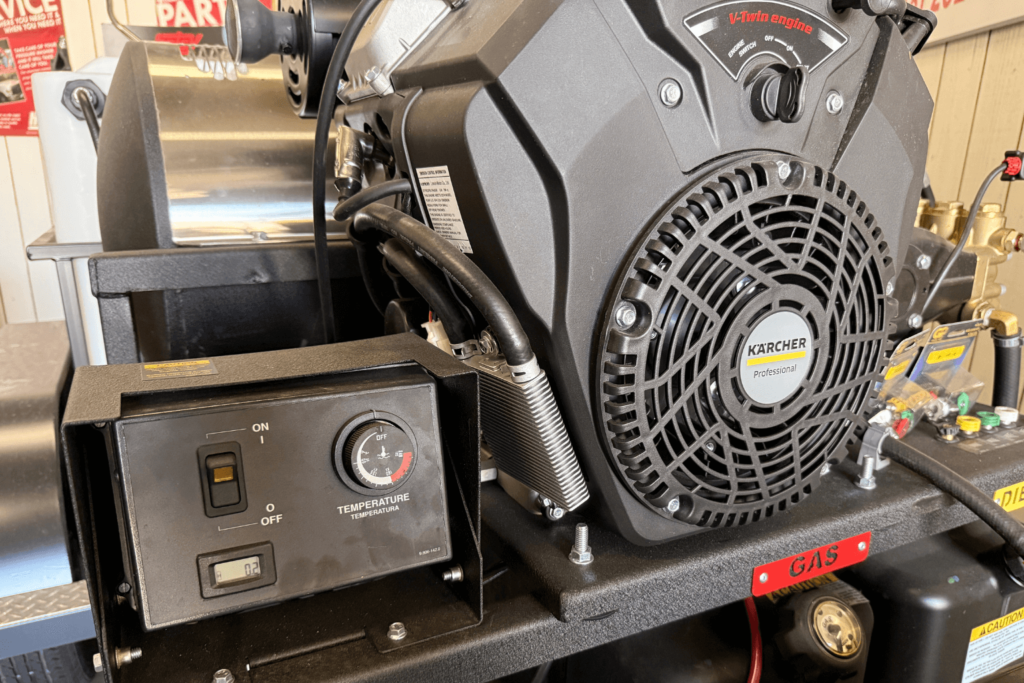
- Engine reliability – You want recognizable names like Honda, Vanguard, or Kärcher. These engines are built for continuous duty cycles and typically include multi-year warranties.
The Four Main Applications That Require a Hot Water Power Washer
Let’s get specific about where a heated pressure washer earns its keep:
- Oil and Grease Removal – Fleet maintenance, equipment yards, and industrial facilities deal with petroleum-based gunk constantly. Cold water barely touches it. Hot water with the right detergent? Game changer. You’ll clean a full truck fleet in half the time.
- Food Service and Sanitation – Restaurant exhaust systems, food processing equipment, commercial kitchens—all of this needs sanitizing-level heat. Health departments love seeing actual temperature readings because it proves you’re not just rinsing, you’re disinfecting.
- Construction Site Cleanup – Concrete forms, heavy machinery, asphalt equipment—construction debris is stubborn. The combination of mud, fuel, hydraulic fluid, and who-knows-what-else requires serious heat and pressure to remove properly.
- Municipal and Government Contracts – City maintenance crews handle everything from sidewalk gum removal to graffiti cleanup to park facility maintenance. A mobile heated pressure washer trailer gives them the flexibility to tackle diverse jobs without hauling buckets of chemical cleaners everywhere.
Meet the Beasts: The Best Commercial-Grade Heated Pressure Washer Models in 2026
Alright, let’s talk hardware. When you’re investing in a commercial heated pressure washer, you want something that’ll survive years of job site abuse. Here are two solid options that deliver the goods:
ALKOTA 8355HNL: The Narrow-Frame Powerhouse
The 8355HNL is perfect if you’re working in tight spaces or need to squeeze your setup onto a smaller trailer.
Key Specs:
- 8 GPM @ 3,500 PSI – That’s a serious flow rate for commercial operations
- Honda GX690 engine with electric start – Reliable as gravity, and you’re not yanking a pull cord in January
- 90°F temperature rise capability
- 158-foot Schedule 80 coil for consistent heat delivery
- Hydro-insulated coil design for user safety and heat retention
- 7-year coil warranty
The narrow frame design (just 22.25 inches wide in stationary mode, 31.25 inches with wheels) is a huge advantage if you’re mounting on a van or smaller trailer. You get all the power of a full-size unit but can actually maneuver through narrow doorways or tight job sites.
The hydro-insulated coil provides user safety as well as money-saving performance, which is engineer-speak for “this thing won’t burn you, and it’ll hold heat better so you’re not constantly reheating water.”
What really stands out: Alkota backs this with a 7-year coil warranty, which is basically them saying “we built this to last.” The belt-drive triplex ceramic plunger pump is designed for longevity, and Alkota’s Soft Damping System protects the coil, pump, and high-pressure components from the kind of vibration damage that kills lesser machines.
Plus, it comes with a 50-foot industrial hose with swivel end and bend restrictor, professional-grade insulated trigger gun, and insulated wand—all the stuff you’d have to buy separately with cheaper units.
Best for: Contractors who need maximum power in minimum space, especially for van mounting or facilities with access restrictions.
"The quality of the Alkota 8355HNL is excellent. Knowing we have a 7-year warranty on the hydro-insulated coil gives us peace of mind. This heated pressure washer is built tough to last."
Tom K., Industrial Services
AWW-HDS 8030E: The High-Flow Trailer Champion
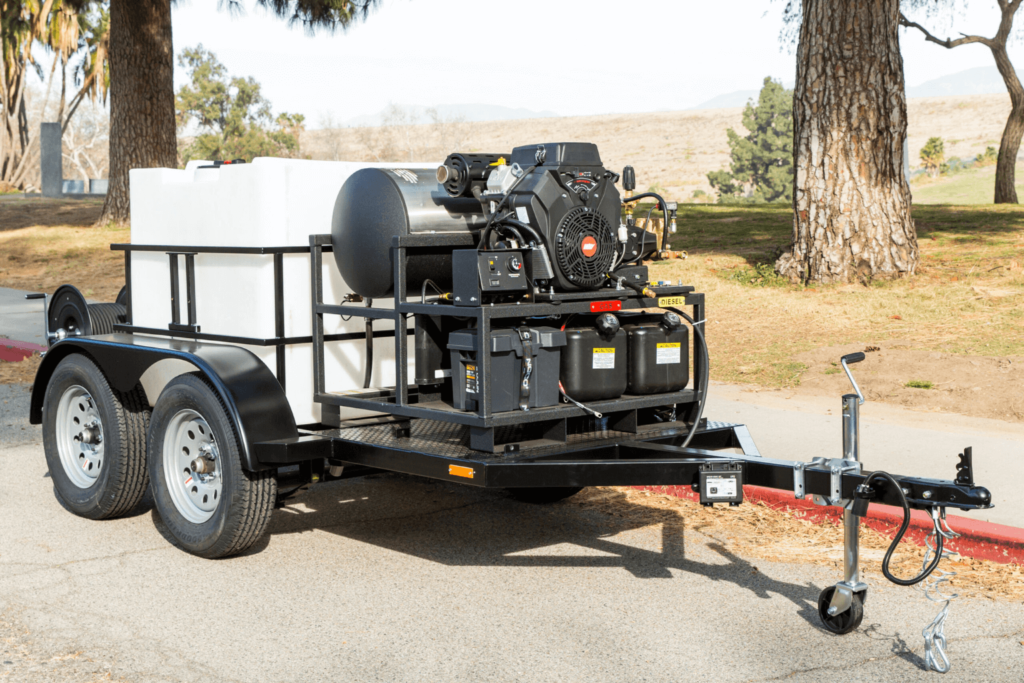
When you need to move a large amount of water and are building a dedicated pressure washing rig, the AWW-HDS 8030E is your answer.
Key Specs:
- 8.0 GPM @ 3,000 PSI – Maximum flow rate for covering large areas fast
- 25 HP Kärcher V-twin engine with 4-year warranty – More displacement, more torque, longer runtime
- Electric start with 12V burner auto-ignition
- Belt-drive T-Series triplex pump with 7-year warranty
- Thermostatic burner control for consistent temperature
- 10-gallon gas and diesel tanks for extended operation
- Stainless-steel coil wrap for durability and heat retention
- Built-in hour meter to track maintenance intervals
The AWW Skid Series is specifically designed to be a truck or trailer-mounted pressure washer, making it ideal for cleaning on the go. This isn’t a “sometimes mobile” unit—it’s engineered from the ground up for life on a trailer.
The entire AWW Skid Series features belt-drive triplex pumps with 7-year warranties and electric start engines, which means you’re getting pro-grade components throughout. These units are certified to UL and CSA safety standards, so you’re not just getting power—you’re getting equipment that meets official safety requirements for commercial use.
The thermostatic burner control is clutch here. Instead of guessing at your water temperature, the system automatically maintains consistent heat output. You set your desired temp, and the burner cycles to keep you right there. No more scalding hot one minute, lukewarm the next.
Best for: Fleet operations, municipal contracts, and commercial cleaning services that need maximum productivity and all-day operation without refueling stops.
"The GPM and PSI on our new heated pressure washer skid (AWW-HDS8030E) is unmatched. It cuts our cleaning time in half for our fleet and handles heavy grease with ease. A real workhorse."
Mike S., Commercial Fleet Manager
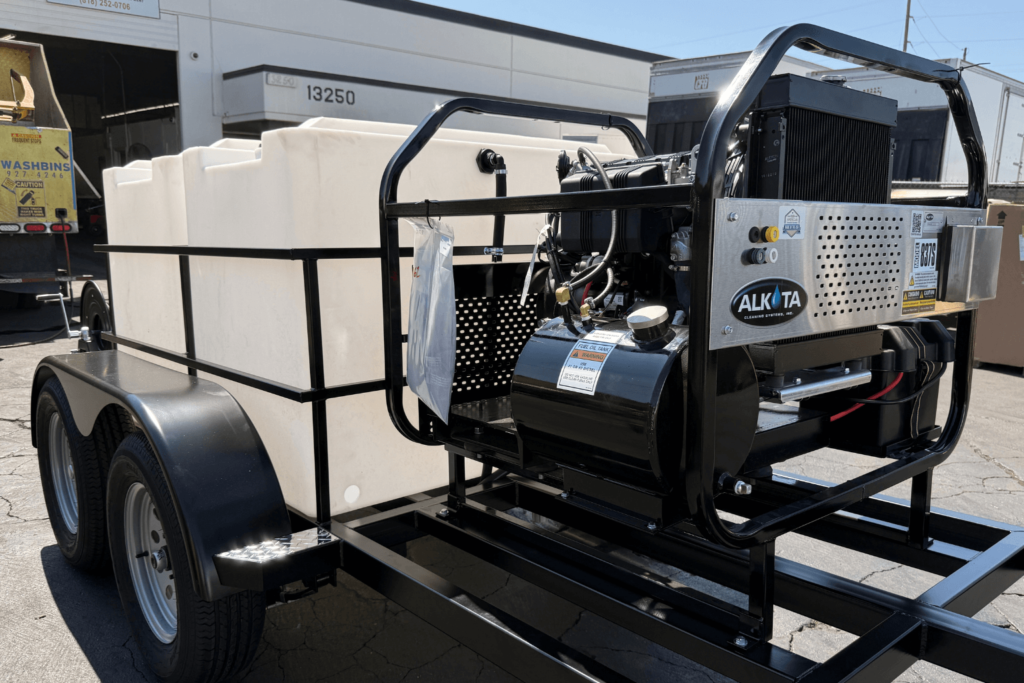
Comparing Alkota HNL vs. AWW Skid Series: Which One's Right for You?
Both are solid choices, but your specific needs will determine the winner.
Choose the Alkota 8355HNL if:
- You need a narrow footprint for van mounting or tight spaces
- You value the Honda GX690’s legendary reliability
- You’re working in facilities with doorway restrictions
- You prefer a slightly higher PSI rating (3,500 vs 3,000)
Choose the AWW-HDS 8030E if:
- You’re building a dedicated trailer system
- You want maximum GPM for large-area cleaning
- You need an extended runtime with larger fuel tanks
- You’re outfitting multiple units and want standardized specs
Honestly? Both deliver. The 8355HNL is your precision tool for tighter operations. The AWW is your workhorse for volume cleaning. Can’t go wrong either way.
Maximizing Mobility: How Custom Trailers Turn Your Heated Pressure Washer into a Mobile Powerhouse
Here’s where things get really interesting. A stationary heated pressure washer is great if you never leave your shop. But most commercial operations need to go where the work is—and that means putting your unit on wheels.
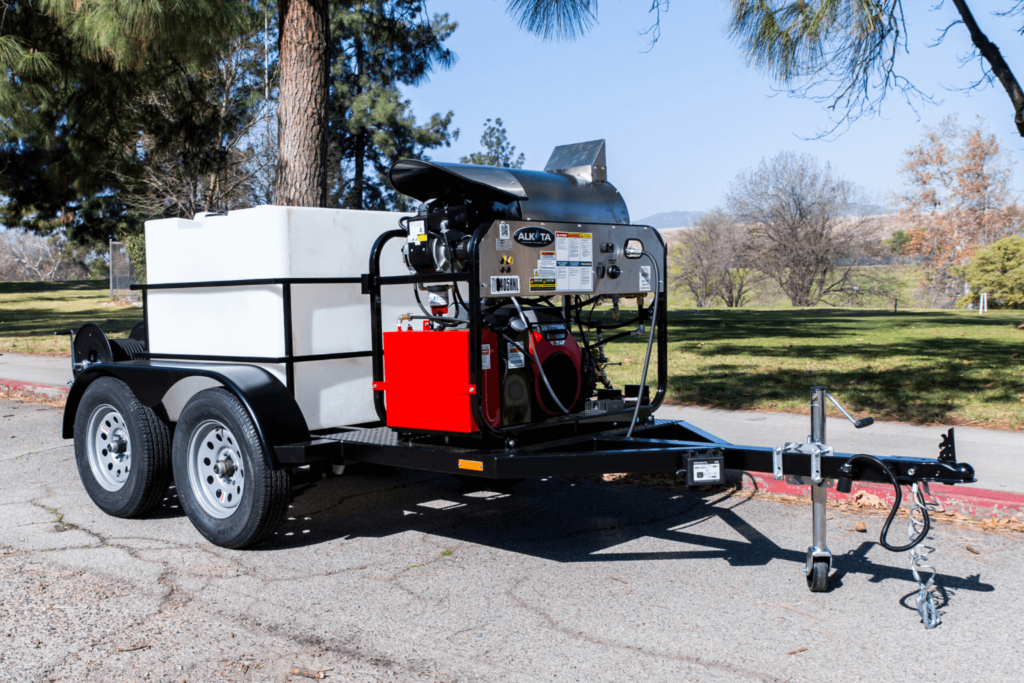
Universal Trailer and American Water Works provides custom trailers that combine powerful hot water pressure washers with features including single or double axles, water tanks, hose reels, and toolboxes.
This isn’t just bolting a washer to a flatbed. A proper custom trailer gives you:
The Complete Mobile Solution
Custom trailers feature all-sided welded tubular steel construction with aluminum diamond plate step, black powder-coated finish, 2-inch ball hitch, easy swing jack, and 3500-pound drop axles. These aren’t lightweight utility trailers—they’re built specifically to handle the weight and vibration of a running pressure washer plus a full water tank.
Trailer packages include high-pressure connection hoses, supply hose with filter, dual hose reels, easy dump valve, and gun and wand holders. Everything has a place, everything’s accessible, and you’re not wrestling with tangled hoses or hunting for your wand.
Water Tank Integration – This is huge for remote sites. Add a 200-500 gallon water tank to your trailer, and you can operate completely independently. No need to hunt down a water source or beg the foreman to let you tap into the site’s supply. Show up, fire up, get to work.
Dual Hose Reels – One for your pressure hose, one for your supply/discharge. Keeps everything organized and protected during transport. Plus, motorized reels save your back at the end of a long day.
Built-In Storage – Toolboxes for nozzles, detergent injection systems, spare fittings—keep your whole operation self-contained.
"American Water Works designed the perfect custom trailer solution for us. The heated pressure washer is mounted securely with a water tank and dual hose reels. Now we can take our cleaning power to any remote job site."
Jane R., Municipal Contractor
These trailer and tank combinations give you the power to take on any size job, anywhere—remote worksites, mines, around the ranch, construction sites, shipyards, municipalities, and food service locations.
Why Diesel Heated Beats Everything Else for Commercial Work
Quick sidebar: you’ll see some electric-heated units out there. They work, but here’s why diesel-heated systems dominate commercial applications:
Power Output – Electric heaters typically max out around 180,000 BTU. Diesel burners like the one in the 8355HNL deliver 550,000 BTU, which means you’re heating water way faster and maintaining temperature even at high flow rates.
Runtime – Electric units need a fat power supply—we’re talking 230V/3-phase in many cases. Diesel runs off its own tank and a 12V battery for ignition. You’re truly independent.
Fuel Efficiency – A quality diesel burner consumes around 4 gallons per hour, and you can run all day on a standard fuel tank. Try running an electric heater for eight hours at a remote site with no power hookup. Yeah, doesn’t work.
Temperature Consistency – Diesel burners use thermostatic controls to maintain exact temperatures. Electric elements fluctuate more, especially when you’re drawing high amperage through long extension cords.
For serious commercial work, diesel-heated is the way. Period.
The Real Cost of Ownership: Warranties Matter
Look, nobody wants to talk about warranties until they need one. But when you’re dropping serious money on a heated pressure washer, the coverage matters.
Both the AWW Skid Series and Alkota models feature belt-drive triplex pumps with 7-year warranties. That’s not a typo—seven years. Compare that to cheap direct-drive pumps with 1-2 year warranties, and you see the difference.
The AWW engines carry warranties ranging from 3-4 years depending on model—the 18HP Vanguard gets 3 years, the 25HP V-Twin gets 4 years. The Alkota 8355HNL runs a Honda GX690 with electric start, and Honda’s commercial engine warranties are rock-solid.
Why does this matter? Because downtime costs money. A machine that’s in the shop is a machine that’s not earning. Extended warranties mean the manufacturer is confident in their components—and you can be too.
Essential Accessories That Make Your Heated Pressure Washer More Effective
Don’t forget the supporting cast. American Water Works offers a complete lineup including surface cleaners, foamers, detergents, dependable hoses, telescoping wands, and hose reels for safety and convenience.

Surface Cleaners – For large flat areas like parking lots or warehouse floors, a surface cleaner attachment is a game-changer. It’s basically a spinning bar under a hood that keeps the spray contained while covering 2-4 times the area of a wand.
Foaming Equipment – Pre-treating surfaces with foamed detergent before hot water washing dramatically improves results on heavy grease. The foam clings to vertical surfaces and gives chemicals time to work.
Detergent Injection Systems – Professional units include both high-pressure and precisely metered chemical injection, letting you adjust soap concentration on the fly.
Variable Nozzles – Different jobs need different spray patterns. Keep a set of quick-connect nozzles (0°, 15°, 25°, 40°, soap) in your toolbox.
Real-World Performance: What to Expect from Your Heated Pressure Washer
Let’s get practical. What does 8 GPM @ 3,500 PSI actually mean in terms of getting work done?
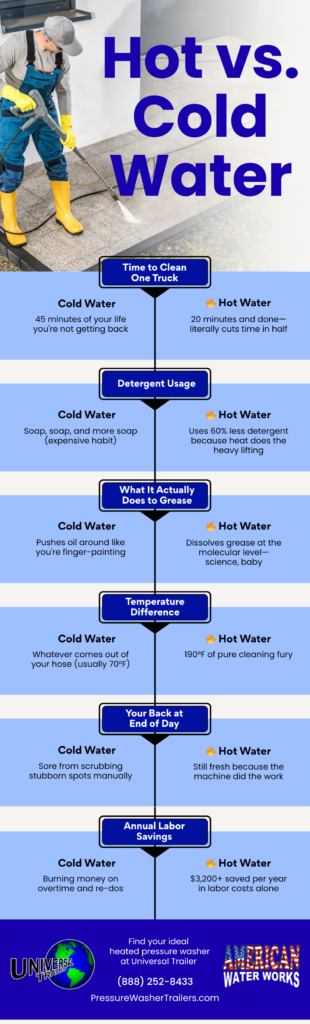
Fleet Washing – A commercial semi-truck that takes 45 minutes with a cold water unit? With a proper heated pressure washer, you’re looking at 20-25 minutes, and you’re getting it way cleaner. The road grime, diesel soot, and bug splatter just melt away.
Equipment Cleaning – Construction machinery caked in mud and hydraulic fluid that would take an hour or more to clean? Hot water cuts that time in half, minimum. You’re not scrubbing—you’re actually dissolving the contaminants.
Food Processing – Sanitizing large stainless steel surfaces where cold water just doesn’t cut it? High-temperature washing (200°F+) not only cleans but actively kills bacteria. That’s the difference between passing and failing health inspections.
Concrete and Masonry – Removing oil stains from concrete parking lots is virtually impossible with cold water alone. Hot water opens the concrete’s pores and pulls the oil out. It’s basically magic.
Making the Investment: What a Commercial Heated Pressure Washer Actually Costs
Let’s address the elephant in the room: quality heated pressure washers aren’t cheap. You’re looking at anywhere from $8,000 to $15,000+ for a commercial-grade unit, and custom trailer packages can push the total investment to $20,000-30,000.
But here’s the thing: this equipment pays for itself if you’re running a legitimate commercial operation. With annual spending on home improvements and maintenance expected to reach $466 billion through mid-2025, and the global pressure washer market growing at 4.8-5.4% annually, the demand for professional cleaning services keeps climbing.
Do the math on your current operations:
- How much time do you waste with inadequate equipment?
- How many jobs could you take if you had mobile capability?
- What’s the cost of callbacks because cold water didn’t get the job done right?
Most contractors find their heated pressure washer trailer setup pays for itself in 12-18 months of steady work. After that? Pure profit improvement.
Why California Operators Need Universal Trailer and American Water Works
If you’re operating in California, you’ve got specific challenges: water restrictions, environmental regulations, diverse job sites from beach cities to mountain communities, and customers who expect professional results.
Universal Trailer and American Water Works at https://www.pressurewashertrailers.com/ specializes in custom, turnkey mobile cleaning solutions. They’re not just selling you a pressure washer—they’re building you a complete business solution.
Their team understands California’s requirements. They know which configurations work best for municipal contracts. They can recommend the right fuel capacity for your typical job radius. And they stand behind their work with those industry-leading warranties we talked about.
When we say American Water Works goes the distance, we really mean it—they provide an entirely mobile cleaning solution with custom trailers that go anywhere you need to clean.
Final Thoughts: Invest in the Right Tool for the Job
Look, you wouldn’t show up to frame a house with a finishing hammer. And you shouldn’t tackle commercial cleaning with residential-grade equipment.
A quality heated pressure washer—whether it’s the narrow-frame Alkota 8355HNL or the high-flow AWW-HDS 8030E—combined with a proper custom trailer setup isn’t an expense. It’s an investment in doing the job right, doing it fast, and doing it profitably.
The market’s growing. Industrial hot water pressure washers are seeing 8.5% annual growth, which means competition’s getting stiffer and customers are getting more sophisticated. They can tell the difference between someone with pro equipment and someone making do with whatever.
You want to be the operator who shows up with a self-contained, powerful, mobile cleaning system that can handle anything the job throws at you. That’s the difference between grinding out a living and building a real business.
Ready to take your operation to the next level? Contact Universal Trailer and American Water Works to discuss your specific needs. They’ll help you configure the perfect heated pressure washer trailer package for your applications.
Because at the end of the day, powerful cleaning where you need it isn’t just a slogan—it’s what separates the pros from everyone else.
Frequently Asked Questions
What's the real difference between hot and cold water pressure washers?
Hot water breaks down grease and oil. Cold water just pushes it around. If you’re cleaning anything with petroleum-based gunk—fleet vehicles, kitchen equipment, construction machinery—hot water cuts through it 40% faster and uses way less detergent.
Is GPM or PSI more important for commercial work?
GPM wins for most commercial jobs. Here’s the quick breakdown:
- High PSI (3,000-4,000) = Impact force for stuck-on grime
- High GPM (5-8+) = Coverage speed and rinsing power
- Both together = Maximum productivity
For large areas and heavy grease, prioritize GPM. You’ll cover more ground, faster.
Why choose belt-drive over direct-drive pumps?
Belt-drive pumps last 3-5x longer. They run cooler, quieter, and absorb vibration that kills direct-drive pumps. If you’re using your machine 30+ hours weekly, belt-drive with a 7-year warranty (like the Alkota and AWW models) is the only way to go.
Can I leave my heated pressure washer idling?
Nope—never more than 1-3 minutes. Water circulating in bypass mode heats up fast and can fry your pump seals. Taking a phone call? Shut it down. Your pump will thank you.
What maintenance does a heated pressure washer need?
Basic maintenance schedule:
- Change oil after first 5 hours, then every 50 hours
- Check and clean filters monthly
- Run pump antifreeze before winter storage
- Replace water seals around 2,000 hours
Both the AWW and Alkota units include hour meters to track service intervals. Keep up with maintenance and these machines will run for decades.
Is a mobile trailer system worth the investment?
If you’re doing commercial work? Absolutely. A custom trailer with water tank and dual hose reels means you can work anywhere—no hunting for water sources or power. Most contractors find their trailer setup pays for itself in 12-18 months through expanded job capabilities.
Disclaimer: Equipment specifications and performance capabilities may vary based on specific configurations and operating conditions. Professional consultation is recommended for custom applications and specialized requirements. Regulatory compliance requirements vary by location and application – consult local authorities for specific permit and operational requirements.