
AI Summary
- Industrial Power: Engineered around commercial-grade heavy duty pressure washer units designed for continuous, rugged operation
- Custom Tank Capacities: Available in versatile 230-gallon, 330-gallon, and high-capacity 460-gallon water tank configurations
- Strict Compliance: Offering specialized, custom-built California-compliant heavy-duty trailers that meet stringent environmental laws
- Tailored Engineering: 100% custom-built options allow you to choose your exact engine, pump, hose reel, and frame layout
- Nationwide Value: Enjoy absolute free shipping across the United States, direct from our production facility to your job site.
TABLE OF CONTENTS
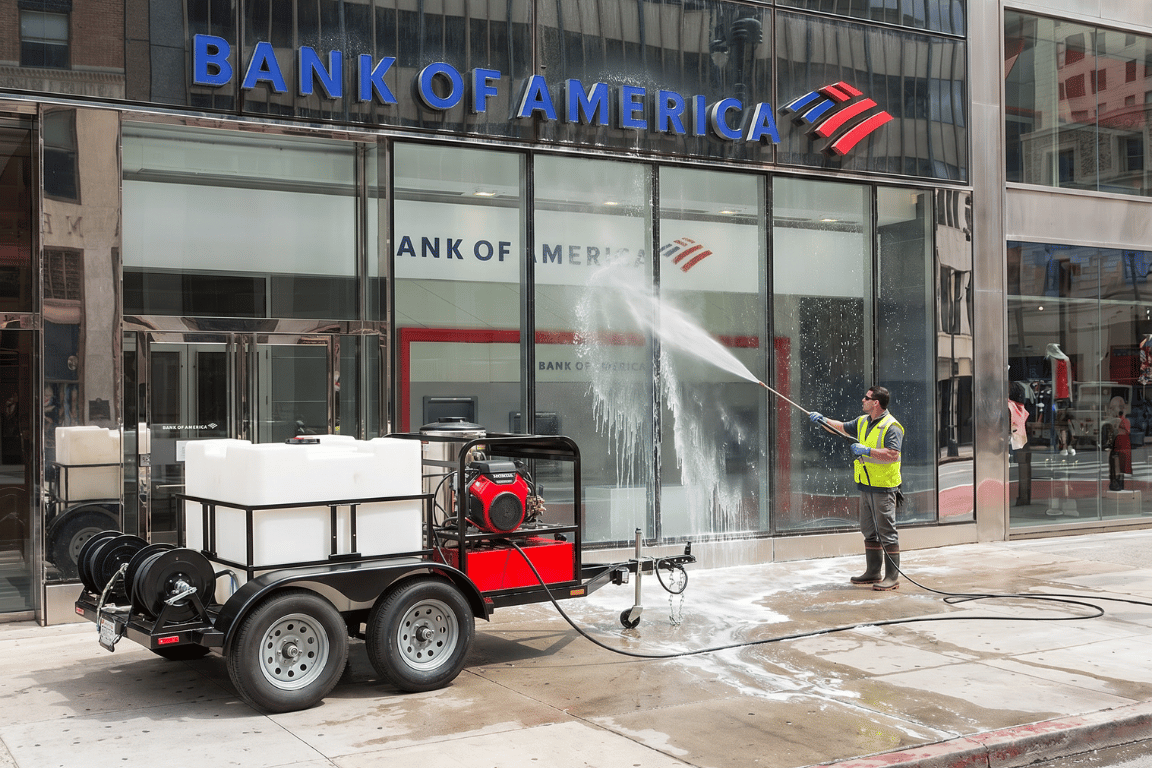
If you’ve spent any time in the commercial cleaning, construction, or property management industry, you already know that not all pressure washers are built the same. A residential box-store machine might impress a homeowner washing a driveway on a Saturday morning. But put that same machine through eight hours of daily fleet washing, graffiti removal, or industrial degreasing — and it will fail you within weeks.
That’s where a true commercial heavy duty pressure washer trailer rig changes everything.
At Universal Trailer and American Water Works, we engineer trailer rigs that are built to work as hard as you do. With nationwide free shipping, multiple water tank configurations, and fully custom California-compliant builds available at pressurewashertrailers.com, we’ve become the go-to source for professional operators who can’t afford to have their equipment fail on the job. This guide breaks down everything you need to know before you invest in your next rig.
The Anatomy of an Industrial-Grade Heavy Duty Pressure Washer
Walk into any big-box home improvement store and you’ll find machines labeled “heavy duty.” Don’t be fooled. True commercial-grade equipment is built around an entirely different engineering philosophy — one where longevity and continuous-use performance take absolute priority over price point.
PSI vs. GPM: Understanding What Actually Matters
Most buyers fixate on PSI (pounds per square inch) because the number is big and the marketing is loud. But experienced commercial operators know the real metric is GPM — Gallons Per Minute. Here’s why:
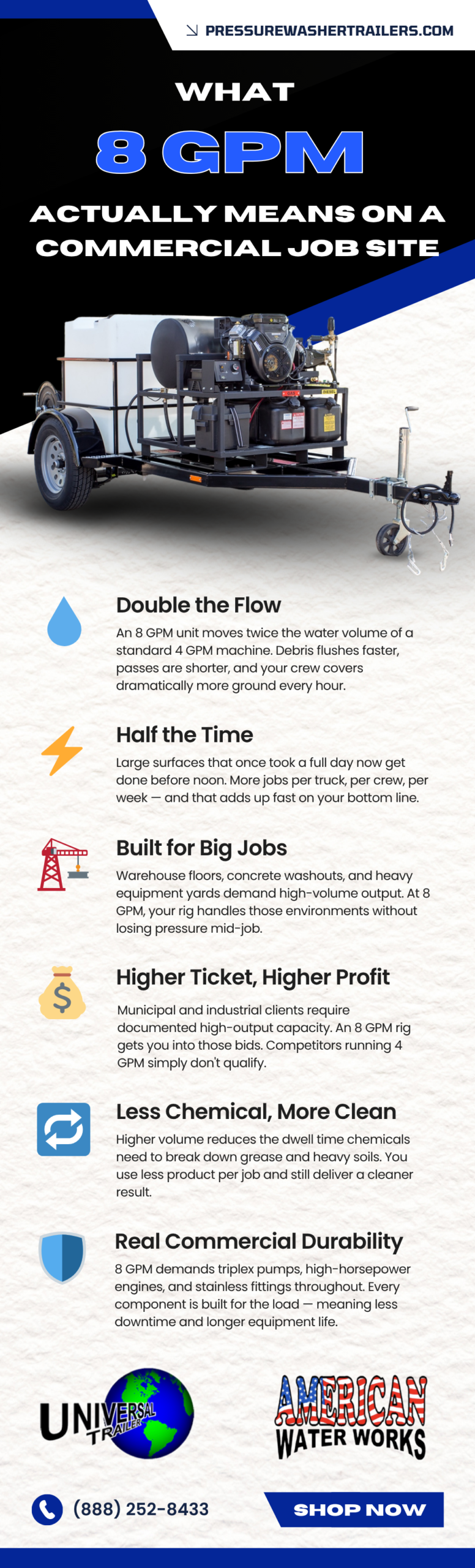
PSI is the force that breaks the bond between dirt and a surface. GPM is the volume that flushes that debris away. A heavy duty pressure washer rated at 4.0 GPM or higher will clean a surface dramatically faster than a unit pushing high PSI with low flow. On a commercial job site, time is money. High-GPM rigs let crews move faster, take on more contracts per day, and deliver a visibly superior result.
For true commercial use, we recommend a minimum output of 3,500 PSI paired with at least 4.0 GPM. Go lower than that, and you’re borrowing productivity from your future self.
The Triplex Pump Advantage
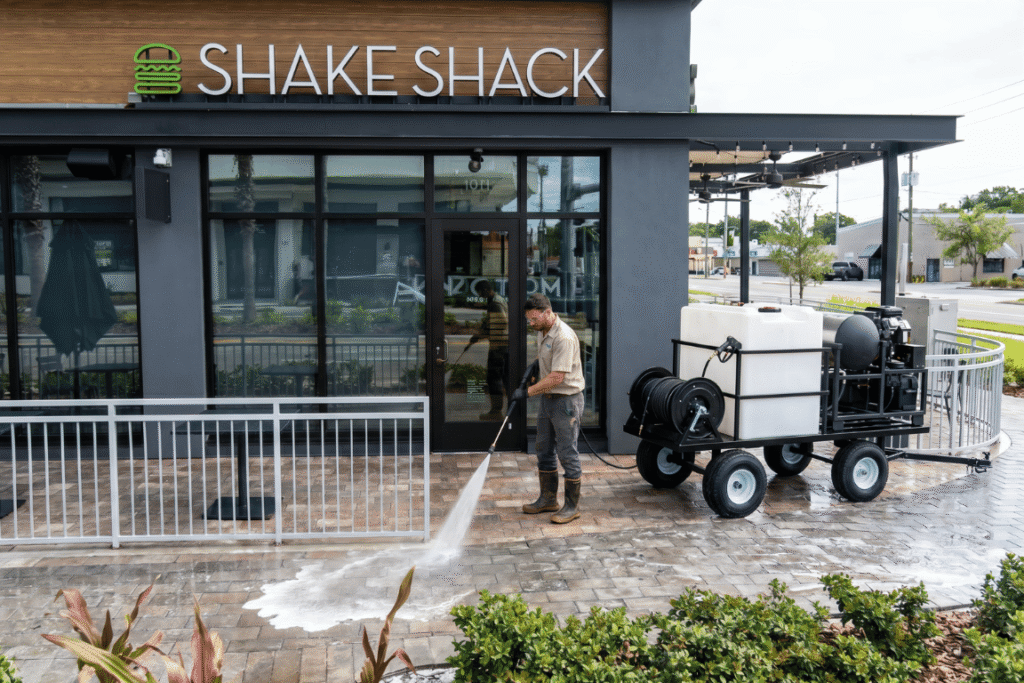
The pump is the heart of any heavy duty pressure washer, and the difference between a consumer unit and a commercial unit comes down to pump type. Consumer machines rely on axial cam pumps — cheaper to manufacture, lighter in weight, and adequate for intermittent use. Commercial machines run on triplex plunger pumps.
A triplex pump uses three pistons operating in sequence to deliver smoother pressure, dramatically lower heat buildup, and significantly longer service life. When you’re running a machine six to ten hours a day, a triplex pump isn’t a luxury. It’s the only viable choice.
Pair that pump with a commercial-grade engine — a Honda GX series or a Vanguard twin-cylinder — and you have the foundation of a rig that will reliably produce revenue for years.
Why a Mobile Trailer Setup Changes the Game for Mobile Washers
A standalone pressure washer unit is a tool. A fully integrated trailer rig is a business.
The single biggest operational limitation for mobile washing contractors is water access. Residential jobs may have a garden hose connection available, but industrial sites, parking structures, highway construction zones, and remote agricultural facilities often have no reliable inlet at all. Without your own water supply, you either turn down the work or show up unprepared.
Our trailer configurations solve this at the source — by building dedicated water storage directly into the rig.
Choosing Your Tank Capacity
We offer three core tank sizes, each engineered for a specific tier of commercial operation:
- 230-Gallon Tanks are ideal for mobile detailers, residential soft-wash operators, and light commercial contractors who need mobility without mass. Compact single-axle builds keep the footprint small and maneuverable in tight residential neighborhoods.
- 330-Gallon Tanks hit the sweet spot for the majority of professional commercial operators. Fleet washing companies, property management contractors, and mid-scale industrial cleaning crews get 45 to 60 minutes of continuous run time without needing to refill — more than enough for most commercial bay configurations.
- 460-Gallon Tanks are the workhorses of serious industrial operations. Municipal graffiti removal, construction site cleaning, large-scale concrete washing, and multi-unit industrial degreasing all demand the extended run time — up to 90-plus minutes continuous — that only a 460-gallon configuration can provide.
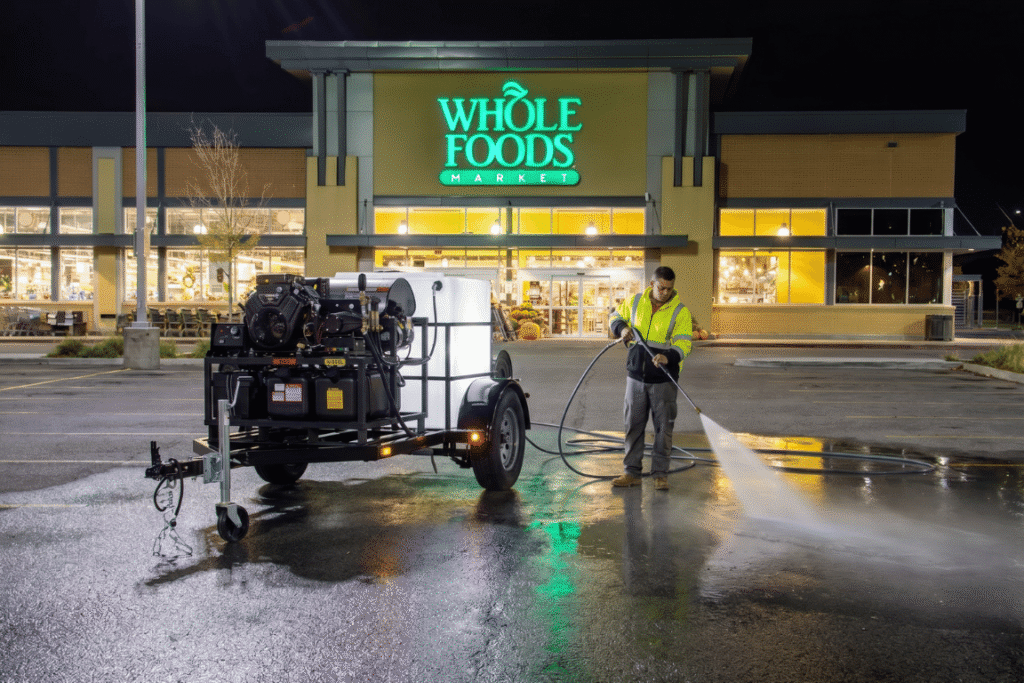
Every tank we build is properly baffled for safe towing, a critical safety feature we’ll revisit in the FAQ section.
2026 Industrial Cleaning Trends: The Shift Toward Smart and Eco-Compliant Rigs
The commercial cleaning industry in 2026 is not the same industry it was five years ago. Regulatory pressure, rising fuel costs, and a workforce that increasingly values operational efficiency have converged to push contractors toward smarter, greener, more connected equipment. Here’s where the industry is heading — and how our heavy duty pressure washer trailer builds are already ahead of the curve.
Environmental enforcement has hit an all-time high in 2026. Municipal storm drain regulations, EPA wash water guidelines, and state-level runoff laws now carry real financial penalties for non-compliant operators. Forward-thinking contractors are building water reclamation systems directly into their trailer configurations — berms, vacuum recovery units, and filtration systems that allow wash water to be captured, filtered, and either reused or properly disposed of. A heavy duty pressure washer trailer designed with reclamation integration isn’t just an environmental decision. It’s a competitive differentiator that allows you to legally bid on jobs that non-compliant operators cannot touch.
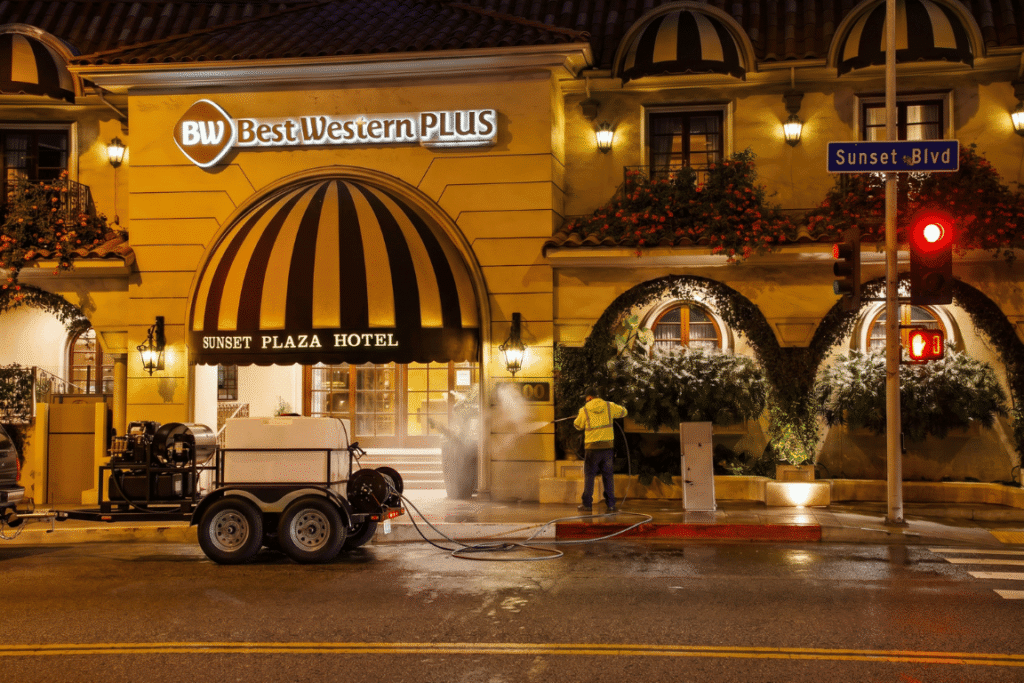
Hot water pressure washers are the gold standard for grease, oil, and biofilm removal. In 2026, the diesel-fired burner systems of the past decade are giving way to hybrid diesel-electric configurations that deliver the same heat output with significantly reduced emissions and fuel consumption. For operators in heavily regulated air quality management districts — particularly in California — this transition is rapidly shifting from optional to essential.
The most forward-thinking commercial operators are now integrating digital hour meters, smart pressure sensors, and maintenance alert systems directly into their trailer control panels. These tools eliminate guesswork, prevent missed service intervals, and give fleet managers real-time visibility into equipment health across multiple rigs. A heavy duty pressure washer trailer with smart diagnostics is a managed asset, not just a machine.
Navigating Strict Regulations: The Importance of California-Compliant Trailers
California has the most demanding environmental and emissions regulations in the United States — and for good reason. The state’s air quality management districts, storm water discharge laws, and CARB (California Air Resources Board) engine certification requirements create a regulatory framework that catches many out-of-state operators off guard.
But here’s what many operators outside California don’t realize: these standards are increasingly being adopted by other states. New York, Oregon, Washington, and Colorado have all moved toward California-style regulatory frameworks. What is currently a California requirement will likely become a national standard within the next several years.
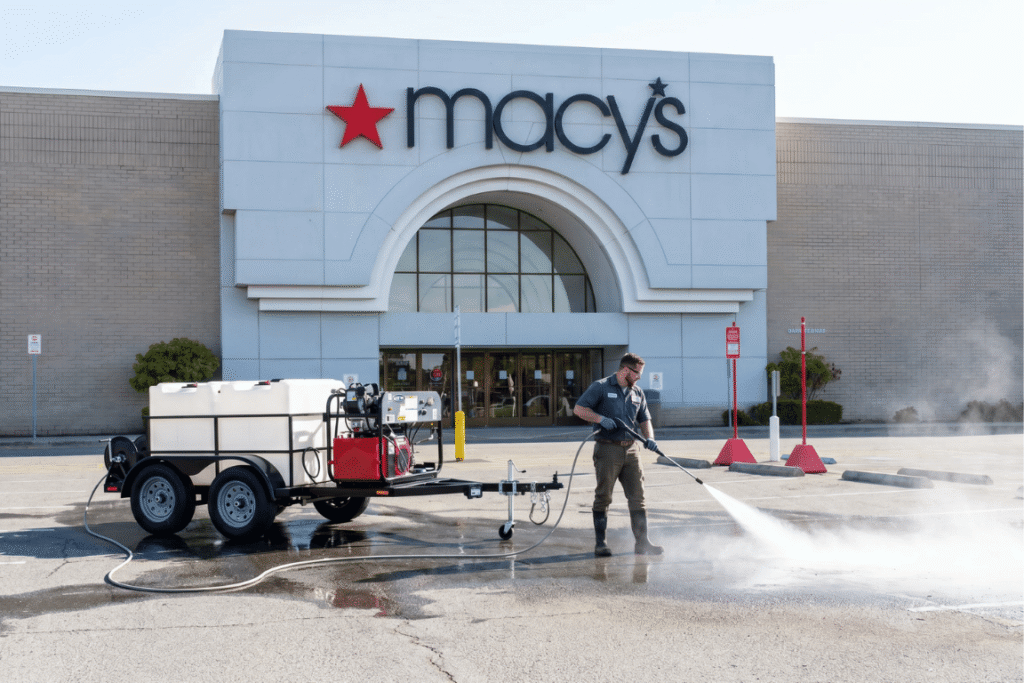
What Makes a Trailer California-Compliant?
A California-compliant heavy duty pressure washer trailer must feature CARB-certified engines that meet strict air quality emissions thresholds. It must also be configured to support wash water containment and recovery, ensuring that runoff from cleaning operations doesn’t enter storm drains or waterways.
Our California-compliant builds are engineered from the ground up for this regulatory environment. We don’t retrofit — we build compliance in from the frame. That means operators who invest in a California-compliant rig today are protected not just for current regulations, but for the tightening standards that are almost certainly coming to their market next.
From Frame to Hose Reel: How to Design a 100% Custom Pressure Washer Trailer
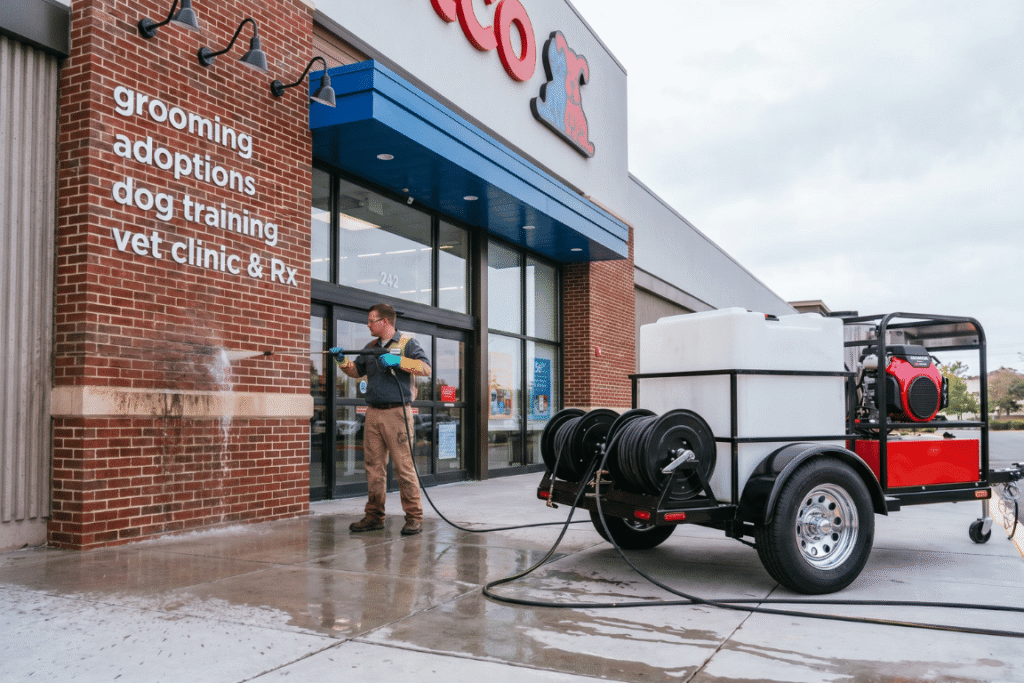
One of our defining strengths at Universal Trailer and American Water Works is our commitment to true custom fabrication. We don’t sell off-the-shelf configurations dressed up with options. Every heavy duty pressure washer trailer we build begins as a blank engineering conversation with the operator who will use it.

Step 1 — Define Your Application
Are you washing fleets, cleaning construction equipment, removing graffiti, or soft-washing commercial roofs? Your application determines your engine, pump output, and water temperature requirements. Hot water dramatically outperforms cold water on grease, oil, and mold — but adds complexity and cost. We'll help you determine whether a hot or cold water system is the right call for your specific revenue streams.

Step 2 — Select Your Tank and Axle Configuration
Your water tank size drives your trailer footprint and axle requirements. A 230-gallon build can work on a single axle. Once you move to 330 gallons and above — especially when combined with a heavy burner unit, hose reels, and an equipment box — dual or tandem axle configurations become necessary for safe weight distribution and legal road compliance.

Step 3 — Configure Your Hose Reel Setup
We offer stainless steel hose reels in both high-pressure and inlet configurations. Your hose reel placement affects both operational efficiency and jobsite safety. We work with operators to position reels for fastest deployment, minimal hose wear, and clean, professional presentation.

Step 4 — Choose Your Storage and Accessory Layout
Chemical tanks, tool storage, supply hose management, and generator mounts all need to be integrated thoughtfully. We design storage boxes and accessory mounting positions with operator workflow in mind — not just whatever fits.

Step 5 — Finish and Branding
Powder coat color, frame finish, and optional wrap preparation are all part of the final build. Your trailer is a rolling advertisement for your business. We help you make it look the part.
Style & Operational Tips: Maintaining an Elite Fleet and a Clean Job Site
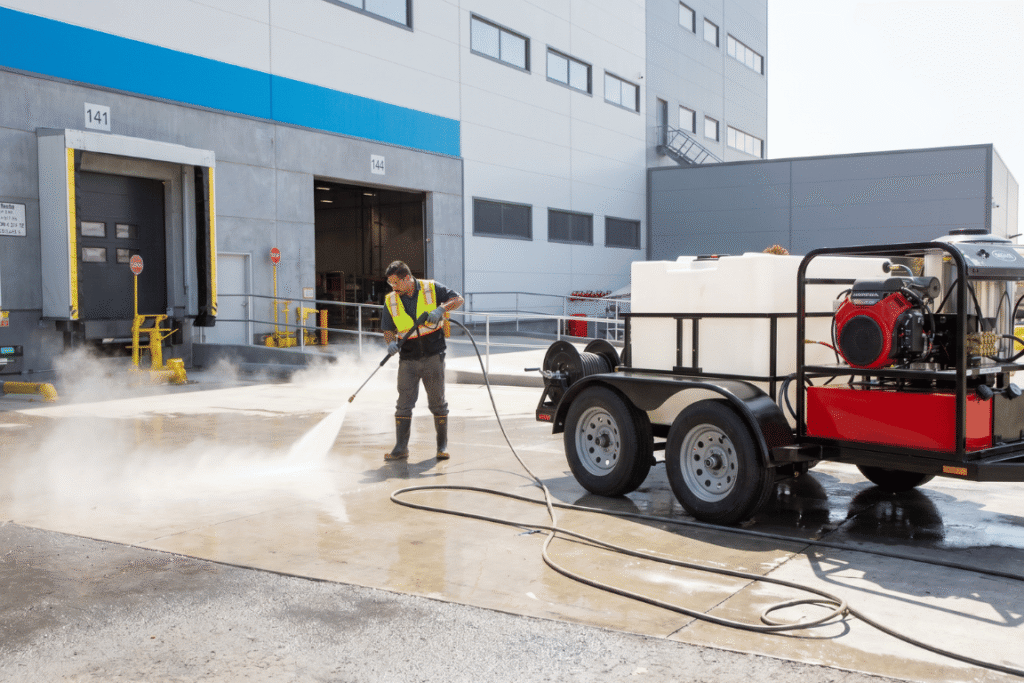
Investing in a commercial heavy duty pressure washer trailer is a significant capital decision. Protecting that investment requires consistent maintenance and deliberate operational discipline. Here’s how elite operators keep their rigs performing at the highest level.
The Professional Aesthetic
A clean, well-branded trailer wins contracts before the pitch even starts. Custom powder-coated or wrapped trailers signal to prospective clients that you operate a serious, professional business. A stainless steel-finished heavy duty pressure washer trailer parked outside a commercial facility sends a message that no sales brochure can replicate. Invest in your presentation — it pays back directly in contract value.
Organization is Efficiency
Stacked heavy-duty stainless steel hose reels — one for your high-pressure line, one for your inlet supply — eliminate the tangle and trip hazards that plague underprepared operators. Faster setup, faster breakdown, and dramatically longer hose life. On commercial contracts where multiple technicians are working simultaneously, organized hose management is a safety issue as much as an efficiency one.
Corrosion Defense
If your work involves sodium hypochlorite (the active ingredient in most roof wash and soft-wash mixes), you are dealing with one of the most aggressively corrosive chemicals in common commercial use. Treat your trailer frame, fittings, and aluminum components with marine-grade anti-corrosion spray monthly at minimum. Inspect stainless welds and powder coat finish quarterly. Corrosion caught early is a maintenance item. Corrosion caught late is a capital expense.
Engine and Pump Service Discipline
Your engine oil and pump oil should be changed on schedule — not when you remember. Most commercial engines call for an oil change every 100 hours of operation. Your pump manufacturer will specify its own interval. Burner fuel filters should be inspected every season. Heating coils in hot water systems should be descaled annually to prevent mineral buildup from strangling your temperature output.
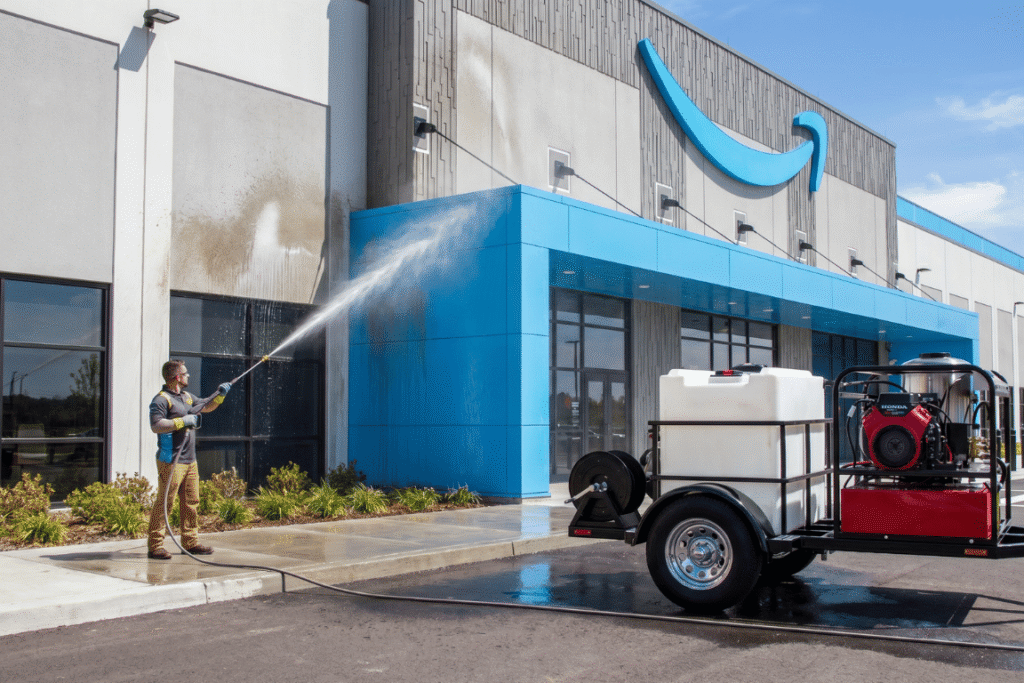
Tank Capacity Selection Matrix
| Tank Size | Target Application | Run Time (Without Inlet Fill) | Best Matched With |
| 230 Gallons | Residential/Light Commercial, Mobile Auto Detailing | ~30–45 minutes continuous | Compact, single-axle California-compliant trailers |
| 330 Gallons | Mid-Scale Commercial, Fleet Washing, Property Management | ~45–60 minutes continuous | Dual-axle heavy-duty trailers for balanced weight distribution |
| 460 Gallons | Heavy Industrial, Construction Sites, Municipal Graffiti Removal | ~60–90+ minutes continuous | Tandem-axle custom configurations with high-GPM pumps |
The Bottom Line: Stop Leaving Money on the Table
The commercial pressure washing industry rewards operators who invest in the right equipment from the start. A properly spec’d, custom-built heavy duty pressure washer trailer doesn’t just perform better — it positions your business to take on larger contracts, operate in regulated markets, and project the kind of professionalism that attracts high-value clients.
At Universal Trailer and American Water Works, we build heavy duty pressure washer trailer rigs engineered for the way commercial operators actually work — not the way consumer brands assume they do. With tank options from 230 to 460 gallons, full California-compliant configurations, 100% custom builds, and free nationwide shipping, we’re ready to engineer your next rig from the ground up.
Browse our heavy-duty pressure washer trailers: https://www.pressurewashertrailers.com/shop/
Frequently Asked Questions
What makes a pressure washer a true heavy duty pressure washer?
A true heavy duty pressure washer features a commercial-grade engine (such as Honda GX or Vanguard), an industrial triplex plunger pump, and an output rating exceeding 3,500 PSI and 4.0 GPM, allowing it to run continuously for multiple hours daily without failure.
How do I choose between a 230, 330, or 460-gallon water tank for my trailer?
Choose a 230-gallon tank for light commercial mobility, a 330-gallon tank for standard commercial fleet and property washing, and a 460-gallon tank for heavy industrial projects where on-site water access is unavailable or highly restricted.
What does it mean for a pressure washer trailer to be California-compliant?
A California-compliant pressure washer trailer features CARB-compliant engines that meet strict air quality emissions standards, along with configurations designed to support wash water containment, recovery, and filtration to prevent illegal environmental runoff.
Can I customize my industrial pressure washer trailer setup?
Yes, Universal Trailer and American Water Works allows you to completely customize your rig, including your choice of hot or cold water pressure washers, tank sizes up to 460 gallons, hose reel configurations, and storage box placement.
How much does shipping cost for a heavy duty pressure washer trailer?
Universal Trailer and American Water Works offers 100% free nationwide shipping across the United States for all custom-built commercial pressure washer trailer configurations.
Why is GPM more important than PSI for a heavy duty pressure washer?
While PSI cuts through the bond of the dirt, GPM (Gallons Per Minute) is what flushes the debris away. High-GPM rigs drastically reduce washing time, making them far more efficient for commercial operators than high-PSI, low-GPM units.
What maintenance is required for a commercial hot water pressure washer?
Commercial hot water systems require routine oil changes for both the engine and the pump, regular fuel filter replacements for the burner system, and descaling of the heating coil to prevent mineral buildup and maintain optimal water temperatures.
Do I need a commercial driver's license (CDL) to pull a pressure washer trailer?
Most custom heavy-duty pressure washer trailers do not require a CDL, provided the Gross Vehicle Weight Rating (GVWR) of the trailer and the towing vehicle combined remains under 26,000 pounds. Operators must ensure water tanks are baffled or properly filled to avoid dangerous weight shifting during transit.
Disclaimer: Equipment specifications and performance capabilities may vary based on specific configurations and operating conditions. Professional consultation is recommended for custom applications and specialized requirements. Regulatory compliance requirements vary by location and application – consult local authorities for specific permit and operational requirements.