
Key Takeaways (TLDR)
- Industrial pressure cleaners with 8 GPM flow rates clean 2x faster than standard 4 GPM units
- Hot water systems are non-negotiable for oil and grease removal—cold water just pushes it around
- Tandem-axle trailers offer true mobility without sacrificing power or water capacity
- Profit margins in pressure washing businesses range from 40-50% with proper equipment
- Free pickup available in California & South Carolina, plus nationwide freight shipping
TABLE OF CONTENTS
Time Is Money—And Your Equipment Is Costing You Both
Here’s the thing nobody tells you when you’re starting out in commercial pressure washing: spending four hours on a job that should take one hour because your flow rate is too low isn’t being thorough—it’s being broke.
I see it all the time. Contractors grab a hardware store pressure washer thinking “3000 PSI sounds impressive!” Then they’re out there all day trying to strip grease off a fleet truck, wondering why their business isn’t taking off. The answer? Wrong tool for the job, my friend.
The global pressure washing equipment market hit $2.5 billion in 2020 and experts project it’ll reach $3 billion by 2026, growing at a solid 4.2% annually. But here’s what’s interesting—that growth isn’t coming from weekend warriors buying consumer-grade units. It’s from serious operators upgrading to true industrial pressure cleaner systems that can actually handle commercial workloads.
Let’s talk about what separates a real industrial pressure cleaner from those shiny boxes at the big-box store.
What Makes an Industrial Pressure Cleaner Actually "Industrial"?
An industrial pressure cleaner isn’t just a beefed-up version of what you’d use on your driveway at home. We’re talking about a completely different animal designed for contractors, fleet washers, and industrial operations that need serious cleaning power—day in, day out.
The Holy Trinity: PSI, GPM, and Heat
PSI (Pounds Per Square Inch) is your stripping power—think of it as how hard you’re hitting the surface. Most industrial rigs run 3000-4000 PSI, which is enough to blast through years of caked-on grime without damaging underlying surfaces.
GPM (Gallons Per Minute) is your secret weapon, and honestly, it’s more important than PSI for most jobs. Here’s why: PSI strips the dirt loose, but GPM rinses it away. A unit pushing 8 GPM will literally clean twice as fast as a 4 GPM machine at the same pressure. According to field data, contractors with high-flow systems complete jobs in half the time, which means you can book more work and make more money.
Hot Water is the non-negotiable third element for industrial work. Try cleaning oil, grease, or organic matter with cold water and you’re basically just pushing it around. Hot water (140-200°F) actually breaks down these contaminants at a molecular level. Industrial burner systems heat water in under two minutes, so you’re not wasting time waiting around.
Built to Last (Not Just to Sell)
Consumer pressure washers are rated for maybe 100 hours total—about 20 hours per year if you’re lucky. Industrial units are engineered for several thousand hours of operation. We’re talking belt-drive pumps that reduce stress and wear, commercial-grade engines from Honda, Vanguard, or Karcher, and heavy-duty frames that can handle being towed across job sites without falling apart.
Why Mobile Pressure Washer Trailers Are the Ultimate Setup
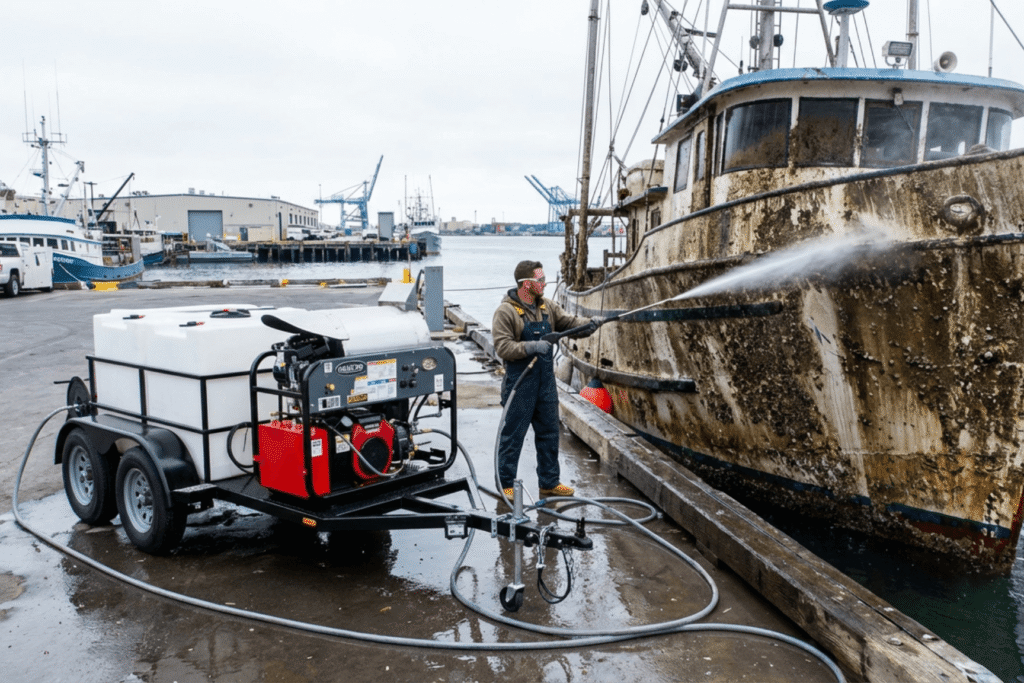
Let’s be real: most commercial pressure washing work isn’t happening at locations with convenient water hookups and power outlets. You need independence.
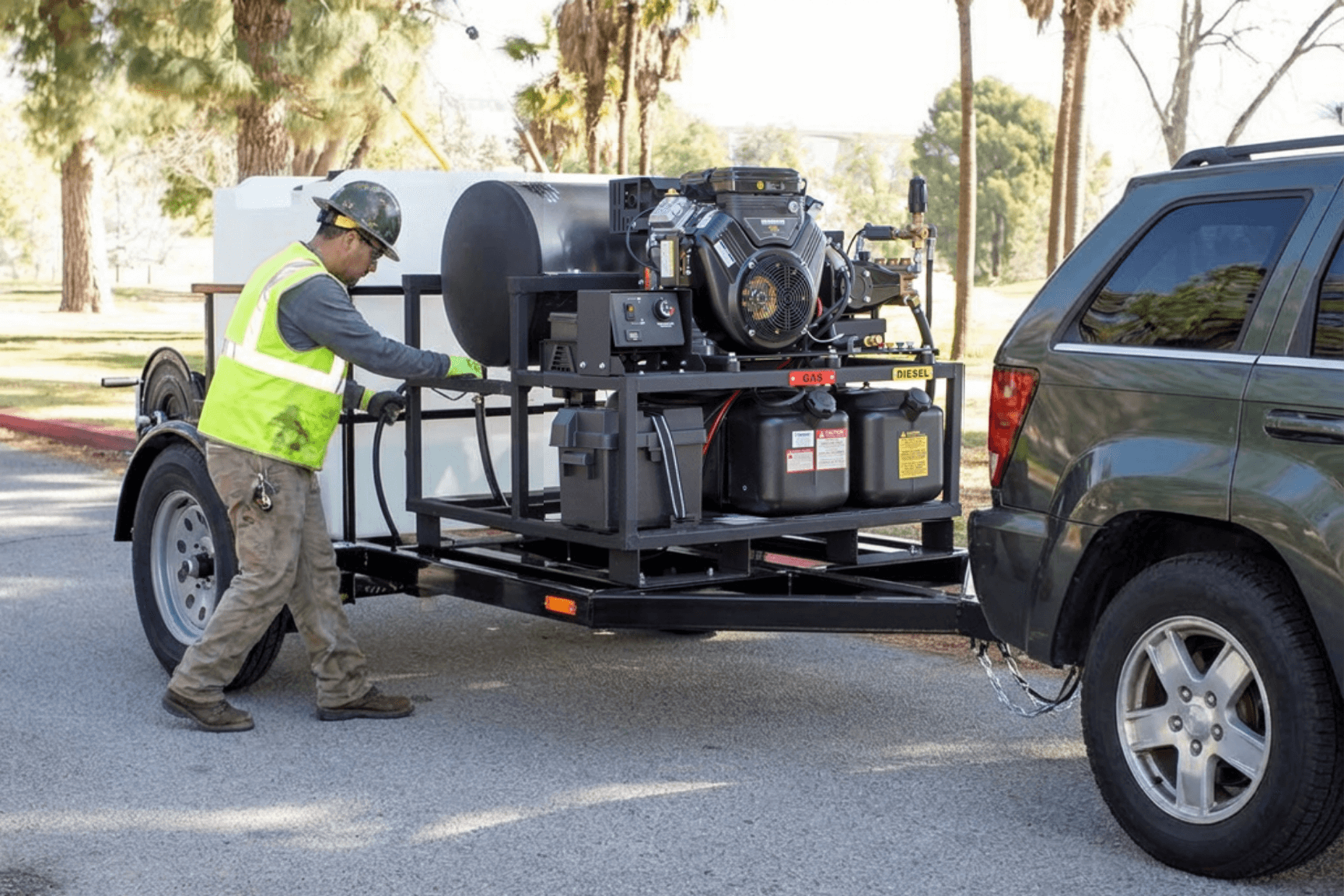
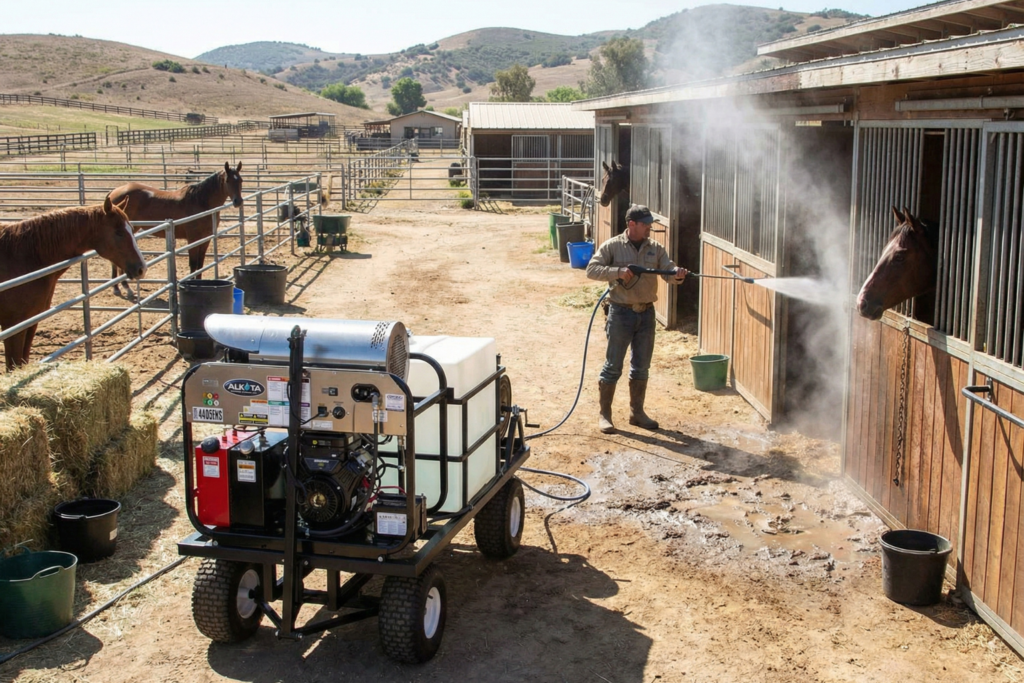
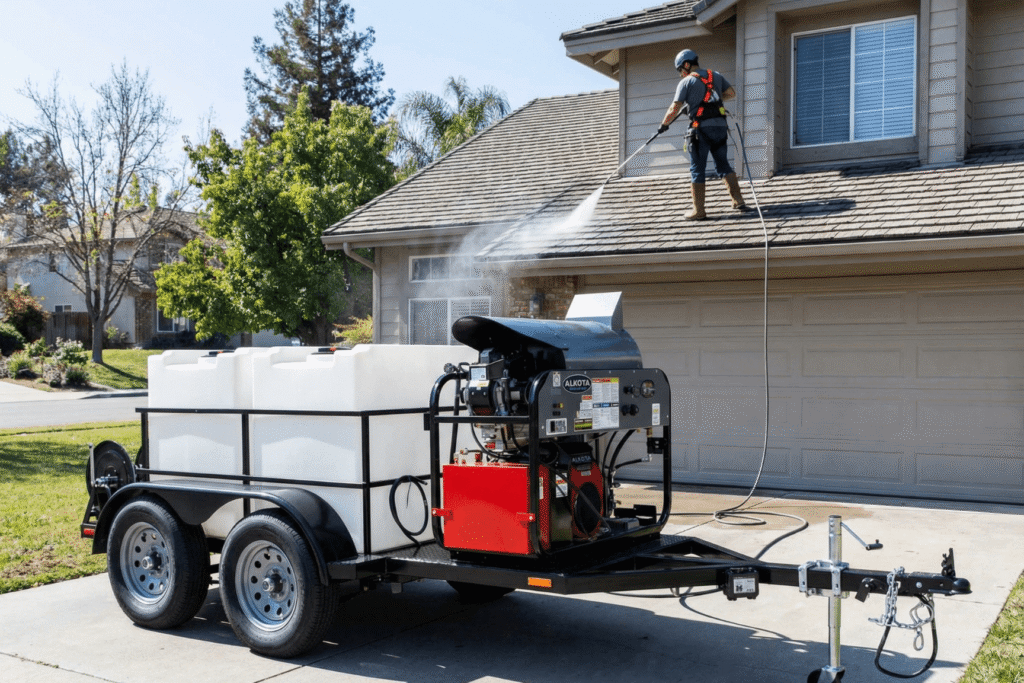
That’s where hot water pressure washer trailers shine. These are turnkey mobile wash rigs built on tandem-axle trailer platforms, giving you everything you need in one package:
- Massive polyethylene water tanks (330-460 gallons) for extended runtime without water access
- Powerful gas engines (no hunting for electrical outlets)
- Integrated hot water burner systems
- High-flow commercial pumps (typically 5-8 GPM)
- DOT-compliant road-ready trailers with proper lighting and safety chains
You roll up to a construction site, a fleet yard, or an industrial facility and you’re immediately operational. No hassle, no excuses, no limitations.
Fun Fact: You don't need a CDL to tow these trailers. Most industrial pressure cleaner trailers fall well under the 26,000-pound threshold that would require commercial licensing. Just a standard vehicle with proper towing capacity and you're good to go.
Why Large Water Tanks Are Non-Negotiable for Industrial Work
Here’s something rookies learn the hard way: running out of water mid-job is a business killer. And trust me, it happens faster than you think with industrial pressure cleaner systems.
An 8 GPM machine burns through water at 480 gallons per hour. Got a little 50-gallon tank like those portable units? You’ll last about six minutes. Not six minutes per vehicle—six minutes total. Then you’re hunting for a water source, unhooking hoses, losing momentum, and watching your profit margin evaporate.
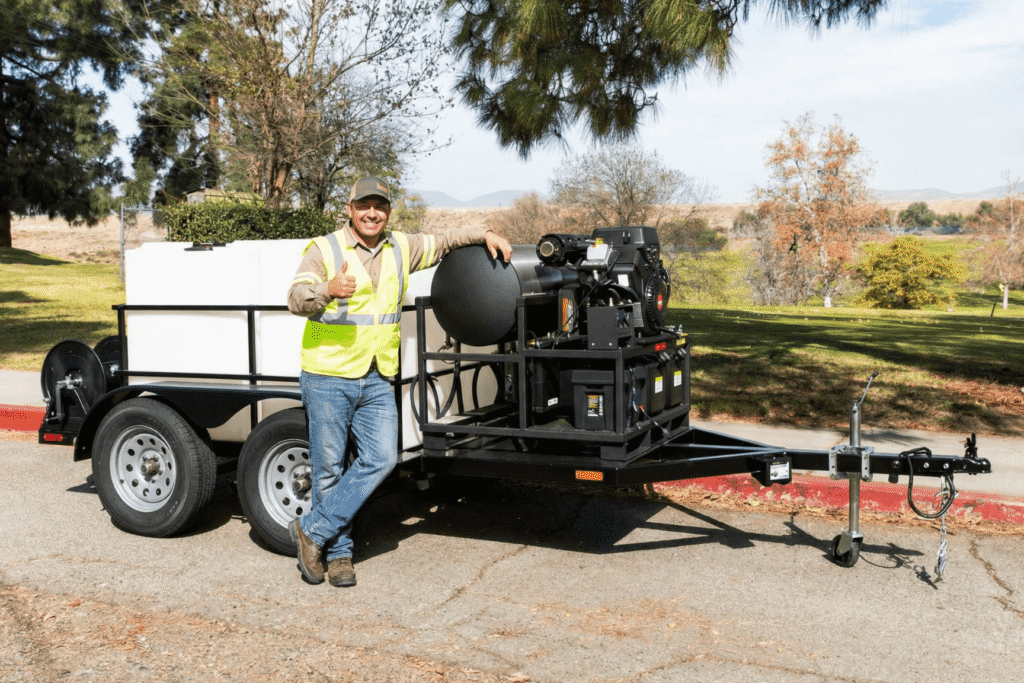
That’s why serious contractors run 330-460 gallon tanks. Here’s the math: a 330-gallon tank gives you over 40 minutes of continuous runtime at 8 GPM. A 460-gallon beast? You’re looking at close to an hour of non-stop cleaning. That’s enough to wash an entire fleet of trucks, clean a commercial building facade, or tackle heavy equipment at a remote construction site without breaking stride.
But it’s not just about runtime. Large tanks give you strategic flexibility. You can fill up once at your shop or a reliable water source, then hit multiple job sites throughout the day without scrambling to find water hookups. Some industrial locations don’t even have accessible water—think remote oil fields, agricultural sites, or facilities where the water access is locked behind security. Your big tank means you show up ready to work, period.
Plus, here’s a pro tip: water sourcing becomes a competitive advantage. While other contractors are limited to jobs near water access, you can bid on premium work in remote locations and charge accordingly. We’re talking an extra $50-$100 per job just because you have the capacity to work anywhere.
You roll up to a construction site, a fleet yard, or an industrial facility and you’re immediately operational. No hassle, no excuses, no limitations.
The Top 3 Best Selling Industrial Pressure Cleaners of 2026
At Universal Trailer and American Water Works, we’ve been building industrial pressure cleaner trailers for serious professionals, and these three units consistently top our sales charts. Each one serves a different niche perfectly.
The High-Capacity Beast: 460-Gallon Tank Monster
Specs:
- 460-gallon water capacity
- 5 GPM @ 3500 PSI
- 18HP Vanguard engine
- Tandem-axle commercial trailer
Hot Water Pressure Washer Trailer with 460 Gallon Tank
This is the go-to industrial pressure cleaner for contractors working in remote locations or areas without reliable water access. That 460-gallon tank gives you serious runtime—we’re talking hours of continuous operation before you need to refill.
The 18HP Vanguard engine is legendary for reliability. Briggs & Stratton’s Vanguard line is specifically engineered for commercial applications, with features like heavy-duty air filtration and oversized oil capacity. Translation: less downtime, fewer headaches.
Perfect for: Agricultural equipment cleaning, remote construction sites, oilfield services, municipal contractors.
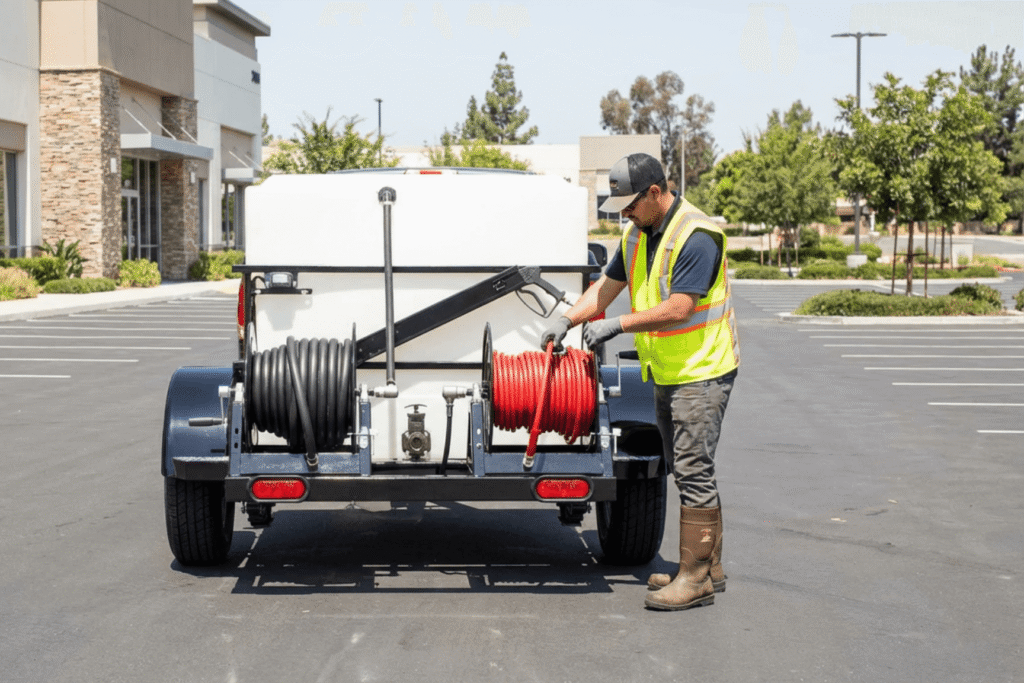
The High-Flow Speed King: 8 GPM Honda-Powered
Specs:
- 330-gallon water tank
- 8 GPM @ 3500 PSI
- 18HP Honda GX690 engine
- Tandem-axle commercial trailer
Hot Water Pressure Washer Trailer with 8 GPM Honda GX690
This is the machine that separates professionals from weekend warriors. That 8 GPM flow rate means you’re cleaning twice as fast as standard 4 GPM units—not kind of faster, literally twice as fast.
The Honda GX690 is the workhorse engine that runs forever. Honda’s commercial engines are known for easy starting, smooth operation, and insane reliability. We’ve seen these engines rack up thousands of hours without major service.
Perfect for: Fleet washing companies, commercial property maintenance, industrial equipment cleaning, mobile detailing operations
"We bought this trailer in 2024 and it's already paid for itself three times over. The 8 GPM flow means my crew finishes our truck fleet in half the time. The Honda engine fires up every single time—even in winter."
Mike T., Fleet Manager
The Powerhouse Professional: 25HP Karcher Dual-Fuel
Specs:
- 330-gallon water tank
- 8 GPM @ 3500 PSI
- 25HP Karcher engine
- Gas AND diesel tank setup
- Tandem-axle commercial trailer
Hot Water Pressure Washer Trailer with 25HP Karcher
This is our premium industrial pressure cleaner for operators who need maximum horsepower and versatility. That 25HP Karcher engine provides sustained power for the most demanding applications—think heavy industrial degreasing or all-day commercial operations.
The dual gas/diesel tank setup is brilliant for efficiency. Run the burner on diesel (cheaper per BTU) while keeping the engine on gas for cleaner operation and easier maintenance. It’s the best of both worlds.
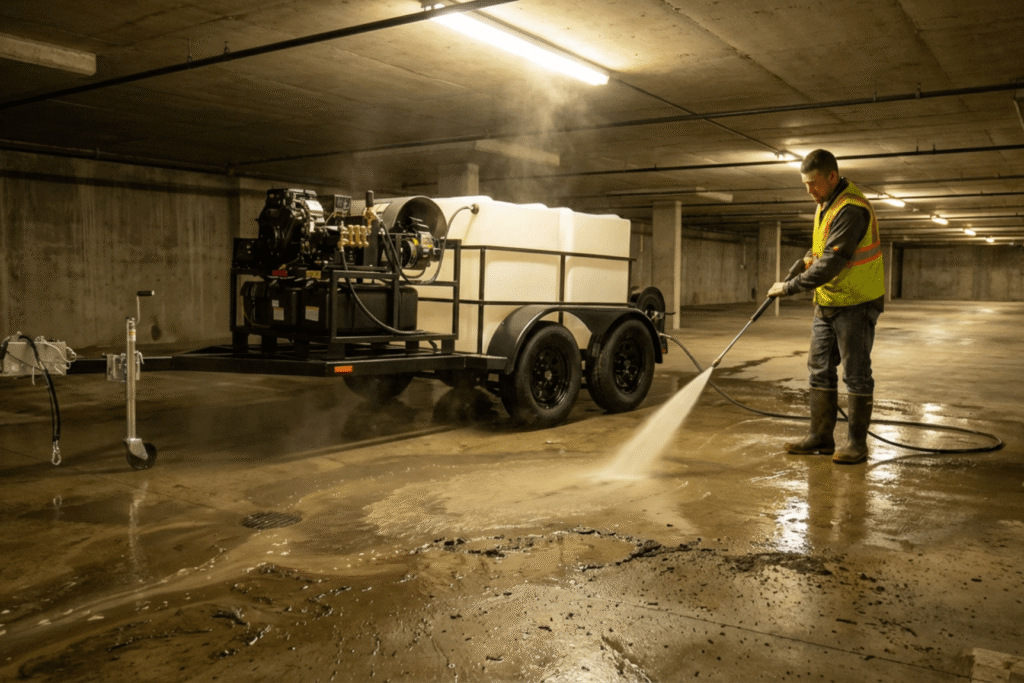
Perfect for: Industrial facilities, heavy equipment rental yards, large-scale commercial contractors, municipal maintenance departments
"I started my pressure washing business with one of these trailers two years ago. The customer support from Universal Trailer was outstanding, and the build quality is rock-solid. I'm now looking at buying a second unit."
Sarah L., Business Owner
Hot Water vs Cold Water: Why Industrial Jobs Need Heat
Let me settle this debate once and for all: if you’re doing real commercial or industrial work, cold water just doesn’t cut it.
Cold Water Works For:
- General dirt and mud removal
- Concrete cleaning
- Basic surface preparation
- Residential driveways and sidewalks
Hot Water Is Required For:
- Grease and oil removal
- Fleet washing (think road grime and diesel residue)
- Food processing equipment
- Restaurant exhaust systems
- Agricultural equipment
- Any organic material (mold, algae, etc.)
The science is simple: hot water breaks molecular bonds in oils and greases, allowing them to be rinsed away instead of just pushed around. According to cleaning industry standards, hot water can improve cleaning efficiency by 40-60% on organic and petroleum-based contaminants.
Plus, hot water means faster drying times and better sanitization—crucial for food service, healthcare, and regulated industries.
5 Industries Desperate for Mobile Pressure Washing Services in 2026
The pressure washing market is absolutely booming, but some sectors are hungrier for services than others. Here’s where the smart money is going:
1. Construction & Heavy Equipment
Construction equipment gets absolutely caked with mud, cement, and oils. Equipment rental companies and contractors need regular cleaning to prevent corrosion and maintain resale value. This sector alone is driving massive growth in industrial pressure cleaner adoption.
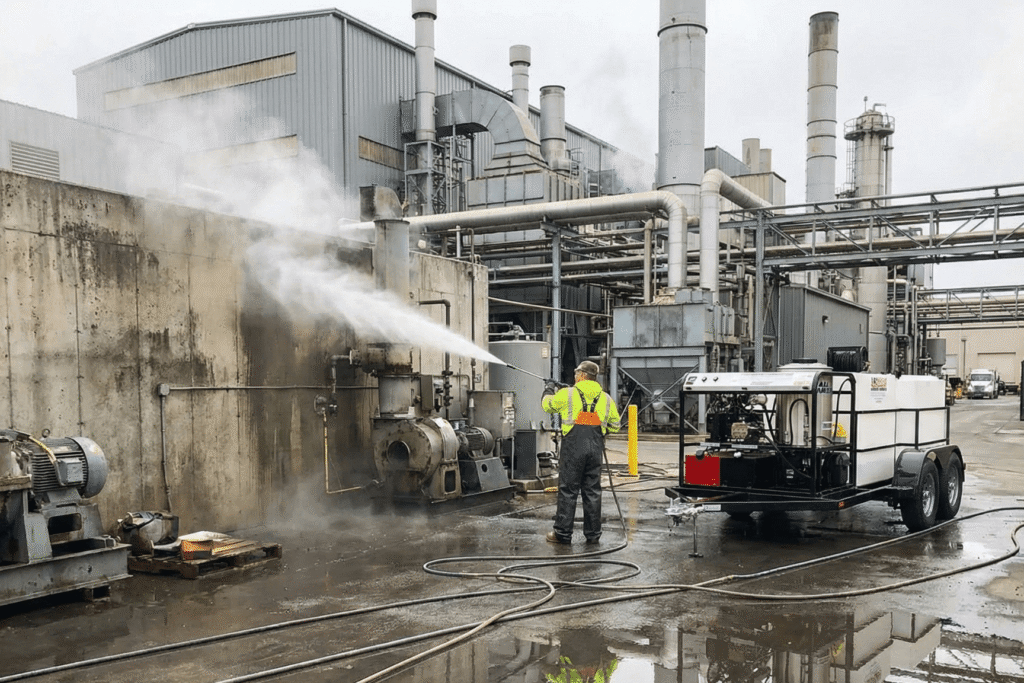
2. Fleet & Transportation
With over 2 million commercial trucks on U.S. roads, fleet washing is a goldmine. Companies want their trucks clean for branding, and they need them clean for DOT inspections. Mobile soft wash systems and high-flow trailers are perfect for this work.
3. Food & Agriculture
Food processing facilities and farms have strict hygiene requirements. Dairy operations, meat processing plants, and agricultural equipment all need regular sanitation. Hot water industrial pressure cleaners are essential here.
4. Oil & Gas
Industrial sites in the energy sector need constant degreasing and equipment maintenance. These operations pay premium rates for reliable contractors with proper equipment—we’re talking $150-$300 per hour in some markets.
5. Municipal & Government
Parks departments, highway crews, and public facilities need regular cleaning services. Government contracts often provide steady, predictable work with decent payment terms.
ROI: How Fast Can an Industrial Pressure Cleaner Pay for Itself?
Let’s talk numbers, because that’s what really matters.
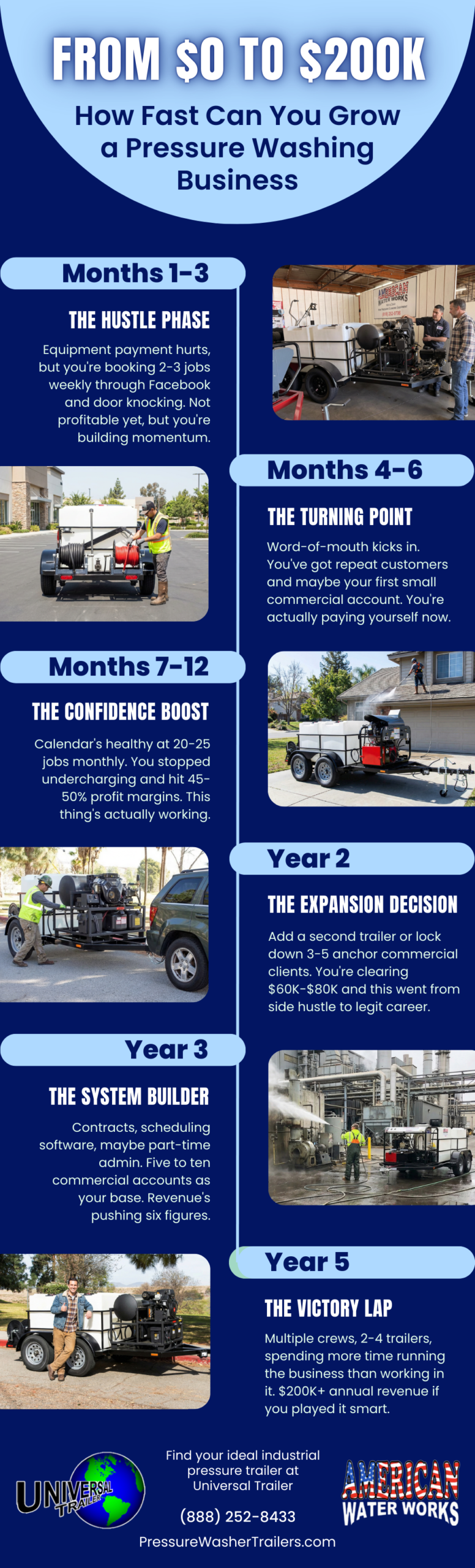
A well-equipped industrial pressure cleaner trailer runs $15,000-$25,000 depending on specs. That sounds like a chunk of change until you look at the revenue potential.
According to recent industry data, pressure washing businesses see profit margins of 40-50% when properly priced. Here’s a realistic breakdown for a part-time operator:
Conservative Revenue Scenario:
- 5 jobs per week at $300 average = $1,500/week
- 40 weeks active (accounting for seasonality) = $60,000 annual revenue
- Operating costs around $15,000/year (fuel, supplies, insurance, maintenance)
- Net profit: $45,000 in year one
Your equipment investment is recovered in 4-6 months. Everything after that is profit.
For full-time operators running crews, the numbers scale dramatically. Multi-crew operations can generate $100,000-$150,000+ annually with the right systems in place.
The key is pricing correctly. Residential house washing should run $0.25-$0.35 per square foot minimum. Commercial fleet washing can command $50-$100 per hour. Don’t be the cheapest—be the best value.
Pre-Trip Inspection Checklist for Towing Heavy Cleaning Equipment
Safety first, profits second. Here’s your quick checklist before hitting the road:
Trailer & Hitch:
- Safety chains properly attached and crossed
- Trailer lights functioning (brake, turn signals, running lights)
- Tire pressure checked (don’t forget the trailer spare!)
- Hitch ball size matches coupler
- Tongue weight balanced (10-15% of trailer weight)
Equipment:
- Water tank secured and filled appropriately
- All equipment and hoses properly stowed
- Engine oil level checked
- Fuel tanks topped off
- Burner system tested
Vehicle:
- Towing mirrors adjusted
- Brake controller set correctly
- Emergency equipment onboard (flares, triangle reflectors)
Pro Tip: Always do a 10-minute test drive before heading to a job site. Stop, check your connections, and make sure nothing’s rattling loose. Five minutes of prevention beats an hour of roadside repairs.
Logistics: Local Pickup or Free Nationwide Shipping
Here’s something unique about us: we offer free pickup at both our manufacturing locations in California and South Carolina. Seriously—if you’re anywhere near either facility, come grab your trailer and save on freight.
Not nearby? No problem. We offer FREE nationwide freight shipping to all 50 states. We work with reputable freight carriers who specialize in equipment transport, and we handle all the logistics coordination. Your industrial pressure cleaner trailer shows up ready to work.
Understanding the Key Components: A Quick Glossary
Unloader Valve: This safety component regulates pressure when you release the trigger, routing water back to the inlet side instead of building dangerous pressure.
Belt Drive vs. Direct Drive: Belt-drive pumps last longer for commercial use because they reduce engine stress and operate at lower RPMs. Direct drive is cheaper but wears faster under heavy use.
Burner System: The heating element that converts cold water to hot. Industrial burners run on diesel, kerosene, or propane, heating water to 140-200°F in under 2 minutes.
Tandem Axle: Two axles instead of one, distributing weight more evenly and providing better stability when towing heavy loads. Essential for commercial trailers.
Polyethylene Water Tank: Lightweight, corrosion-resistant tank material that won’t rust or degrade from chemicals. Way better than steel for mobile applications.
Surface Cleaner: A rotating attachment that covers large flat areas evenly, preventing striping and speeding up concrete work dramatically.
Why Universal Trailer & American Water Works?
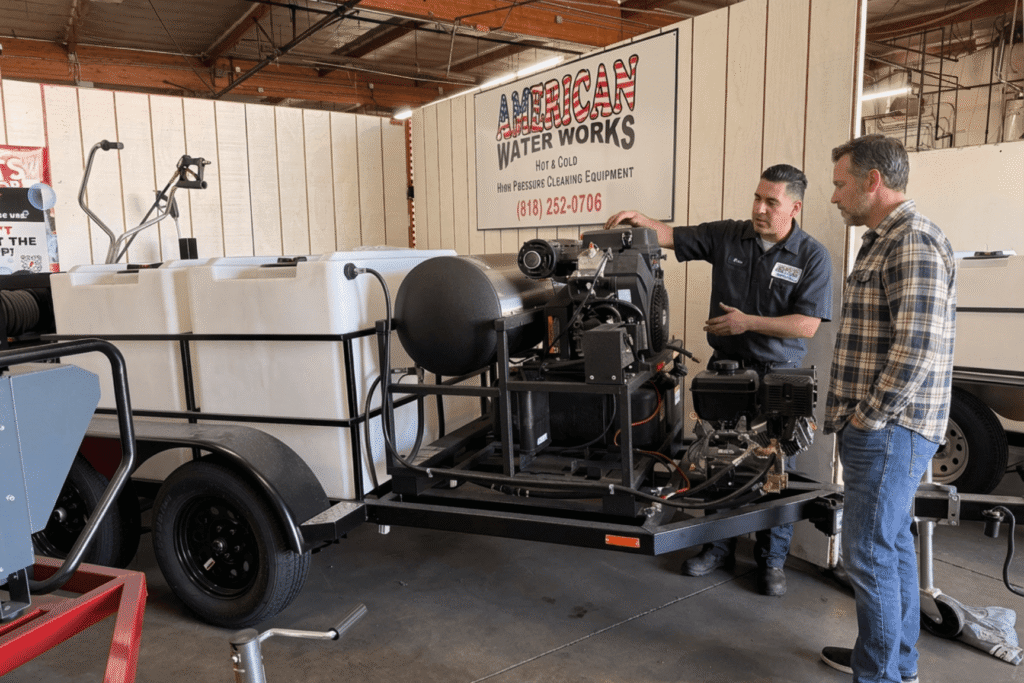
Look, we’re not just slapping together pressure washers and trailers here. We build fully independent, single and tandem-axle hot water systems designed specifically for contractors and industrial applications who need equipment that works every single day.
We stock the most reliable engines in the industry—Vanguard, Honda, and Karcher—paired with high-flow commercial pumps built for sustained use. Our trailers are road-ready from day one with DOT-compliant lighting, proper weight distribution, and quality components throughout.
What makes us different:
- Two manufacturing locations (California & South Carolina)
- Free pickup or nationwide freight shipping
- Focus on commercial-grade components, not consumer-spec compromises
- Actual customer support when you need it
General Customer Feedback: Contractors consistently praise our build quality and customer service. Many report that their trailers are still running strong after thousands of hours, with minimal maintenance beyond routine service.
The Bottom Line: Invest in Equipment That Makes You Money
Here’s the reality: you can spend $2,000 on a Home Depot pressure washer and struggle through jobs, or you can invest in a real industrial pressure cleaner system and start building a profitable business from day one.
The pressure washing industry is projected to hit $3 billion by 2026, growing at 4.2% annually. That growth is being driven by contractors who understand that the right equipment isn’t an expense—it’s an investment that pays dividends every single day.
Whether you’re starting fresh or upgrading from consumer gear, an 8 GPM hot water trailer with a commercial engine will transform how you work. You’ll finish jobs in half the time, take on bigger contracts, and actually make the profit margins that make this business worthwhile.
Time is money. Choose equipment that respects both.
Ready to level up your operation? Browse our full lineup of industrial pressure cleaner trailers, or contact us to discuss which system fits your specific needs. We’re here to help you build a profitable pressure washing business—one quality job at a time.
Frequently Asked Questions
Do I need a CDL to tow these industrial pressure cleaner trailers?
No, most pressure washer trailers weigh under 10,000 pounds fully loaded, well below CDL requirements.
How does nationwide shipping work?
We coordinate with freight carriers who specialize in equipment. You’ll get tracking info and delivery takes 5-10 business days typically.
Can I pick up my trailer in person?
Absolutely! Free pickup in California and South Carolina. Just schedule ahead.
What's the warranty coverage?
Components carry manufacturer warranties. Vanguard and Honda engines have comprehensive coverage. Contact us for specifics.
Can I use regular gasoline for the burner?
No, burners require diesel, kerosene, or propane. Never use gasoline in the heating system.
How much fuel does an 8 GPM system use?
About 2 gallons per hour including engine and burner. Budget accordingly for all-day jobs.
What about water restrictions in my area?
That’s exactly why mobile trailers with large tanks are valuable—you bring your own water supply and manage runoff properly per local regulations.
Is financing available?
Contact us directly to discuss financing options for your industrial pressure cleaner purchase.
Disclaimer: Equipment specifications and performance capabilities may vary based on specific configurations and operating conditions. Professional consultation is recommended for custom applications and specialized requirements. Regulatory compliance requirements vary by location and application – consult local authorities for specific permit and operational requirements.