

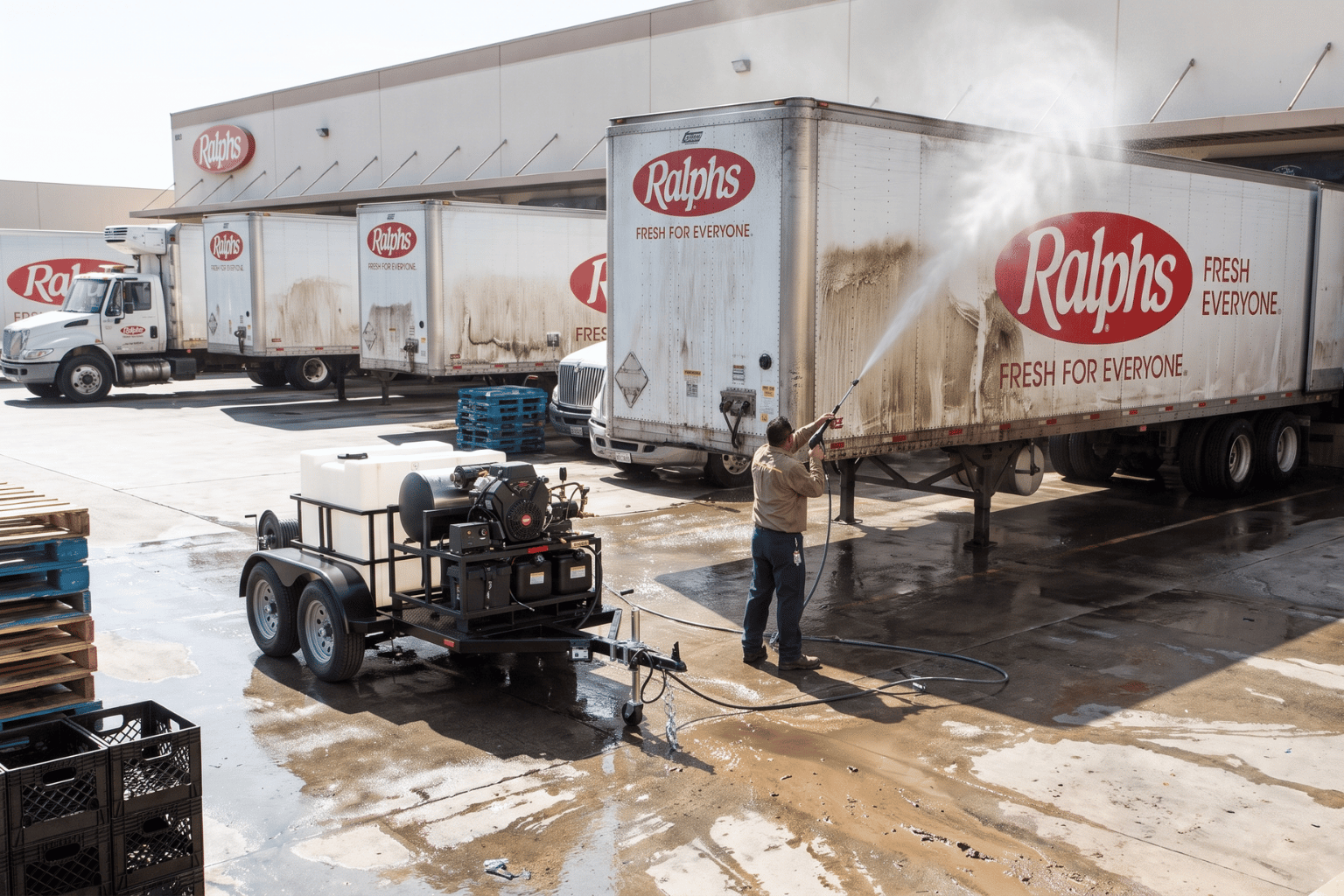
Your trucks have schedules to keep. Your cleaning equipment should help you keep them. At Universal Trailer and American Water Works, we build and supply pressure washer trailers that bring commercial cleaning capability to your fleet yard, customer location, or next scheduled wash stop.
Our fleet washing equipment combines a commercial pressure washer, onboard water storage, and a practical trailer configuration. Choose from hot-water systems, different flow rates, and single- or tandem-axle arrangements to match the vehicles you clean and the way your team works.
Whether you manage delivery vans, operate a trucking company, or want to expand a mobile fleet washing business, we help you compare the details that affect your purchase: gallons per minute, operating pressure, water capacity, fuel requirements, accessories, and transport considerations.
Explore our pressure washer trailers for sale or request a fleet washing equipment quote. Tell us about your vehicles, workload, and water access, and we can discuss an appropriate configuration.
TABLE OF CONTENTS
A Complete Starting Point for Mobile Fleet Washing
Fleet washing equipment is the collection of machines and accessories used to clean multiple commercial vehicles. A mobile system typically includes a pressure washer, tank, hoses, reels, spray gun, and detergent application equipment. Depending on the wash location, wastewater containment, recovery, and storage may also be necessary.
At Universal Trailer and American Water Works, our focus is the pressure washer trailer at the center of that operation. We bring the washing machine and water supply together so you can move your cleaning setup between locations and organize your equipment around a repeatable workflow.
That matters when a fleet returns after business hours, a customer has vehicles spread across several yards, or a wash area lacks a convenient water connection. You can plan around the vehicles instead of building every job around a fixed wash bay.
Start with our trailers with machines to compare complete combinations. If you already own a suitable pressure washer, our stock trailers provide another starting point. Machine compatibility, mounting, plumbing, and loaded weight still need to be checked before choosing a trailer.
Truck Washing Equipment for the Fleets You Serve
The right purchase begins with the vehicles and contaminants you handle most often. A delivery fleet and a construction fleet may both need washing, but they place different demands on water supply, cleaning methods, and equipment access.
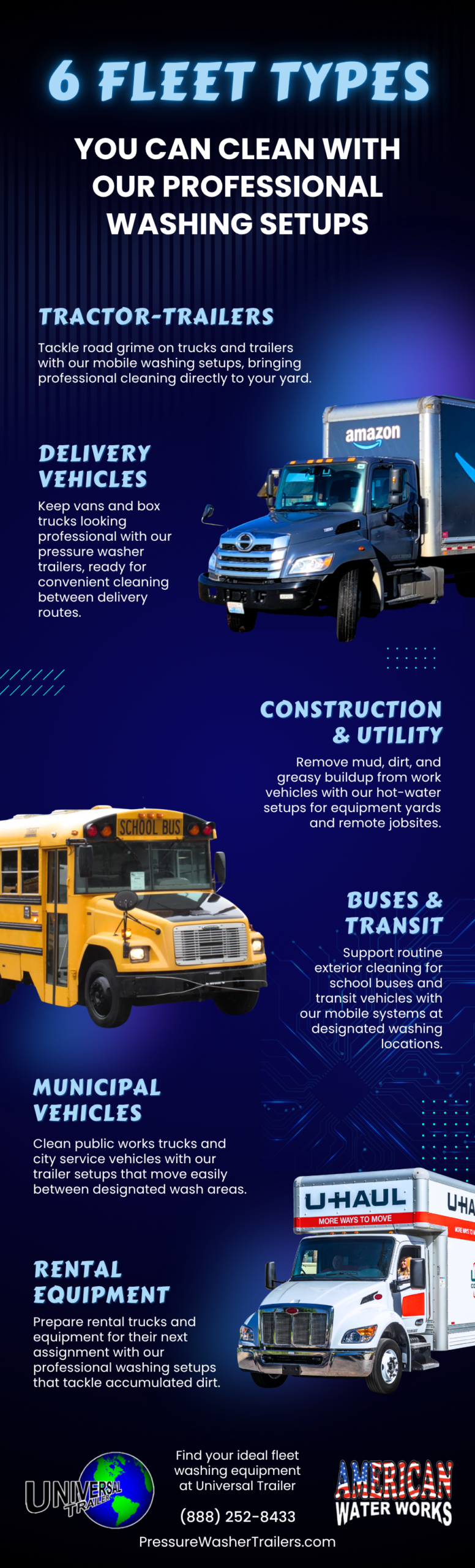
Trucking and Logistics Fleets
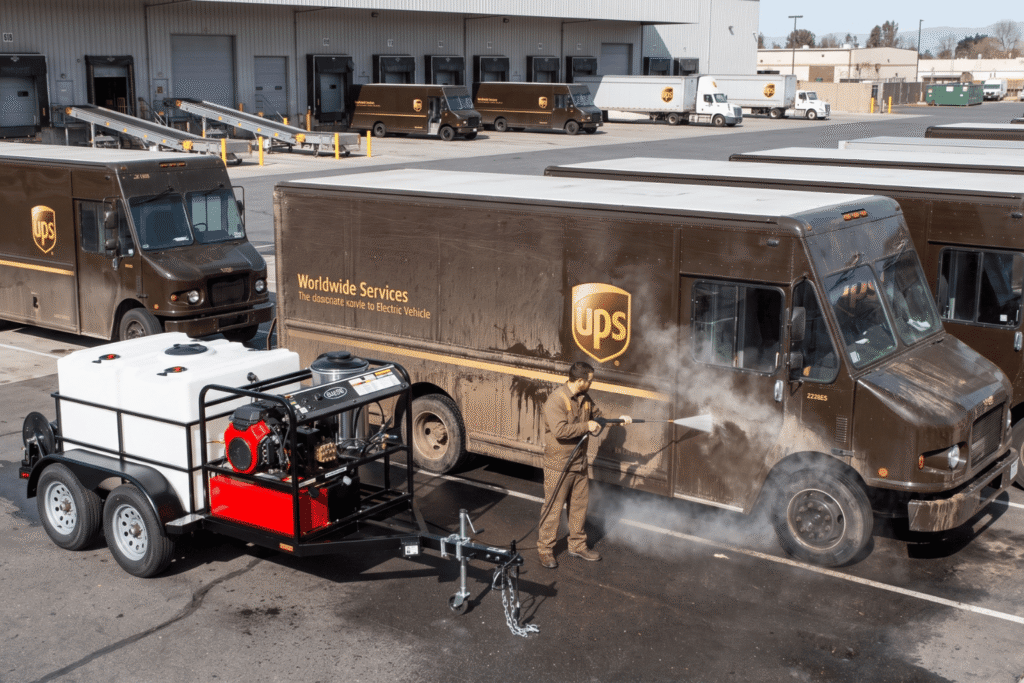
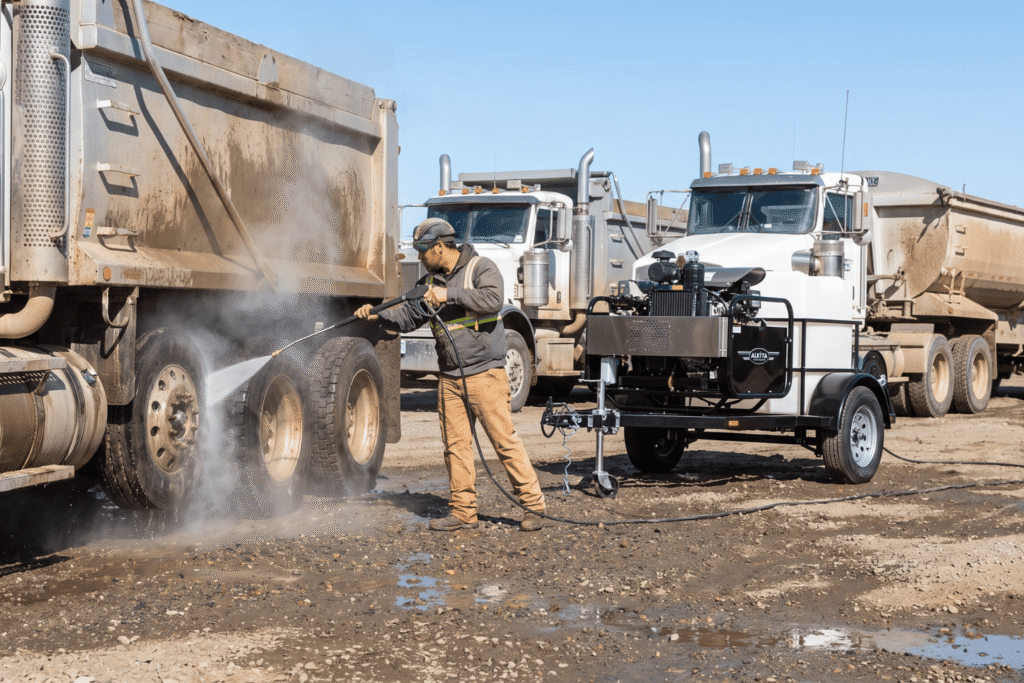
Tractor-trailers, box trucks, and distribution vehicles present large surfaces and varied cleaning challenges. Painted cabs, trailer panels, wheels, and chassis components cannot all be treated identically. We encourage buyers to describe the actual scope of work, including whether the job involves exterior appearance washing, localized degreasing, or more detailed cleaning.
A mobile trailer can support a planned route through a truck yard. Hose reach, refill access, and equipment placement deserve as much attention as the pressure washer itself. A well-chosen arrangement helps operators spend more time washing and less time relocating equipment.
Delivery Vans and Service Vehicles
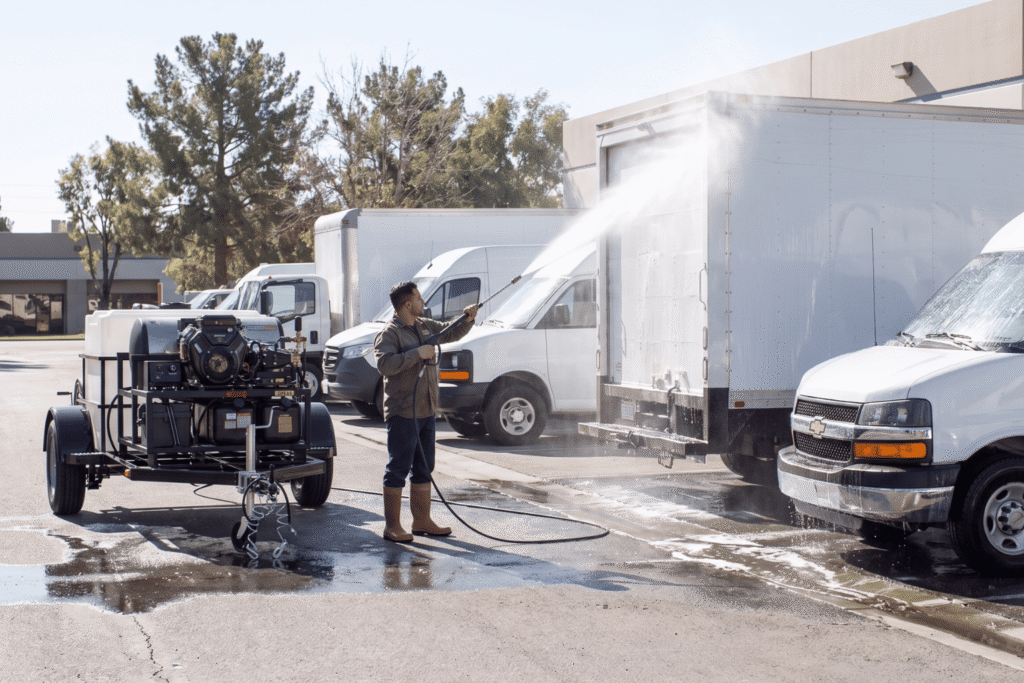
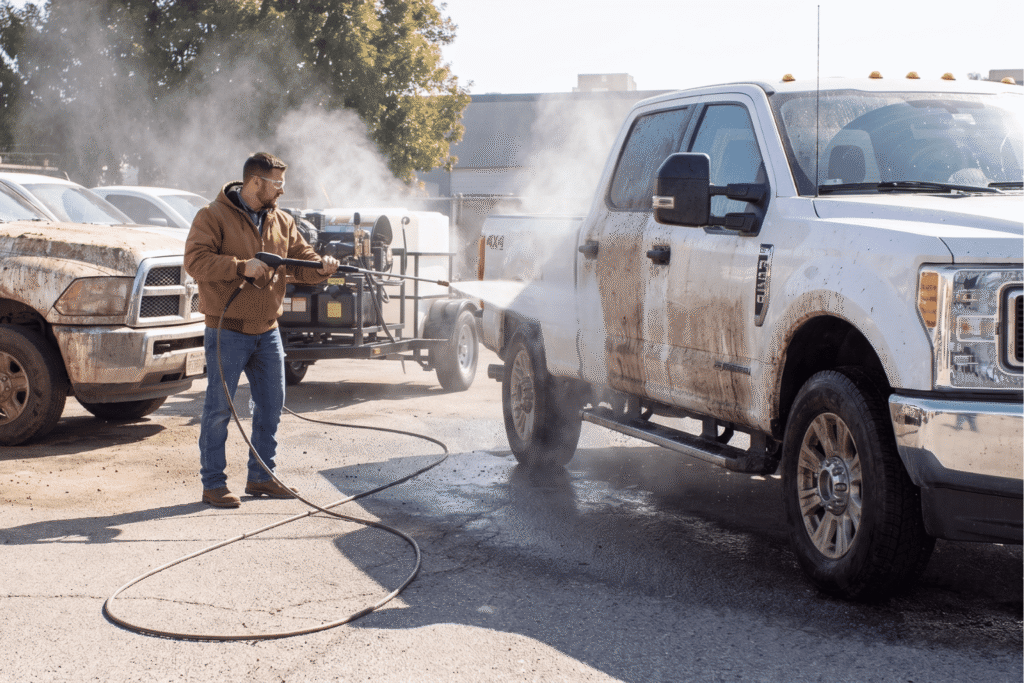
Branded vans and service trucks often need consistent exterior presentation across the entire fleet. Buyers should account for vehicle wraps, mirrors, cameras, door seals, and other sensitive areas when selecting tools and developing procedures.
For these fleets, we recommend discussing manageable equipment size, convenient hose handling, and the frequency of washing. Buying more capacity than your site can comfortably support may create unnecessary transport and storage challenges.
Construction, Utility, and Equipment Fleets
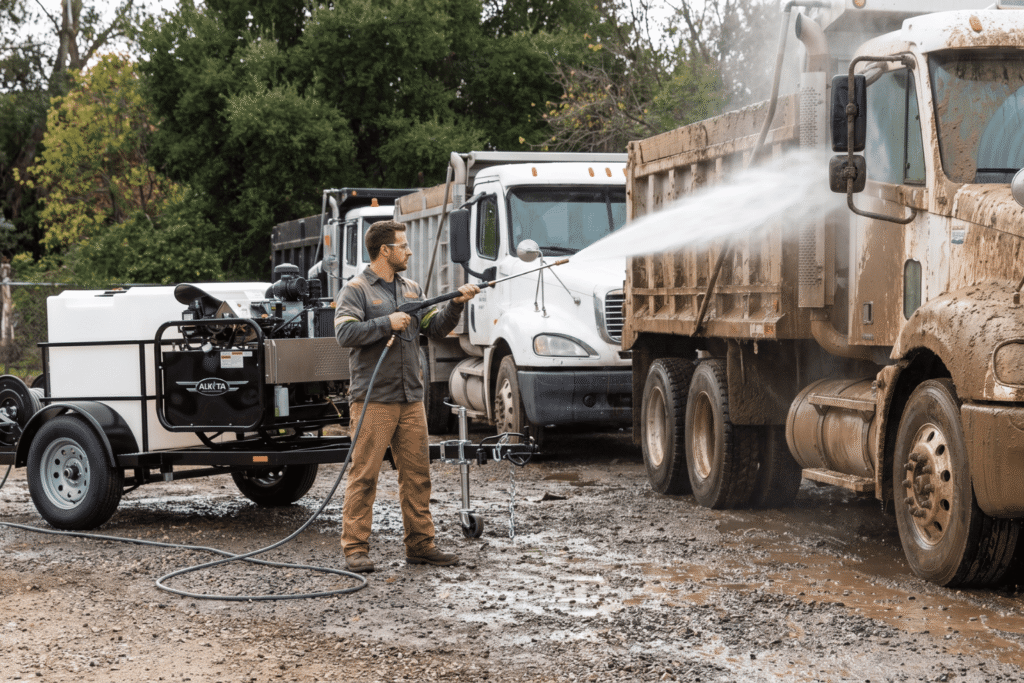
Work trucks and equipment support vehicles may arrive with mud, oily residue, or accumulated jobsite dirt. Hot-water capability is worth evaluating where grease is a regular part of the cleaning workload.
Tell us whether you wash in a central yard or travel between jobsites. That distinction affects the tank capacity, trailer arrangement, and refill strategy worth considering. Also separate routine exterior washing from specialized decontamination or internal tank cleaning, which may require different equipment and procedures.
Municipal and Public-Service Fleets
Public works departments, school transportation operations, and utility organizations often purchase equipment for several vehicle types. A specification should describe those applications clearly, including wash location, permitted operating hours, available utilities, and purchasing requirements.
We can discuss pressure washer trailer options against that list. Having a defined specification helps you compare proposals fairly and avoid buying a system around a single headline number.
Mobile Fleet Washing Contractors
If you sell fleet washing services, your trailer needs to fit the accounts you can realistically service. Consider travel time, vehicle access, setup, rinsing, water recovery, and packing up when estimating daily capacity.
We want your purchase to support a workable business plan. Bring us your expected vehicle mix and route conditions, and we can help you compare equipment choices before you commit to a configuration.
How to Choose the Right Fleet Washing Equipment
Match GPM to Your Workload and Water Supply
Gallons per minute, or GPM, describes water flow. Pounds per square inch, or PSI, describes pressure. Both affect equipment selection, but a higher pressure rating alone does not tell you how efficiently a crew will complete a fleet wash.
Compare flow alongside water availability and the actual cleaning method. Our catalog includes 5 GPM and 8 GPM trailer systems. An 8 GPM machine moves more water at its rated output, which may help with rinsing large surfaces, but it also draws down stored water faster when no refill supply is connected.
We recommend evaluating the whole route. A higher-flow machine may be attractive for a busy yard with dependable water access. A different configuration may make more sense when refill stops are difficult or transport capacity is limited. Our 8 GPM pressure washer trailer guide explains the available configurations in more detail.
Treat Rated PSI as Capability, Not a Universal Wash Setting
Several of our listed systems are rated at 3,500 PSI. That is an equipment specification, not an instruction to wash every vehicle surface at that pressure.
Your operating method should follow the vehicle, coating, and equipment manufacturers’ instructions. Nozzle selection, spray angle, working distance, temperature, and detergent compatibility all matter. Begin with a suitable procedure for the surface rather than assuming maximum output produces the best result.
For wrapped vehicles, consult the film supplier’s care instructions. 3M’s graphic maintenance bulletin explains how excessive pressure can force water under graphics and damage them. We encourage buyers to identify these surface limitations before selecting their accessory package.
Evaluate Hot Water Against the Soil You Remove
Hot-water pressure washers deserve consideration when fleet cleaning regularly involves grease and oily buildup. Cold water can still be appropriate for other tasks. The useful question is how heat fits your vehicles, contaminants, detergents, and operating procedure.
When comparing our hot-water models, distinguish the engine fuel from the burner fuel. A gasoline engine may drive the pump while a diesel-fired burner heats the water. These are separate functions, with separate fuel planning and maintenance requirements.
For a buyer, that means checking more than whether a listing says “hot water.” Ask about the heating system, temperature control, fuel storage, and the equipment included in the selected configuration. We can walk through those details with you.
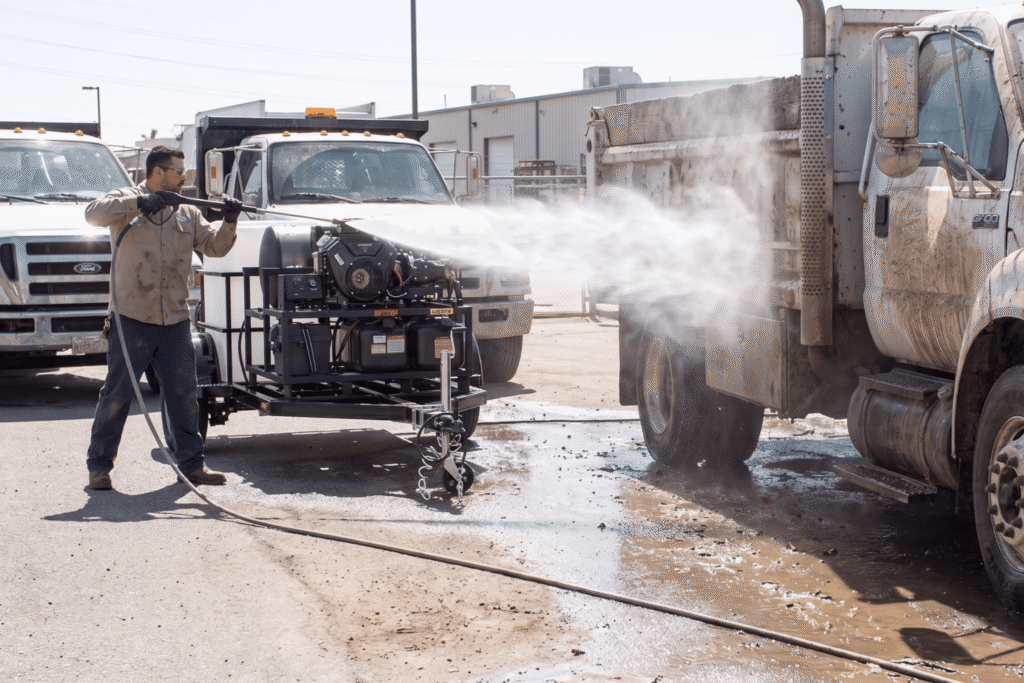
Compare Our Pressure Washer Trailer Options
These examples provide a starting point for discussing your fleet washing requirements. Prices shown are the individual product-page listings reviewed for this page; confirm current pricing, specifications, availability, and options with us before ordering.
Trailer configuration | Rated output | Water capacity | Engine | Listed price | Buying consideration |
AWW UTS230 single axle | 5 GPM at 3,500 PSI | 230 gallons | 18 HP Vanguard gasoline | $14,488 | Compare when you want a smaller water-capacity configuration |
AWW UTT330 tandem axle | 5 GPM at 3,500 PSI | 330 gallons | 18 HP Vanguard gasoline | $15,848 | More stored water than the 230-gallon option at the same rated flow |
AWW UTT330 tandem axle | 8 GPM at 3,500 PSI | 330 gallons | 25 HP Kärcher gasoline | $17,128 | Higher flow for buyers whose water supply and workflow support it |
Alkota UTT460 + 5357C tandem axle | 4.7 GPM at 3,500 PSI | 460 gallons | Kubota Z602 diesel | $20,800 | Diesel-powered option listed as California compliant |
AWW 230-Gallon, 5 GPM Single-Axle Trailer
Our 230-gallon Vanguard pressure washer trailer combines an 18 HP gasoline engine with a diesel-heated burner. The listing includes a belt-drive pump, adjustable thermostat, hour meter, hose reels, and an inline water filter.
Consider this configuration when comparing a smaller onboard water supply with the demands of your route. It is especially important to establish where and how often you can refill before selecting tank capacity.
AWW 330-Gallon, 5 GPM Tandem-Axle Trailer
Our 330-gallon Vanguard tandem-axle trailer retains the 5 GPM output while increasing nominal water storage by 100 gallons compared with the UTS230.
This is a useful comparison for buyers who want more onboard water without moving to an 8 GPM machine. Ask us to review the final equipment list, transport requirements, and layout against your planned wash locations.
AWW 330-Gallon, 8 GPM Tandem-Axle Trailer
Our 330-gallon Kärcher-powered 8 GPM trailer features a belt-drive triplex pump, diesel heating, thermostatic burner control, and separate gasoline and diesel tanks.
It deserves a close look when rinse flow is a purchasing priority. Compare that benefit with refill capacity, recovery requirements, and the accessories your operators use. Higher rated flow is most useful when the rest of the operation is ready for it.
Alkota 460-Gallon Diesel Trailer
Our 460-gallon Alkota trailer with Kubota Z602 diesel engine is listed as California compliant and includes a hot-water system, belt-drive triplex pump, and winterizing valve.
For buyers considering diesel equipment, this offers another combination of machine output and water storage. Ask us for the documentation applicable to your purchase and location. Engine compliance and wash-water discharge requirements are separate matters; one does not establish the other.
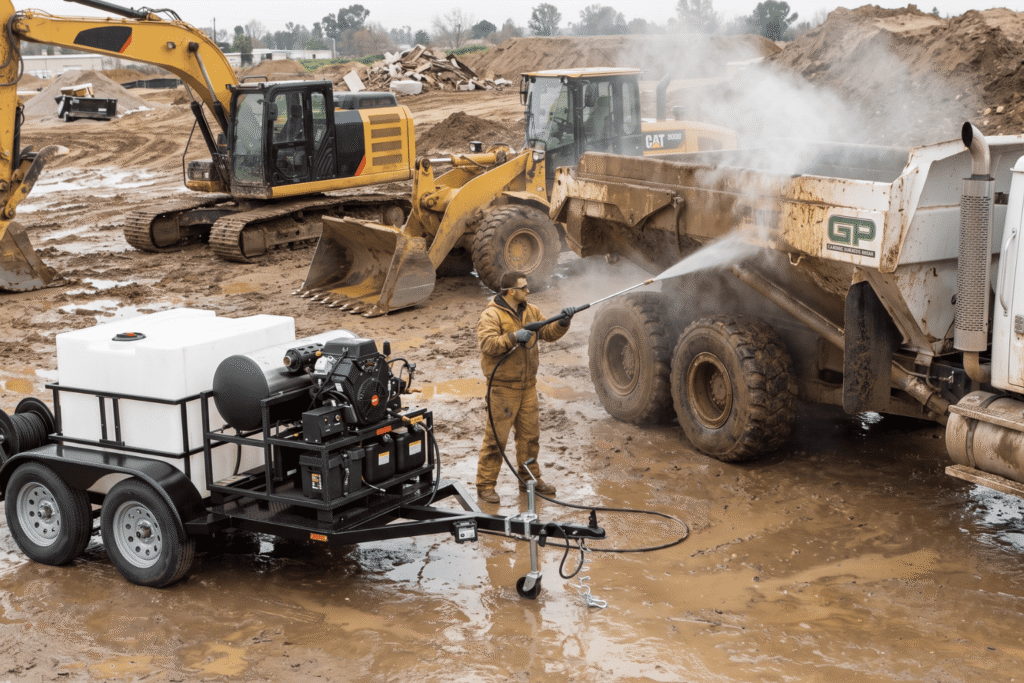
Choose Your Water Tank with Real Operating Numbers
Tank capacity should be based on water use, refill access, and allowable loaded weight. It should not be selected only by counting the number of trucks in your fleet.
As a simple planning calculation, nominal tank capacity divided by rated flow gives theoretical continuous spray time without refilling. A 230-gallon tank at 5 GPM gives 46 minutes. A 330-gallon tank at 5 GPM gives 66 minutes. At 8 GPM, that same 330 gallons gives approximately 41 minutes.
These figures are arithmetic estimates, not promised working times. Actual usable water, reserve requirements, nozzle flow, refill rate, and operating conditions affect the result. Time spent applying detergent, brushing, moving around vehicles, or repositioning equipment also changes elapsed job time.
Use a representative wash to measure consumption where possible. Record the water used, active spray time, and total labor time. That gives you a better purchasing basis than assuming every tractor-trailer or delivery van takes the same amount of water.
Our pressure washer with water tank guide provides additional background on onboard storage. We can discuss that information alongside the practical details of your route.
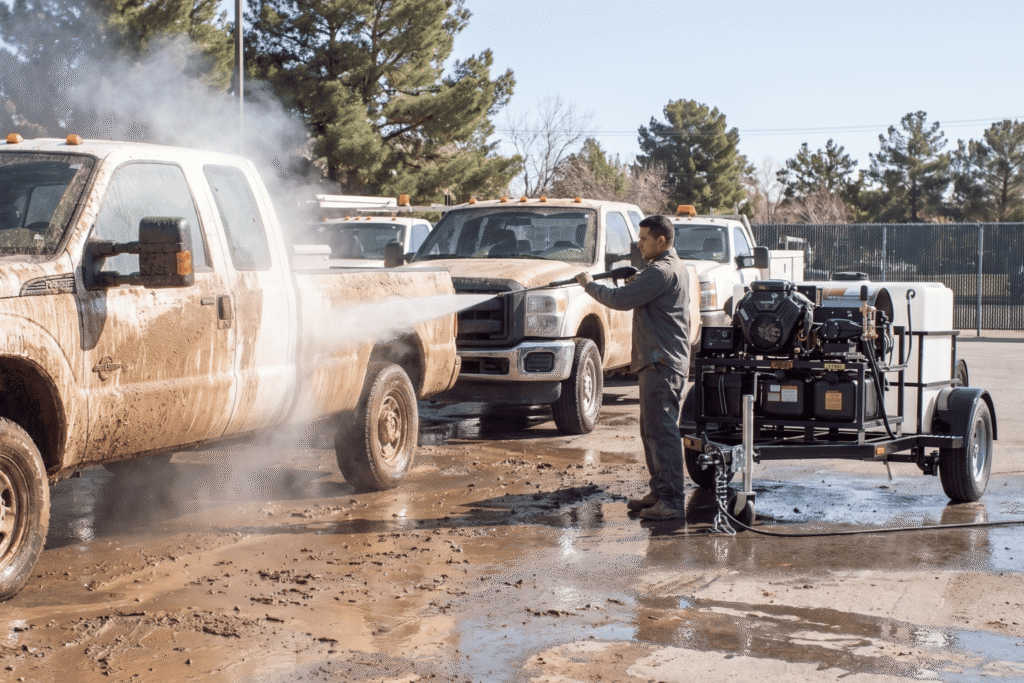
Trailer Layout and Towing Deserve Equal Attention
Your trailer carries more than the machine. Water, fuel, detergent, hoses, tools, and any recovery equipment all contribute to the loaded system.
Water weighs approximately 8.34 pounds per US gallon. At that approximation, 330 gallons contributes about 2,752 pounds before the trailer and other equipment are counted. A larger tank therefore changes the transport calculation as well as the washing schedule.
Before ordering, compare the proposed loaded configuration with the trailer’s gross vehicle weight rating, axle ratings, and your tow vehicle’s towing and payload limits. Include hitch and tongue-weight limits in that review. NHTSA’s guidance on trailer loading emphasizes obtaining loaded tongue-weight information and checking it against vehicle ratings.
Layout also affects the working day. Think about where operators stand, how hoses reach parked trucks, where detergent is secured, and whether routine inspection points remain accessible. Look through our trailer gallery and read our custom pressure washer trailer guide before discussing your preferences with us.
Plan Detergent Application and Vehicle Protection
Pressure washing is only one part of a fleet cleaning method. Detergent choice, dwell time, rinsing, and any necessary brushing should be appropriate for the vehicle’s finish and the contamination being removed.
Fleet operators may use a single-step detergent process, brushing, or a purpose-designed two-step system. Chemical manufacturer Hydro-Chem Systems outlines these alternatives in its fleet washing method guide. The equipment and chemical requirements vary by method.
Tell us which process you intend to use so we can discuss compatible application equipment. Do not assume that a standard trailer package includes a complete two-step chemical system. Follow product labels and safety data sheets, and never improvise chemical mixtures.
We also recommend separating wheel and chassis cleaning tools from tools used on painted panels. Establish procedures for polished aluminum, wraps, reflective markings, cameras, and seals before the first wash. The aim is a repeatable result that protects the fleet’s appearance as well as your equipment investment.
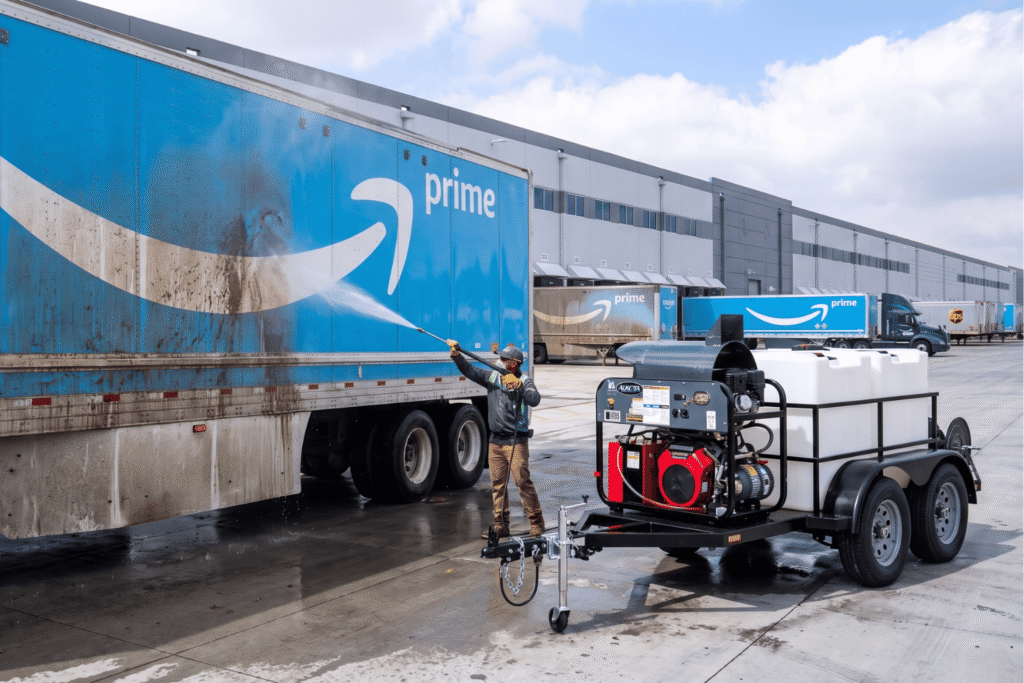
Include Wash-Water Management in Your Purchase Plan
A freshwater tank gives you a supply for washing. It does not collect the wastewater produced during the job.
The EPA’s vehicle and equipment washing guidance explains that wash water can contain sediment, detergents, oil, grease, and metals. Containment and appropriate treatment help prevent those pollutants from reaching waterways.
Before choosing your final setup, identify the wash area and confirm requirements with the local stormwater agency and sewer authority. Depending on the site, your plan may involve containment mats or berms, vacuum recovery, holding capacity, treatment, or an authorized disposal arrangement.
Ask us which components are included in your quotation and which require separate specification. Do not assume that a pressure washer trailer automatically includes recovery or recycling equipment. For additional background, the EPA’s transportation-facility guidance discusses designated wash areas and sanitary sewer discharge where the sewer authority allows it.
Buy Around Total Operating Cost
The best fleet washing equipment purchase is one you can operate productively, maintain, and use on the work you actually have.
Compare the complete cost of ownership: purchase price, fuel, detergent, water, wastewater handling, labor, maintenance, towing, and storage. Add the time spent filling tanks, setting up, moving vehicles, and cleaning the work area afterward.
For example, an equipment upgrade that reduces rinsing time may have less impact than expected if the crew still spends most of the shift waiting for vehicles. Conversely, a better trailer layout or refill plan may remove a bottleneck without requiring the largest available machine.
We encourage you to bring realistic numbers to the equipment conversation. How many washes are scheduled? How long does a typical stop take? Which tasks slow the crew down? That information helps us discuss a purchase with a clear purpose instead of relying on an assumed payback period.
Make Maintenance and Operator Readiness Part of the Setup
Before ordering, ask about the selected engine, pump, burner, and component documentation. Maintenance intervals and warranty terms vary, so use the instructions for the actual equipment rather than a generic schedule.
Build a routine around inspections, fluid checks, filters, hoses, fittings, and trailer condition. Record operating hours where an hour meter is provided. Plan winterization and storage before freezing weather arrives, following the relevant manufacturer procedure.
Operator readiness also matters. The CDC’s pressure washer safety guidance warns against gasoline-powered washer use in enclosed spaces and near building openings because of carbon monoxide risk. Plan the machine’s location accordingly, and train operators in pressure, heat, chemical handling, and pedestrian control.
We want you to approach delivery with the basics organized: a suitable tow vehicle, a wash location, a water source, a wastewater plan, and staff who understand the equipment they will use.
Order Your Fleet Washing Equipment from Universal Trailer and American Water Works
We offer a practical path from comparing equipment to confirming your trailer. Begin with our catalog, then tell us about the fleet, the wash locations, and the configuration you are considering.
To help us prepare a useful quote, include your vehicle types, anticipated workload, water availability, preferred tank capacity, tow vehicle, and any requirements for detergent application or wastewater handling. Photographs of the wash area and a description of the operating sequence can help explain the job.
Our ordering process includes confirming specifications and pricing before invoicing. We offer free shipping within the continental United States; Alaska and Hawaii require a separate shipping quote. Review our payment and shipping policy for the current process and terms.
Ready to compare truck washing equipment for your business? Contact Universal Trailer and American Water Works at 818-252-0706 or 888-252-8433. Our South Carolina number is 843-399-1055. You can also request a custom quote and give us the details of your next fleet washing setup.
Frequently Asked Questions About Fleet Washing Equipment
What equipment do I need to start fleet washing?
You need a suitable pressure washer, water supply, hoses, spray tools, appropriate detergent application equipment, and a plan for wastewater. A mobile operation may also need onboard freshwater storage, containment, recovery, and holding capacity. We help you compare the pressure washer trailer and confirm what your selected package includes before you order.
Do I need hot water for fleet washing?
Hot water is worth considering when oil and grease are frequent cleaning challenges. It is not automatically necessary for every vehicle or surface. We recommend comparing the soils you remove, your wash method, and the vehicle manufacturer’s restrictions before deciding how much heating capability your operation needs.
Is 5 GPM or 8 GPM better for washing trucks?
The better choice depends on the workload and water supply. At rated output, an 8 GPM machine delivers more rinse water but consumes stored water faster than a 5 GPM machine. We can compare both against your vehicle sizes, refill access, transport limits, and available washing time.
Can I wash every truck at 3,500 PSI?
No. A machine’s rated pressure is not a universal setting for vehicle washing. Use the pressure, nozzle, distance, temperature, and detergent allowed by the vehicle and surface manufacturers. Painted panels, wraps, seals, and electronic components require particular care. We recommend developing a surface-specific procedure before operators begin work.
What size water tank do I need?
Choose tank capacity around measured consumption, refill opportunities, and the weight your trailer and tow vehicle can carry. Our listed options include 230-, 330-, and 460-gallon configurations. We can help you compare them, but the number of vehicles alone is not enough to predict the required capacity.
How many trucks can I wash with one tank?
There is no reliable universal number. A lightly soiled van and a heavily soiled tractor-trailer can require very different amounts of water. Measure a representative wash, include all water-using steps, and maintain an operating reserve. That test is more useful than a generic trucks-per-tank claim.
Do your trailers include water reclamation?
Do not assume reclamation is included in a standard pressure washer trailer. Freshwater storage and wastewater recovery perform different functions. Ask us to identify the components included in your specific quotation, and establish the containment, treatment, storage, and disposal requirements for the locations where you plan to work.
Can I wash trucks without brushing?
Some fleet washing methods are designed to reduce or avoid brushing, but results depend on contamination, finish, chemistry, and wash frequency. A touchless result cannot be promised for every vehicle. Tell us your intended process so we can discuss application equipment rather than assuming the pressure washer alone determines the outcome.
Can two people wash from one pressure washer?
Only when the system is designed and specified for simultaneous operation. Two hose reels do not prove that a trailer supports two washing guns at full output. If you want two operators working at once, tell us before ordering so pump capacity, plumbing, controls, and accessories can be evaluated together.
Should I buy a trailer or build a permanent wash bay?
A trailer is worth considering when equipment needs to move between yards or customer locations. A permanent bay may suit a fleet that returns to one facility with suitable utilities and drainage. We specialize in mobile pressure washer trailer options and can discuss how they fit your intended operation.
How much does your fleet washing equipment cost?
The four trailer examples above have listed prices from $14,488 to $20,800. Those are examples, not a price range for every possible build. Your final purchase depends on the selected machine, tank, trailer, and options. Contact us for a current quote based on your actual requirements.
How do I choose the right trailer from Universal Trailer and American Water Works?
Start by telling us what you wash, where you wash it, and how much work you need to complete. Include water access, your tow vehicle, and any site requirements. We can then discuss suitable configurations, clarify included equipment, and prepare the next steps. Request your fleet washing equipment quote to get started.
Disclaimer: Equipment specifications and performance capabilities may vary based on specific configurations and operating conditions. Professional consultation is recommended for custom applications and specialized requirements. Regulatory compliance requirements vary by location and application – consult local authorities for specific permit and operational requirements.